
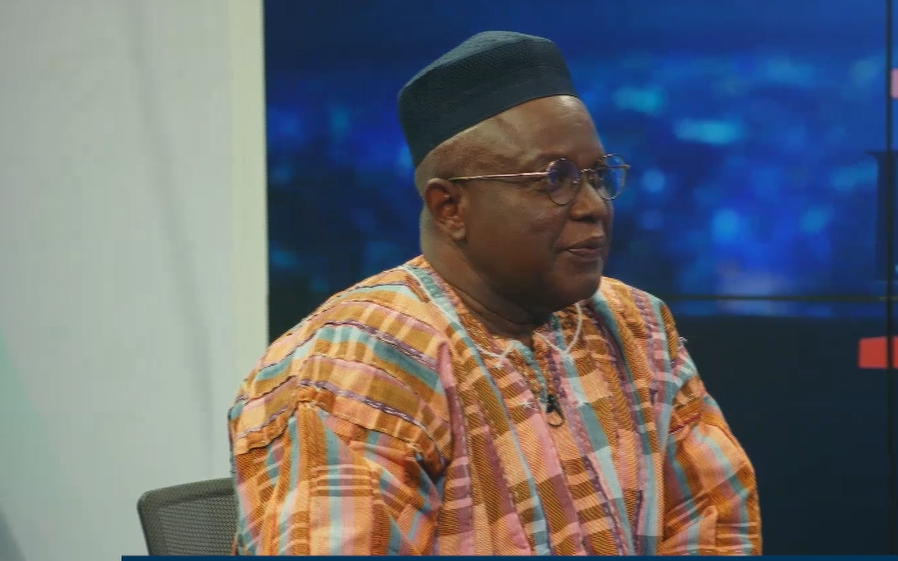
The Chairman of the National Development Planning Commission (NDPC), Dr Nii Moi Thompson, has defended Ghana’s first President, Osagyefo Dr Kwame Nkrumah, describing recent criticisms of his leadership as deeply ironic.
Speaking to Bernard Avle on Channel One TV’s The Point of View on Wednesday, March 4, Dr Thompson argued that Nkrumah’s approach to governance was rooted in a deliberate and strategic vision for national development, built on two core pillars: nation-building and socio-economic transformation.
According to him, the first pillar centred on preserving the territorial integrity of the newly independent state by holding together the diverse regions inherited at independence — the Northern Territories, Ashanti, Trans-Volta Togoland and the Gold Coast Colony — and preventing fragmentation.
“Nkrumah’s view on national development was based on two pillars: Firstly, was nation building, which was to hold together the nation as we had inherited it, the Northern territory, Ashanti, trans-Volta, the Gold Coast proper, so that it wouldn’t break up.
“The other pillar was socio-economic progress, and this is where he gradually became tough on certain groups to prevent the disintegration of the country we knew then as the Gold Coast and now Ghana,” he stated.
Dr Thompson said it was ironic that Nkrumah had, in recent weeks, been subjected to what he termed relentless attacks, with critics branding him a dictator.
“I personally find it ironic that in the past few weeks, Nkrumah has come under relentless attacks, that he was a dictator and so on and so forth. The irony here is that the very things he did that preserved the integrity of this country are what they are accusing him of. We may not have had the Ghana we know today if he hadn’t taken those decisions,” he said.
He cited Nkrumah’s decision to outlaw the formation of political parties based on religious or ethnic identities as a key measure aimed at safeguarding national unity.
“He outlawed the setting up of political parties with religious and ethnic names. It’s ironic that we will accuse him of something that he held Ghana together,” Dr Thompson added.
Dr Thompson’s comments come amid renewed public debate over Nkrumah’s legacy and the balance between national cohesion and political freedoms in the early years of Ghana’s independence.

