


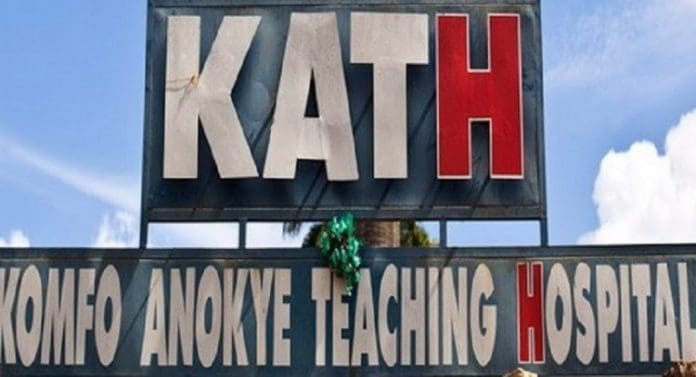

The Ashanti Region’s chronic shortage of functional emergency healthcare infrastructure has been placed squarely in the public spotlight by the man who until recently led its only fully equipped referral hospital, with former Komfo Anokye Teaching Hospital (KATH) chief executive Prof. Dr. Otchere Addai-Mensah warning that patients in Kumasi face a measurably lower chance of surviving emergencies than those in Accra.
Speaking in an interview on Oyerepa Radio, Addai-Mensah drew a stark contrast between the emergency healthcare landscape of the two cities. “KATH remains the only hospital in the Ashanti Region that has a proper emergency unit,” he said, adding that residents of Accra benefit from a cluster of fully operational emergency departments, including those at the Ridge Regional Hospital, the 37 Military Hospital, and the Police Hospital. “The chances of survival when it comes to emergencies in Accra are higher than in the Ashanti Region,” he stated.
KATH, a 1,200-bed facility in Kumasi, serves as the anchor of tertiary healthcare for the region and beyond, offering round-the-clock emergency services. The hospital receives referrals from 13 of Ghana’s 16 regions, functioning as the only tertiary medical facility in a vast swathe of the country despite serving a region whose population is roughly comparable to that of Greater Accra.
The pressure that creates on KATH has been well documented. Several hospitals whose completion could have significantly eased KATH’s burden, including facilities at Sewua, Fomena, Kumawu, and the Afari Military Hospital, remain incomplete or non-operational, meaning KATH continues to absorb demand that would otherwise be distributed across the region.
During a government facility tour in 2024, then-Health Minister Dr. Bernard Okoe Boye acknowledged KATH’s challenges, including severe congestion and inadequate equipment, and pledged to work toward operationalising facilities that could help decongest the hospital. Progress on that front has been slow.
Asantehene Otumfuo Osei Tutu II has also intervened directly, spearheading the Heal KATH Project to mobilise renovation funding from corporate bodies, traditional institutions, and the broader public, describing KATH as “our last hope in Ashanti.”
Addai-Mensah’s remarks add a clinical perspective to a conversation that has largely been framed around infrastructure and funding. His underlying message is that the gap is not merely an inconvenience but a matter of life and death for patients across the Ashanti Region and the wider north who have no alternative when emergencies strike.
