


Kenya and Italy are steering their
long-standing ties toward job creation, artificial intelligence and innovation,
signalling a new phase in bilateral relations.
The shift was highlighted during recent
engagements between the two governments, including the visit of Italy’s
Minister for Universities and Research Anna Bernini and the launch of the
Nairobi AI Forum.
A trilateral AI partnership between Italy,
India and Kenya was also signed on February 19 on the sidelines of
the AI Impact Summit in New Delhi, aligning with Rome’s Mattei Plan — a
cooperation model between Italy, the EU and African states.
The deal aims to deploy AI systems at scale
in sectors such as agriculture, healthcare, education and public services.
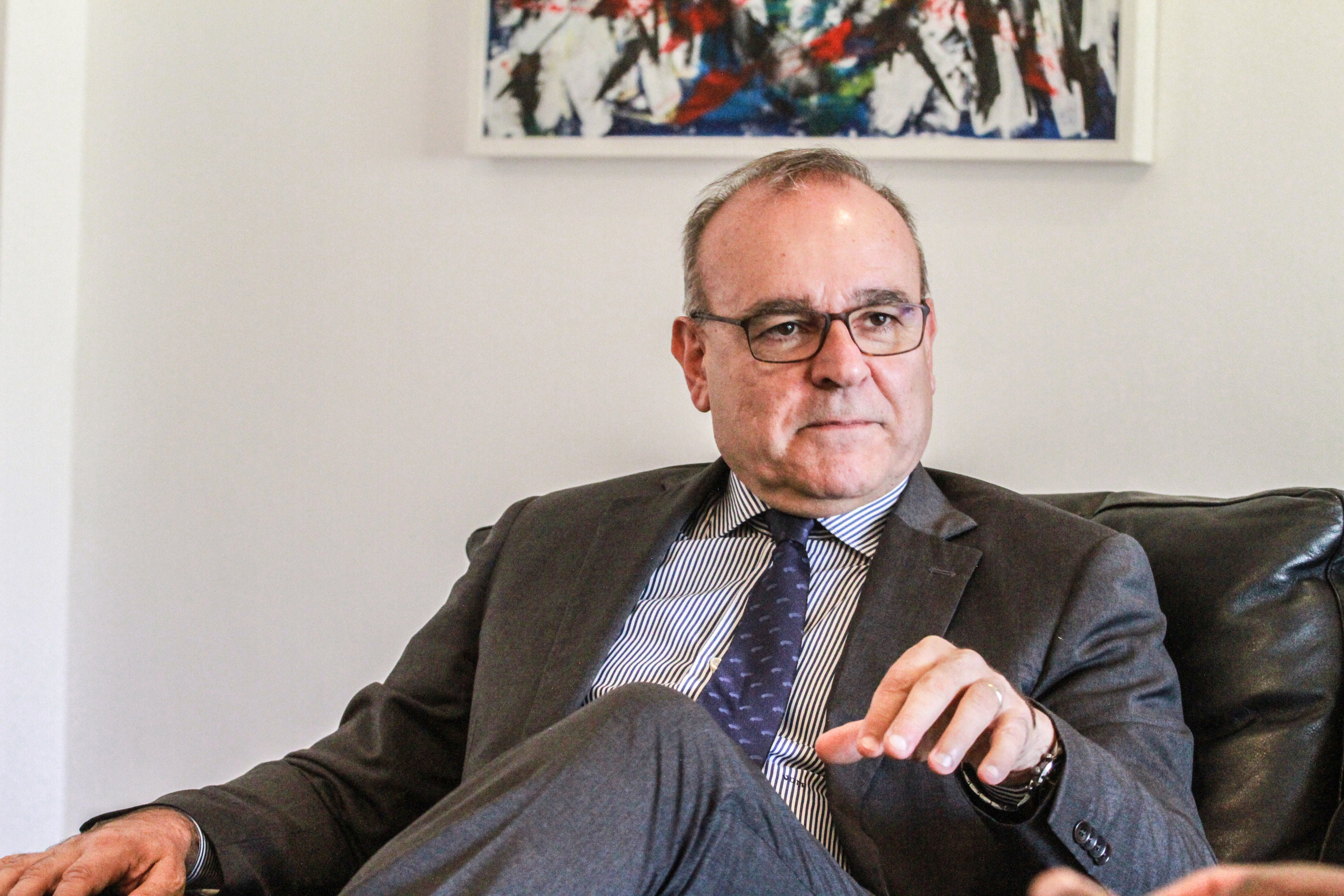
Speaking to the Star, Italian Ambassador
Vincenzo Del Monaco said the relationship between the two countries is entering
a “very positive cycle” as cooperation expands beyond traditional sectors to
research, innovation and technology.
“The motto is alignment. This means we must
remain open to building an evolving agenda because it is not set in stone,” he
said.
“We need to keep our eyes open and our
antennae raised so we can continuously exchange information at a bilateral
level and adjust accordingly. This is why, in my opinion, alignment is a key
word and a compass.”
The envoy said Kenya’s strong digital
ecosystem and youthful population make it well positioned to benefit from
emerging technologies, including artificial intelligence.
Here are excerpts from the interview.
The Star: What are your immediate and
long-term priorities during your tour of duty?
Amb Vincenzo Del Monaco: My priority is to strengthen what already exists and then expand
the menu to offer a wider variety of options. We already have sectors I would
describe as mature and successful, but we cannot afford to rest on our laurels.
We need to be creative, visualise the new dynamics and strongest parts of the
country, and build on these to shape a future-oriented agenda together. This is
my priority in broad terms.
Which sectors will you focus on?
We have a proven track record of success in
political relations at the highest level. In 2023, Italy’s President visited
Kenya on a state visit for the first time. President [William] Ruto has likewise
visited Italy several times and is due to return on an official visit soon.
My Prime Minister and your President met
during the Italy-Africa summit and then at the African Union summit the
following day, as Prime Minister [Giorgia] Meloni was invited to address the
Assembly as the guest of honour.
Building on the political dialogue, we are
expanding our cooperation around three pillars: people, prosperity and planet.
Take coffee, for example. Italy is
collaborating with around 30,000 local producers to develop the country’s
coffee supply chain. These are very meaningful numbers.
Moreover, Eni is collaborating with about
100,000 local workers to produce biofuels. This is achieved without taking land
from agricultural fields, but rather from semi-arid, arid and uncultivated
land.
The Italian company Impresa Costruzioni
Giuseppe Maltauro has constructed heavy infrastructure in Konza, which aligns
with Kenya’s priorities. My objective is to leverage these successful
foundations of cooperation by adding elements related to science, research,
innovation and universities.
Italy, Kenya and UNDP co-hosted the
Nairobi AI Forum this month. What were the key deliverables?
We didn’t bring a conference to Nairobi to
discuss how important AI is — that discussion is long gone. Instead, we focused
on the role of the private sector outside the traditional framework of
international aid and on co-creation with Kenya and Africa.
Kenya and Africa do not need assistance in
the field of tech but collaboration, and Italy can be a gateway for Africa to
facilitate access to Western markets and capital. This is the significance of
the Venture Capital Fund announced in Nairobi by Harmonic Innovation Group and
Primo Capital.
The Forum started with deliverables, not
theories.
First, the co-design of a $10 billion
initiative with the AfDB, which aims to create up to 45 million jobs by 2035
through infrastructure and entrepreneurship funding.
The second deliverable was the Harmonic
Africa start-up acceleration programme, launched to provide capital, technical
support and global market access for high-growth AI start-ups.
The third is a new space-enabled
partnership for food security using satellite data and AI to strengthen
agriculture and climate resilience.
A cyber-security readiness initiative was
announced to train and support African AI start-ups in building secure and
trusted systems. This is under the framework of the Undersecretary for AI for
Development, one of the concrete legacies of Italy’s G7 presidency in 2024.
President Sergio Mattarella’s state
visit to Kenya marked a high point in bilateral relations. How is the embassy
ensuring agreements translate into programmes and investments?
A presidential visit is the highest
possible visit in the diplomatic realm. It elevates relations and leaves a mark
in the history of bilateral ties. This is why expectations are high from the
visit of President Ruto to Rome.
In 2023, an MoU on political dialogue was
signed at the Foreign Affairs ministries level, and its implementation is
proceeding smoothly. We are seeing intensified exchanges of visits,
consultations and meetings, also on the margins of international fora.
The visit by the Minister of Universities
and Research feeds into that picture. The visit offered the opportunity to
address priorities such as mobility of researchers, scientists and young
people. An MoU was also signed with Education CS Julius Ogamba.
During President Mattarella’s visit, an
agreement on development cooperation was signed, and today we have 45
ongoing projects worth 150 million euros. They are unfolding well and span an
array of key sectors.
We have another meaningful project
supported by the EU Global Gateway programme on the water level of Lake
Baringo.
Italy is happy to partner with Germany’s
GIZ. There is also the new maternity and child ward at the Malindi hospital and
the construction of the road connecting the space base in Malindi to the
coastal main road.
Dialogue is proceeding smoothly. It is
essential that we keep assessing the implementation of these projects while
conceptualising new ones.
Italy and Kenya have a long history in
space cooperation through the Space Centre in Malindi. How do you view the
future of this partnership amidst parliamentary queries and renewed interest by
other powers in the sector?
I live in the real world, not the world of
film. We have been working together in Malindi since 1963. Huge progress has
been made and the results are visible. Kenya plays a leading role in
continental conversations on space.
I believe this is one of the effects of the
success of our collaboration. When you have such a long history of partnership,
there are times when you may not agree on everything — like in every happy
marriage.
Italy’s President visited the space centre
three years ago. On February 8, Minister Bernini visited the centre for
the first time.
We also collaborate with NASA, the French
Space Agency and the European Space Agency at the base. Following the launch of
the Ariane rocket, Malindi is the final control point on Earth. The activities
implemented at the base make a meaningful contribution to agriculture, disaster
prevention and relief, and have considerable economic value.
Future collaboration initiatives and
opportunities were also discussed. In a nutshell, I see a promising future for
our bilateral space partnership.
Is there collaboration in data gathering
and monitoring to address climate change?
At a bilateral level, we can contribute to
addressing the root causes and effects of climate change. We are already doing
so through projects such as the blue economy initiative involving your coastal
counties and the Baringo Lake project supported by the Global Gateway. Kenya
and Italy also collaborate closely at the UN level here in Nairobi.
Are there new partnerships in
healthcare, medical research or capacity building?
This topic was part of the discussions
between Minister Bernini and her Kenyan counterpart. Biotechnology is one of
the issues mentioned and needs further exploration. We are assessing what more
can be done together, building on already intense bilateral collaboration and
technical exchanges. Italy is a global leader in pharmaceutical manufacturing,
with exports reaching about $53.85 billion (Sh6.9 trillion) in 2024, making it
the fifth-largest exporter worldwide.
Kenya is implementing an Affordable
Housing programme. Does Italy see opportunities for collaboration?
We are open to collaboration in every area,
although social housing is not yet on my radar. However, we can cooperate
concretely in the field of smart cities, which make citizens’ lives easier
daily, especially given the pace of urbanisation in your country. I see
enormous potential in conversations spanning smart cities, public transport and
social housing.
On a related note, I would like to
emphasise the importance of enhanced collaboration between law enforcement
agencies and the judiciary. This urbanisation process goes hand in hand with
the growing threat posed by organised crime and criminal gangs.
What initiatives is the embassy pursuing
to deepen cultural exchange and boost tourism?
I have great respect for cultural diplomacy
and am passionate about it because it is ‘free of charge’. It is never
transactional. It is about sharing traditions, knowledge and friendship. It
brings together young people and civil society and highlights the things that
bind us together.
Behind culture there is also agriculture,
scenery, the beauty of our landscapes and technology.
In November, I launched two initiatives at
the National Museum of Kenya in Nairobi focusing on cuisine. The first featured
50 menus illustrating the evolution of Italian cuisine over the past 100 years.
The main message was about embracing the future and change. Italian cuisine was
recently added to the Unesco World Heritage List.
We also hosted Italian artist Tommaso
Cascella, who built a table now part of the residence of the Italian
Ambassador’s collection. The table represents the place where bread is cut and
meals are shared — a place where we also share ideas, ideals and the principles
that bring Italy and Kenya together in the international community.
I am keen to play a significant role in
promoting cultural diplomacy.
Are there collaborations in marketing
Kenyan tourism in Italy?
Yes, definitely. But I don’t think Kenya
needs to be advertised — it has scenery of biblical beauty.
If we look at the numbers, Italians are the
second-largest group of tourists from Europe visiting Kenya after the UK.
Around 100,000 Italians visit Kenya yearly.
I wish more Kenyans could visit Italy.
On March 10, I will host a tourism promotion event at my residence in
collaboration with Italian tour operators and Turkish Airlines.
What about sports tourism?
In November, when I organised the arts and
cuisine event, I invited Tourism CS Rebecca Miano. We parked a beautiful,
shiny, brand-new Ferrari outside the National Museum of Kenya.
I also invited Benson Kipruto, the Kenyan
champion who won the New York Marathon this year — his coach is Italian.
So we had one of the fastest men on Earth
and one of the fastest cars on Earth, and Italy was the common link. This
illustrates how culture, sport and trade are interconnected — what I call the
“diplomacy of growth”.
