



Ghana’s push to launch free primary healthcare next week has revealed a critical gap: many frontline health facilities are not yet fully oriented, and the Ghana Health Service (GHS) is racing to fix that before the policy goes live.
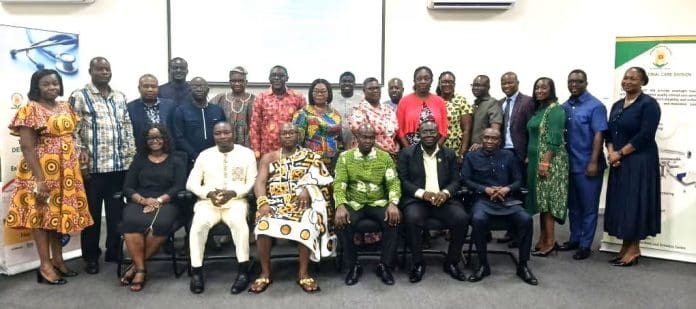
Speaking at a clinical care retreat organised by the Institutional Care Division of the GHS in Accra on Tuesday, the Director-General of the Service, Dr Samuel Kaba Akoriyea, said the mindset of facility leaders must shift fundamentally before the Free Primary Healthcare policy can deliver meaningful results at the community level.
The retreat, focused on preparing regional and district health directors for smooth implementation, comes weeks ahead of the policy’s expected rollout in the first week of March 2026. The initiative will give Ghanaians access to promotive, preventive, and basic curative services at no cost, with a particular emphasis on early detection and management of non-communicable diseases (NCDs) such as hypertension, diabetes, and certain cancers.
One of the most striking commitments to emerge from the retreat is a plan to train every single health worker in basic life support (BLS), not just clinical staff. Dr Kaba Akoriyea said the plan covers the entire workforce, from ward cleaners to senior consultants.
“When it comes to emergencies, normally we need to look at the pre-hospital stage and then the hospital stage. Everybody needs to be trained in basic life support. We are planning to make sure that every health worker, from the cleaner to the consultant, at least, they will be able to do basic life support activities,” he said.
The Director-General also emphasised that the success of the policy depends heavily on how health leaders at the facility level internalise its long-term purpose, warning that the programme must not be treated as a short-term government project but embedded permanently into Ghana’s healthcare delivery architecture.
Officials say preparation also includes upgrading ambulance services, strengthening referral systems, and ensuring that frontline facilities can handle critical cases before and after transfer. The combination of pre-hospital response training and improved referral capacity is designed to reduce preventable deaths from conditions that are currently reaching hospitals at advanced stages.
The Free Primary Healthcare policy forms part of Ghana’s broader drive toward Universal Health Coverage (UHC) by 2030. The 2026 national budget allocated GH¢34 billion to the health sector, representing more than 11% of total government expenditure, with the Ghana Medical Trust Fund, popularly known as MahamaCares, receiving GH¢2.3 billion to support NCD patients directly.
