
Published on
February 15, 2026

For decades, the global tourism industry operated on a wing and a prayer. We built beautiful resorts, marketed pristine beaches, and simply hoped that the weather stayed fair, the economies stayed stable, and the world stayed safe. But hope, as Jamaica’s Minister of Tourism Edmund Bartlett famously says, is not a strategy.
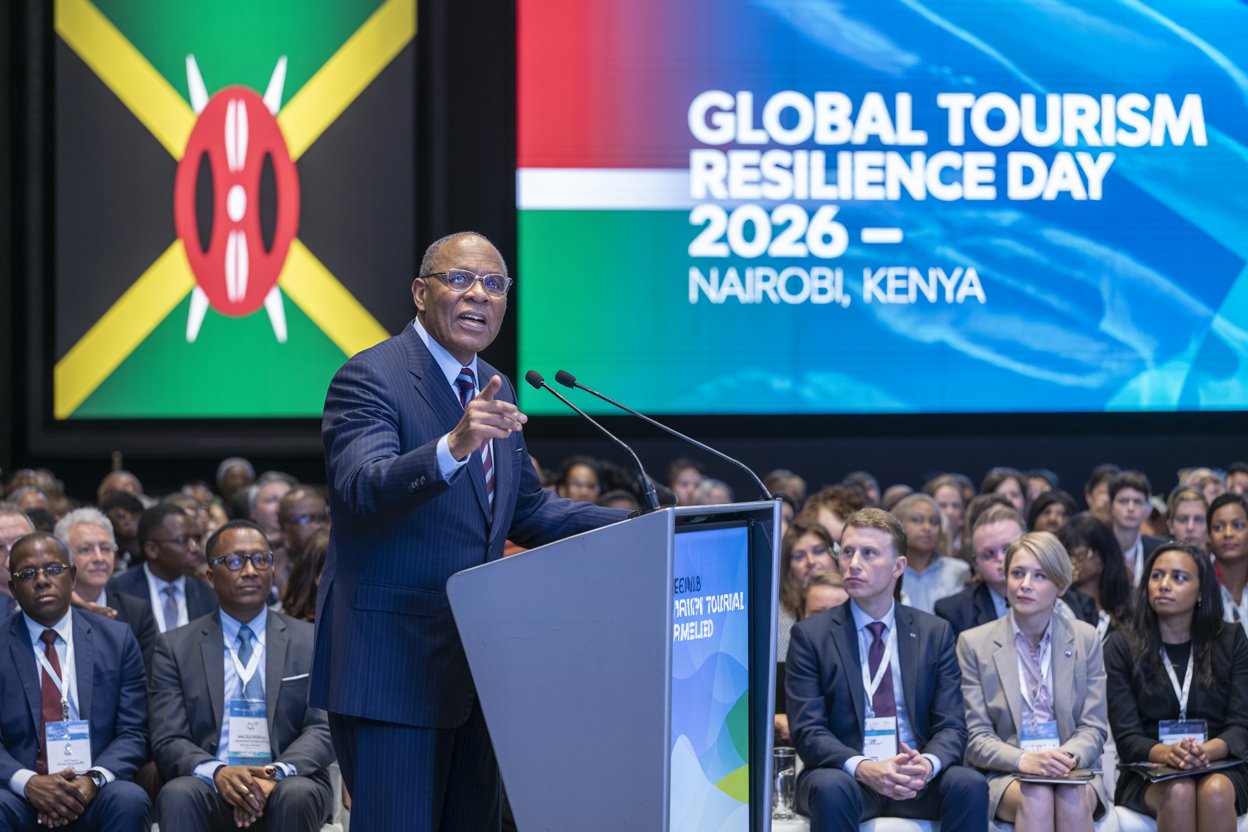
As we step into mid-February 2026, the conversation has shifted from “recovery” to “resilience.” This week, the eyes of the travel world are fixed on Nairobi, Kenya, where the 4th Global Tourism Resilience Day Conference and Expo is currently underway (February 16–18). At the heart of this movement is a powerful partnership between the Caribbean and Africa, led by the visionary leadership of Jamaica.
The “New Currency” of Tourism
Minister Edmund Bartlett, the founder and co-chair of the Global Tourism Resilience and Crisis Management Centre (GTRCMC), has brought a clear message to the Kenyatta International Convention Centre (KICC): “Resilience is the new tourism currency.”
In an era where a single cyber-attack, a sudden climate event, or a wave of digital misinformation can shut down travel demand faster than a hurricane, Bartlett argues that resilience must be institutionalized. It is no longer enough to wait for a disaster to happen and then react; destinations must be built to withstand pressure, maintain credibility, and bounce back with lightning speed.
Why Kenya? The African Vision
While the movement began in Jamaica, hosting the 2026 summit in Nairobi is a deeply symbolic move. Kenya stands as one of Africa’s most diversified tourism economies, having navigated everything from health crises to security challenges with remarkable grit.
The theme for 2026, “Tourism Resilience in Action: From Crisis Response to Impactful Transformation,” reflects a shift toward tangible results. This isn’t just about white papers and speeches; it’s about “operationalizing” resilience at the community level.
Advertisement
Advertisement
- Kenya as a Classroom: Delegates are engaging in field visits to the Nairobi National Park and the National Museums of Kenya to see how conservation and community-led tourism can survive even during global downturns.
- The Nairobi Declaration: The conference is expected to culminate in the “Nairobi Declaration for Tourism Resilience,” a policy roadmap that will guide international tourism discussions until 2027.
Modern Threats: Beyond Natural Disasters
Twenty years ago, a tourism “crisis” usually meant a storm or an economic crash. Today, the GTRCMC 2026 agenda highlights a far more complex web of threats:
- Climate Shocks: Dealing with unpredictable weather patterns that threaten ecosystems.
- Cyber-Attacks & Deepfakes: Protecting a destination’s digital reputation from misinformation.
- System Failures: Ensuring that tech infrastructure (like biometric borders) doesn’t become a bottleneck during a crisis.
Professor Lloyd Waller, Executive Director of the GTRCMC, noted that the center is moving toward using Big Data and Artificial Intelligence to predict crises before they occur. By treating “reputation as infrastructure,” destinations can defend their brand in the fast-moving digital world.
The Human Heart of the Conference
Despite the high-level talk of policy and AI, the conference remains grounded in the people who make tourism possible. Minister Bartlett emphasized that for tourism-dependent regions—where the sector can represent up to 90% of GDP—resilience is about protecting livelihoods, jobs, and community stability.
The summit is shining a spotlight on the roles of women, youth, and indigenous communities. In many African and Caribbean nations, these groups are the backbone of the “authentic” travel experience. By giving them the tools to survive economic shocks, the industry ensures its own long-term survival.
The Takeaway for the Global Traveler
What does this mean for the average holidaymaker? It means that when you book a trip to Jamaica or Kenya in the future, you are entering a destination that has a “safety net” built into its very foundation. You are visiting a place that doesn’t just want your business when times are good, but has a plan to keep you safe and the local economy running when times get tough.
As the conference observes Global Tourism Resilience Day on February 17, the message from Nairobi is loud and clear: The future of travel is being built on systems of trust, data-driven planning, and a shared vision between nations.


