

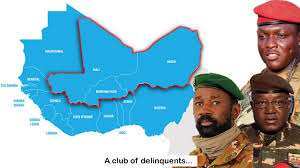
For many years, Ghana took comfort in its reputation as an island of stability in a turbulent sub-region. Coups rattled Mali. Insurgency spread across the Sahel. Burkina Faso oscillated between civilian rule and military intervention. Through it all, Ghana stood firm —democratic, orderly, and largely at peace. That comfort is now wearing thin. What happens in Burkina Faso and Mali no longer stays there. The fires burning in the Sahel are edging steadily southwards, and Ghana finds itself no longer a distant observer but a frontline neighbour. The Ghana-Burkina Faso-Mali triangle has become one of the most consequential geopolitical spaces in West Africa today. How Ghana manages this relationship, individually and collectively, may well determine whether the country’s northern stability endures or erodes.
Geography Is Destiny
Ghana does not share a border with Mali, but geography has a way of collapsing distance. Burkina Faso sits between them, acting as both buffer and bridge. When Burkina Faso is stable, Ghana breathes easier. When Burkina Faso burns, Ghana feels the heat. Northern Ghana shares ethnic ties, trade routes, and social networks with southern Burkina Faso. Markets in Bolgatanga, Wa, and Tamale are deeply connected to Ouagadougou and beyond. Livelihoods flow across borders daily — quietly, organically, and often informally. This interconnectedness, once a strength, has become a vulnerability in an age of insecurity.
Mali: From Anchor State to Epicenter of Instability
Mali was once considered a pillar of Sahelian stability. That illusion collapsed over a decade ago. Successive coups, the breakdown of state authority in the north, the rise of jihadist groups, and the withdrawal or reconfiguration of international forces have turned Mali into an epicenter of insecurity. What began as a localized rebellion metastasized into a regional crisis. Weapons, fighters, and ideology spilled outward, first into Burkina Faso, then towards coastal West Africa. The lesson is clear and uncomfortable. State collapse does not respect borders.
Burkina Faso: The Crumbling Buffer
For Ghana, Burkina Faso is the most immediate concern. Once relatively stable, Burkina Faso has suffered repeated coups and an alarming spread of insurgent violence. Large swathes of territory are contested. Civilian displacement has surged. Trust between citizens and the state has eroded. Burkina Faso’s north and east are now theatres of active conflict. Its southern regions, closer to Ghana are no longer immune. For decades, Burkina Faso functioned as a buffer between the Sahel’s volatility and Ghana’s calm. That buffer is weakening.
Ghana’s Northern Regions: Calm, But Not Immune
Northern Ghana remains peaceful, for now. But peace should not be confused with insulation. There are early warning signs. Arms trafficking routes, cross-border criminality, illegal mining, drug networks, and the quiet radicalization of marginalized youth. None of these are unique to Ghana; they are symptoms of regional instability finding local entry points. Extremism rarely announces itself with fanfare. It embeds slowly, through grievances, unemployment, and perceived injustice. Ghana’s strength lies in acting before crisis erupts, not after.
ECOWAS and the Limits of Collective Response
The crises in Mali and Burkina Faso have exposed the limitations of ECOWAS as a security guarantor. Sanctions, suspensions, and diplomatic isolation were intended to restore constitutional order. Instead, they hardened resistance, deepened mistrust, and pushed Mali and Burkina Faso towards alternative alliances. The formation of the Alliance of Sahel States and the withdrawal from ECOWAS marked a historic rupture. West Africa is now fragmented not just politically, but strategically. For Ghana, this presents a dilemma. How does one uphold democratic norms while maintaining pragmatic security cooperation with neighbours who have chosen a different path?
Ghana’s Diplomatic Tightrope
Ghana has traditionally favored quiet diplomacy over megaphone politics. This approach now faces its toughest test. Open confrontation with Mali and Burkina Faso could jeopardize intelligence sharing and border security. Silence, however, risks appearing complacent. Ghana must walk a careful line. Principled without being rigid, pragmatic without being permissive. This requires diplomatic maturity, and regional leadership.
Security Cooperation: From Reaction to Prevention
Security cooperation within the Ghana-Burkina Faso-Mali corridor has been largely reactive. Joint patrols intensify after incidents. Intelligence sharing spikes after attacks elsewhere. But prevention demands permanence, not episodic collaboration. Ghana, Burkina Faso, and Mali, regardless of political systems, share a common enemy: instability. Terrorist groups do not care who governs; they exploit weakness wherever it exists. Institutionalized intelligence fusion, coordinated border management, and shared early-warning systems are no longer optional luxuries. They are necessities.
Development as the Missing Pillar
Security responses alone will fail if development is neglected. Northern Ghana, southern Burkina Faso, and parts of Mali suffer from similar challenges. Poverty, climate stress, youth unemployment, and limited state presence. These conditions create fertile ground for recruitment and radicalization. A tri-national development corridor, focused on livelihoods, infrastructure, and education, could change the narrative. Roads, markets, irrigation, and skills training do more to defeat extremism than bullets ever will. Yet, development planning remains stubbornly national.
Climate Change: The Silent Accelerant
Climate change is the silent accelerant in this crisis. Shrinking arable land, erratic rainfall, and desertification are intensifying competition over resources. Farmers and herders clash. Migration increases. Grievances deepen. Mali and Burkina Faso are already experiencing severe climate stress. Northern Ghana is not far behind. Without coordinated climate adaptation strategies, insecurity will continue to find willing recruits.
What Ghana Must Do — Now
For Ghanaian readers, the implications are sobering but clear. First, Ghana must abandon any lingering illusion that stability can be preserved in isolation. Security is now regional by default. Second, Ghana must invest more deliberately in its northern regions, not as charity, but as national defense. Third, Ghana must champion a pragmatic regional security dialogue that includes Mali and Burkina Faso, regardless of ECOWAS tensions. Exclusion breeds unpredictability. Lastly, Ghana must strengthen community resilience — traditional authorities, religious leaders, and youth networks are the first line of defense.
A Choice between Complacency and Leadership
History offers Ghana a choice. It can remain reactive, hoping instability stops at the border. Or it can step into leadership, quietly but firmly, shaping a cooperative security and development framework for the northern corridor. The Sahel crisis is not Ghana’s making. But its consequences will not ask for permission.
My Thoughts: Stability Is Shared or It Is Lost
The Ghana-Burkina Faso-Mali triangle reveals a hard truth about West Africa today. No country is an island anymore. Borders may define sovereignty, but they do not contain insecurity. Fires ignored next door eventually reach one’s own roof. Ghana’s greatest strength, its stability will endure only if it is protected collectively. Engagement, not withdrawal; cooperation, not complacency; foresight, not fear. Africa’s integration is no longer an abstract ideal. In this corridor, it is a matter of survival.
FUSEINI ABDULAI BRAIMAH
+233208282575 / +233550558008
[email protected]

