


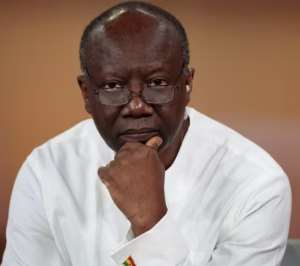
Ken Ofori-Atta, Ghana’s former Minister of Finance, has become one of the most controversial figures in recent Ghanaian public life not merely for his time managing the country’s economy, but for the dramatic showdown that has unfolded since he left office. What once looked like typical elite politics has escalated into a high-stakes confrontation involving state institutions, international legal pressure, and public expectations of accountability.
From Finance Minister to National Flashpoint
Ofori-Atta served as Finance Minister from 2017 to 2024 under President Nana Akufo-Addo, a period marked by rising public debt, economic strain, and fierce debate over fiscal choices. His policies, including controversial tax measures, polarized opinion long before the current legal battles began.
As economic pressures deepened, political opponents and even members of his own party had, at times, criticized his stewardship including a parliamentary motion of censure in 2022, although it ultimately failed.
While that was a political clash, the true transformation in his public role began after he left office.
The Legal Onslaught: OSP and Anti-Corruption Institutions Step In
In early 2025, Ghana’s Office of the Special Prosecutor (OSP) a body created to investigate and prosecute corruption dramatically escalated actions against Ofori-Atta. He was declared a wanted person and fugitive with multiple investigations tied to alleged misuse of public funds and irregularities involving major state contracts and projects.
The OSP’s case list included five major areas of probe from revenue contracts with Strategic Mobilization Ghana Limited (SML) to questions about disbursements for the controversial National Cathedral project and other high-value deals.
Officials presented their actions as a strong stance against corruption, positioning themselves as titans of accountability fighting entrenched power. This marked a serious escalation not just an audit or media critique, but a formal legal confrontation that has captured national attention.
Negotiations and Back-And-Forth with Justice
The battle between Ofori-Atta and the state has not been straightforward. After being declared a fugitive in February 2025 for failing to appear for questioning, Ofori-Atta’s lawyers communicated a definite date for his voluntary return, leading to his temporary removal from the wanted list.
However, his subsequent failure to appear as promised in June 2025 prompted the OSP to reinstate his wanted status and pursue an Interpol Red Notice and extradition efforts a rare move against a former national minister.
This back-and-forth has been seen by many as part of a broader clash between political elites seeking to defend themselves and institutions seeking to assert the rule of law. Critics argue that legal processes should be respected; supporters of the OSP position the saga as a test of Ghana’s anti-corruption resolve.
International Dimension and Extradition Moves
The conflict took on an international dimension with the issuance of a Red Notice by INTERPOL effectively asking police around the world to detain Ofori-Atta pending extradition after he failed to return to face questioning.
Ghana’s Attorney-General’s Department and other agencies have pursued legal steps to bring him back from abroad, while Ofori-Atta’s defenders have pointed to medical claims and legal protections as reasons for his absence. The legal fight rooted in domestic law but stretching across borders has come to symbolize something larger than any single case.
The Clash of Titans: Institutions, Politics, and Public Trust
The phrase “clash of the titans” captures the scale and intensity of this confrontation:
- State institutions, particularly the OSP, EOCO, and the Attorney-General’s office, are asserting their authority to hold powerful figures accountable.
- Ofori-Atta and his supporters frame the actions against him as politically motivated or procedurally flawed, pointing to negotiations over return dates and legal protections.
- Public opinion is sharply divided some see the pursuit as overdue accountability, others criticize perceived double standards or political targeting.
- This clash goes beyond one individual; it touches the core of Ghana’s struggles with corruption, executive power, rule of law, and institutional independence.
What’s Next?
As Ghana continues to grapple with this high-profile case, several questions remain central:
Will Ofori-Atta return to Ghana to face the charges, or will legal wrangling continue abroad?
Can the OSP and other anti-corruption bodies enforce accountability against elite figures without political interference?
How will public trust in justice and governance institutions be impacted?
The confrontation a literal and symbolic clash between powerful individuals and state authority is likely to be a defining political and legal saga in Ghana for years to come.
Mustapha Bature Sallama
Medical Science communicator.
Private Investigator and Criminal
Investigation and Intelligence Analysis,
International Conflict Management and Peace Building. Alumni Gandhi Global Academy United States Institute of Peace.
[email protected]
+233-555-275-880
