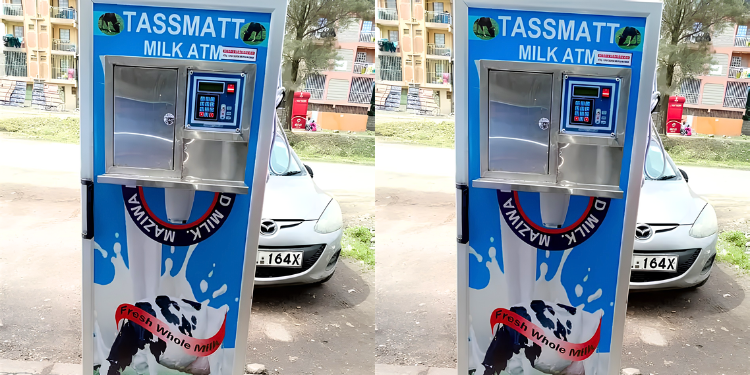
Milk ATMs have transformed milk retailing in Kenya by offering consumers a cheaper alternative to packaged milk and allowing entrepreneurs to enter the dairy value chain.
However, despite rapid growth in the sector, many operators struggle to remain profitable or shut down altogether.
Research by Wageningen University & Research, the Kenya Dairy Board, and Kenyan dairy sector experts identified several challenges affecting the performance and sustainability of milk ATM businesses.
Reasons Why Some Milk ATM Businesses Fail in Kenya
Choosing the Wrong Location
Location is one of the biggest factors determining the success of a milk ATM business.
Milk is a daily household product, meaning operators depend on a steady flow of repeat customers.
Businesses located in areas with low residential populations or weak foot traffic often struggle to generate enough sales to remain profitable.
According to a 2020 report by Wageningen University & Research, milk ATM businesses perform best in densely populated residential areas with high demand for milk.
Insufficient Daily Sales Volume
Milk ATM businesses rely on high sales volumes rather than high profit margins.
Researchers found that consumers are attracted to ATM milk largely because it is more affordable than packaged milk, making consistent daily sales critical to profitability.
Also Read: Is Fingerprint Banking Safe? Hidden Risks of Using Your Fingerprint on Mobile Banking Apps
Operators that fail to sell enough liters each day often struggle to cover expenses such as rent, electricity, labor, licensing, and maintenance costs.
Milk Quality and Food Safety Failures
Milk quality remains one of the biggest challenges facing the sector.
Laboratory testing shows that while ATM milk generally performs better than milk sold through informal channels on some quality indicators, some samples have shown bacterial contamination, antibiotic residues, and preservatives.
Poor quality milk can lead to customer complaints, regulatory action, and a loss of consumer confidence.
Consumer Distrust and Adulteration Concerns
Consumer confidence plays a major role in purchasing decisions.
The Kenya Dairy Board found that although many consumers consider ATM milk safer than raw milk sold through informal channels, concerns about adulteration and product quality remain a significant challenge.
Because customers cannot easily verify milk quality, trust becomes a key factor in where they buy milk.
Unreliable Milk Supply
Consistent milk supply is essential for any milk ATM business. Customers expect milk to be available whenever they visit an outlet, and repeated stock shortages can quickly drive them to competitors.
Research on Kenya’s milk ATM industry identifies reliable supply as an important factor in customer retention and business growth.
Supply interruptions can arise from seasonal production changes, transport challenges, and sourcing difficulties.
Refrigeration and Cold-Chain Failures
Milk is highly perishable and requires continuous refrigeration from the point of delivery to the point of sale.
Refrigeration system failures can affect milk quality, shorten shelf life, and increase spoilage.
Poor cold-chain management can result in financial losses and damage consumer confidence in the product.
Machine Maintenance and Breakdown Costs
Maintenance is one of the biggest operating expenses in the milk ATM business.
Research found that machine servicing accounts for a significant share of monthly operating costs for many operators.
Frequent breakdowns can interrupt sales, increase repair expenses, and reduce customer confidence, especially when outages recur.
Regulatory Non-Compliance
Milk vending is a regulated activity in Kenya.
Operators must comply with licensing, inspection, and food safety requirements governing the handling and sale of dairy products.
Also Read: The Hidden Cost of Switching Brokers: What Traders Underestimate When They Chase a “Better Offer”
Failure to comply can result in fines, suspension of operations, or closure of the business.
The regulatory burden is considerably higher than in many other small retail enterprises because milk directly affects public health.
Milk Spoilage and Wastage
Milk has a short shelf life, making inventory management critical.
Unsold milk can quickly become a loss, especially when operators overstock or forecast demand inaccurately.
Even small amounts of daily wastage can significantly reduce profitability over time.
Weak Inventory and Sales Controls
Profitability in the milk ATM business depends on accurately tracking milk purchased, milk sold, and stock balances.
Poor record-keeping can make it difficult to identify losses, wastage, or operational inefficiencies.
In a business that relies heavily on volume sales, weak inventory controls can steadily erode profits without the operator noticing.
Follow our WhatsApp Channel and X Account for real-time news updates.