


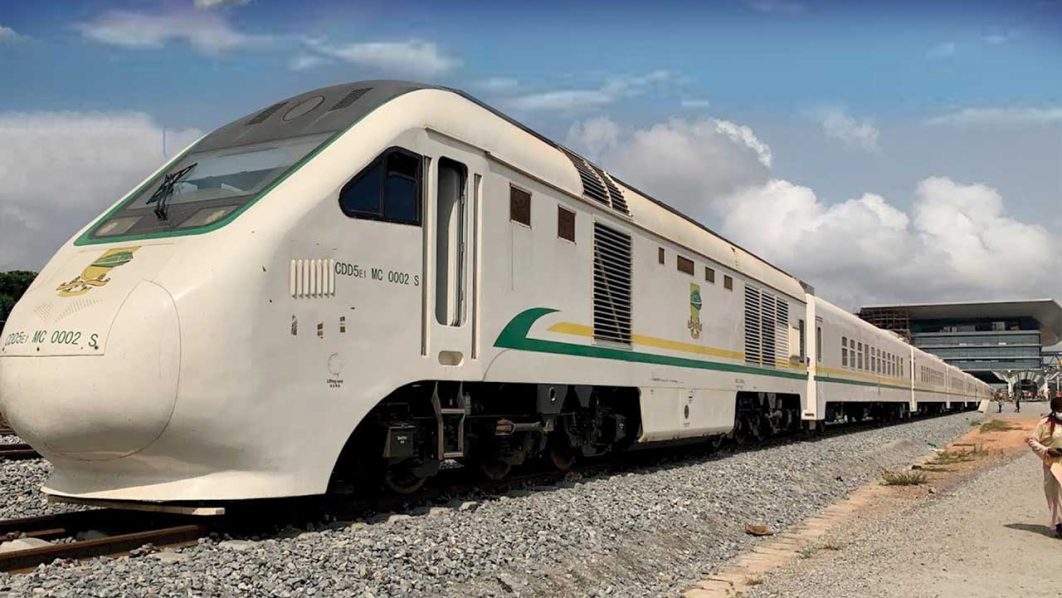
Nigeria’s railway sector has been the recipient of over N300 billion in federal allocations across the past two budget cycles, yet the tangible impact on commuters and freight logistics remains elusive. Despite ambitious plans to modernize the nation’s rail network—boosting passenger capacity, reducing highway congestion, and reviving economic corridors—operational realities paint a starkly different picture. Passengers, businesses, and policymakers alike are left questioning: Where is the promised transformation?
A Billion-Naira Boom on Paper, But Limited Progress on Tracks
The Nigerian government has consistently touted rail modernization as a cornerstone of economic development, with successive budgets allocating massive sums to infrastructure upgrades. The 2026 Appropriation Bill, for instance, earmarked N29.04 billion for critical rail projects, including:
– Completion of the Abuja–Kaduna line (a key economic corridor)
– Upgrades to the Lagos–Ibadan corridor (Nigeria’s busiest rail route)
– Rehabilitation of the Itakpe–Ajaokuta rail link (vital for industrial and energy logistics)
– Construction of twelve new station buildings
– Track-laying at Agbor (a strategic junction in the southern rail network)
– New rolling stock and signaling systems, including an acoustic surveillance system for the Abuja–Kaduna route
Yet, despite these allocations, passenger complaints persist, and freight utilization remains underwhelming.
The Lagos–Ibadan Corridor: A Case Study in Disconnect
As Nigeria’s most critical rail artery, the Lagos–Ibadan corridor was supposed to serve as a showcase of rail modernization. Commissioned in 2021, the service was promised sixteen daily trips upon full completion. However, reality has fallen far short:
– Operational frequency hovers around four to six trips per day, far below the advertised schedule.
– Reliability issues plague the service, with frequent delays and unexpected halts due to technical failures and external disruptions.
– A 2023 incident saw the Obafemi Awolowo Train Station (Moniya) temporarily shut down after the Ibadan Electricity Distribution Company (IBEDC) disconnected power over unpaid bills, stranding passengers.
– Vandalism and security concerns have also emerged, with the Nigerian Railway Corporation (NRC) confirming that railway components worth N200 million were stolen in a recent incident, prompting arrests.
Despite these challenges, the NRC has yet to provide a clear roadmap for resolving these issues, leaving passengers and businesses in limbo.
Freight: The Silent Opportunity Cost
While passenger complaints dominate public discourse, the real economic potential of Nigeria’s railways lies in freight. The NRC has repeatedly emphasized the need to shift containerized cargo from roads to rails to:
– Reduce port congestion in Lagos and other major hubs
– Lower haulage costs for businesses
– Decrease road accidents caused by overloaded trucks
However, freight volumes remain depressingly low. Unlike in countries like Kenya or South Africa, where rail freight accounts for a significant portion of cargo movement, Nigeria’s standard-gauge lines carry a fraction of what road transporters handle. No official breakdown of freight revenue has been published, raising questions about whether the allocated billions are being effectively utilized for cargo logistics.
Funding Without Accountability: Where Does the Money Go?
The N300 billion+ rail outlay includes:
– N102.3 billion for the Lagos Green Line (a metro project linking Marina to Lekki Free Zone, jointly funded with Lagos State and China Harbour Engineering)
– N146.14 billion allocated in 2025 alone for rail infrastructure, on top of N256.73 billion in the Ministry of Transport’s 2025 budget (with N223.8 billion designated for capital expenditure)
– N68.5 billion for transport consultancy services on high-priority corridors
Yet, critical questions remain unanswered:
– How much of the allocated funds has actually been disbursed?
– Are contractors delivering on time and within budget?
– Why has the promised electronic ticketing system—expected to generate N22 billion in revenue—been repeatedly delayed?
A Freedom of Information request to the NRC for quarterly capital expenditure reports, contractor payment schedules, and project completion certificates would provide transparency into whether the shortfalls stem from funding gaps, poor disbursement, or contractor inefficiencies.
State-Led Rail Projects: A Double-Edged Sword
Nigeria’s recent shift of rail to the concurrent legislative list allows states to build and operate their own rail systems, potentially accelerating development in key urban centers. Lagos State has already secured a permanent operating license, while Kano State has announced plans for a N1 trillion metropolitan rail system.
However, this decentralization raises concerns:
– Will state-led projects compete with or complement federal rail efforts?
– Could political fragmentation lead to fragmented rail networks, rather than a unified national system?
– Will federal rail corridors remain underfunded as states prioritize their own projects?
The NRC’s Vision: Transformation or Empty Promises?
NRC Managing Director Dr. Kayode Opeifa has framed the corporation’s strategy as transformational, citing:
– A new generation rail system under a forthcoming national masterplan
– New locomotive pilots as central to sector modernization
Yet, without a clear public accounting of capital releases, the N300 billion+ rail investment remains a mystery. Passengers continue to endure unreliable services, freight remains underutilized, and critical infrastructure projects stall.
Until full transparency is achieved, the billions spent on Nigeria’s railways will remain a number with no visible train attached**—leaving commuters, businesses, and policymakers waiting for answers.
