


Operation HADIN KAI (OPHK), Nigeria’s military offensive against insurgent groups, has intensified its counterterrorism efforts with a series of high-impact operations in Borno State. Recent missions have led to the arrest of suspected ISWAP collaborators, the voluntary surrender of a senior terrorist’s family, and the recovery of critical logistics, including vehicles, cash, and illicit drugs. These developments underscore the Nigerian Army’s commitment to dismantling terrorist infrastructure while offering incentives for defectors to abandon extremism.
Intelligence-Led Raids Disrupt ISWAP’s Financial Networks
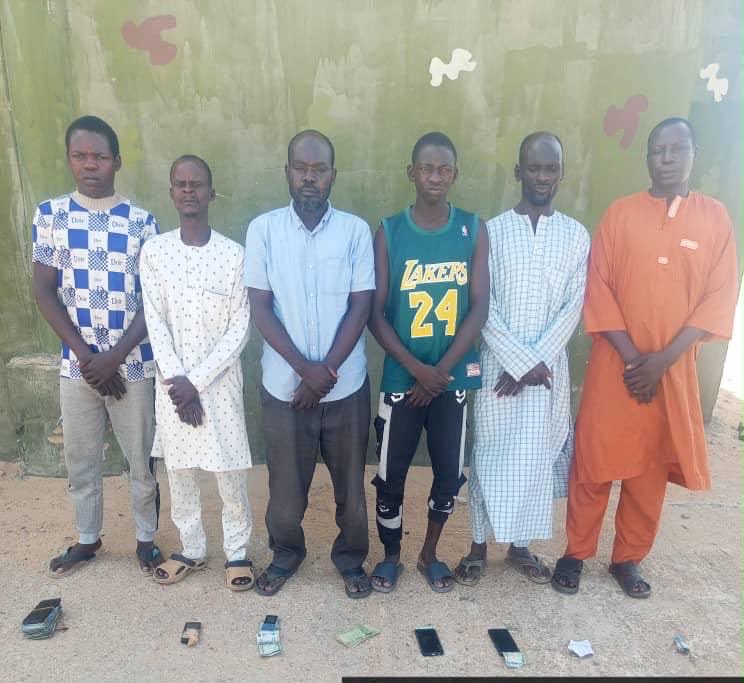
On July 27, 2026, troops from 5 Brigade conducted a targeted operation in Damasak, Borno State, resulting in the arrest of six individuals allegedly involved in funding ISWAP’s operations. Preliminary investigations indicate that the suspects were engaged in procuring and selling cattle—a known revenue stream for the terrorist group—across markets in Gubio, Damasak, and Ajuwango.
During the raid, military personnel recovered:
– One Volkswagen Golf vehicle (presumably used for logistical support)
– Vehicle keys (suggesting additional transport assets)
– Four mobile phones (likely used for coordination and communication)
– Cow meat (indicating direct involvement in the illicit trade)
– ₦317,950.00 in cash (a significant sum likely intended for ISWAP’s operational expenses)
The suspects are currently held in military custody, where further interrogations are underway to establish their roles within the terrorist network.
Senior ISWAP Commander’s Family Surrenders After Husband’s Defection
In a separate but equally significant development, on July 29, 2026, the wife of an ISWAP Chief Finance Officer and her 11-year-old son voluntarily surrendered to troops of 3 Battalion in Kusuma Village. The commander, who had previously served as ISWAP’s financial operative in Jubillaram, had escaped from the enclave on July 25, 2026, following his surrender to authorities.
According to military sources, the husband had explicitly instructed his family to turn themselves in after securing his own defection. Both individuals have since been screened and are undergoing further profiling in compliance with military protocols.
This case highlights the Nigerian Army’s strategic approach of targeting financial networks while simultaneously offering protection and rehabilitation pathways for defectors and their families.
Clearance Operation Yields Massive Drug Haul
In another operation, troops from 145 Battalion conducted a preemptive clearance at Turoh, where ISWAP operatives were detected. Upon the military’s advance, the terrorists abandoned their positions in disarray, fleeing the area.
During the exploitation phase, soldiers recovered:
– Two motorcycles (likely used for rapid movement and reconnaissance)
– Huge quantities of illicit hard drugs (a significant blow to ISWAP’s funding mechanisms, as drug trafficking has been a key revenue source for the group)
The seizure underscores the diverse threats posed by ISWAP, which operates not only as a militant group but also as a transnational criminal syndicate involved in smuggling and narcotics trade.
Military’s Call for Public Cooperation Continues
Operation HADIN KAI has reiterated its commitment to dismantling terrorist logistics and financial networks through intelligence-driven and offensive operations. The military has also encouraged willing ISWAP members and their families to surrender, emphasizing that defectors will be protected and rehabilitated rather than persecuted.
In a public appeal, the Nigerian Army has urged civilians to provide credible and timely information that could aid ongoing counterterrorism efforts. Such cooperation is deemed critical in restoring lasting peace, security, and stability in the affected regions of Borno State and beyond.
Broader Implications of OPHK’s Success
The recent operations reflect the Nigerian Army’s evolving counterterrorism strategy, which now includes:
– Disrupting financial flows by targeting revenue-generating activities (e.g., cattle trade, drug trafficking).
– Exploiting defections to weaken ISWAP’s leadership and operational cohesion.
– Leveraging public intelligence to stay ahead of terrorist movements.
As OPHK continues its relentless pressure on ISWAP, the military’s ability to neutralize key assets, recover critical evidence, and encourage defections signals a shift in the balance of power in the region. The success of these operations also serves as a deterrent to potential recruits, reinforcing the message that extremism is unsustainable under Nigeria’s military leadership.
The Nigerian Army remains unwavering in its resolve to eliminate terrorism and restore normalcy to the affected communities. The recent developments mark significant progress, but the fight against insurgency will require continued vigilance, public cooperation, and sustained military action.
