


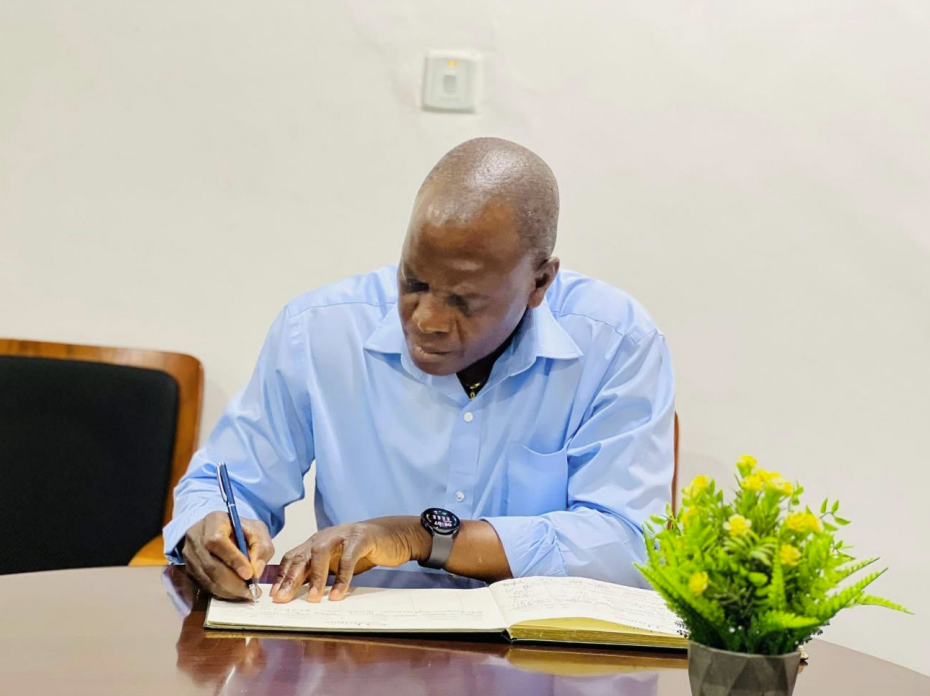
Nestled within the rugged landscapes of Ghana’s Upper East Region, artisanal and small-scale mining (ASM) remains a cornerstone of economic livelihoods, providing employment and income for thousands of families. However, the sector’s rapid expansion has also brought pressing challenges—environmental degradation, social inequality, and unethical resource extraction practices—that threaten both the present and future of these communities. To address these complexities, a groundbreaking research initiative, led by McMaster University’s Dr. Baniyelme Zoogah, is collaborating with local stakeholders to foster ethical leadership, sustainable mining, and long-term community resilience.
A Research-Driven Approach to Ethical Mining
Funded by the Social Sciences and Humanities Research Council (SSHRC) Insight Development Grant, the project—titled Educating for Ethical Extraction: Building Knowledge, Values, and Leadership for Responsible Mining in Ghana’s Upper East Region—aims to redefine how mining communities engage with resource governance. Unlike traditional top-down approaches, this initiative prioritizes community-led solutions, ensuring that decision-making reflects the unique cultural, economic, and environmental realities of Ghanaian mining zones.
Dr. Zoogah, a Professor of Management at McMaster’s DeGroote School of Business, emphasizes that responsible development is not just about economic growth but about empowering communities to shape their own future.
“This project is about helping local voices build the collaborative frameworks they need to make decisions that are beneficial—not just for today, but for generations to come.”
Ethics-in-Action Leadership Workshops: A Community-Centric Model
At the core of the initiative are Ethics-in-Action Leadership Workshops, designed to bring together miners, educators, women leaders, youth, and other stakeholders in a participatory learning environment. These workshops will explore critical themes such as:
- Ethical leadership – Developing principles that balance profit with social and environmental responsibility.
- Environmental stewardship – Implementing sustainable mining practices to protect land, water, and biodiversity.
- Civic responsibility – Strengthening community governance to ensure fair resource distribution.
- Inclusive development – Addressing gender disparities and youth empowerment in mining-dependent economies.
A co-created approach ensures that workshop content is grounded in local knowledge, making the learning process relevant, actionable, and culturally sensitive. By integrating real-world experiences of miners and community leaders, the initiative seeks to bridge the gap between academic research and practical application.
Strategic Partnerships for Lasting Impact
The project leverages McMaster’s long-standing collaboration with the University for Development Studies (UDS) in Ghana, along with partnerships with three key local organizations:
- Savannah Research Advocacy Network (SRAN) – A research-focused NGO that advocates for sustainable development in northern Ghana.
- Talensi Mining Initiative (TMI) – A community-driven organization working to improve mining practices in the Talensi District.
- Media Without Borders – A communications platform that amplifies grassroots voices and promotes ethical journalism in mining-affected areas.
Over the next two years, the research team will:
– Develop and pilot the Ethics-in-Action workshops in select mining communities.
– Assess their effectiveness through feedback from participants and measurable outcomes.
– Share findings with policymakers, educators, and international development organizations to scale best practices.
Mentorship and Capacity Building for Future Leaders
Beyond academic research, the project is committed to nurturing the next generation of global researchers. It will provide:
– Mentorship for a Canadian doctoral student, ensuring cross-cultural exchange and collaborative problem-solving.
– Training for a Ghanaian research coordinator, strengthening local research capacity and institutional knowledge.
By combining academic rigor with community engagement, the initiative aims to produce practical tools, policy recommendations, and ethical frameworks that can be adapted in mining regions worldwide.
A Model for Global Collaboration in Sustainable Development
This research initiative is more than an academic study—it represents a shift toward participatory, ethical, and sustainable development. Rather than imposing external solutions, the project works with communities, ensuring that leadership and decision-making remain locally driven.
Dr. Zoogah’s vision aligns with broader global efforts to promote responsible resource governance, demonstrating how university-community partnerships can drive meaningful, long-term change. As mining continues to shape Ghana’s economy, this initiative offers a blueprint for balancing economic needs with environmental and social responsibility—proving that true development is built on collaboration, not extraction alone.
For communities in the Upper East Region and beyond, this research is not just about mining gold—it’s about mining knowledge, ethics, and a sustainable future.
