


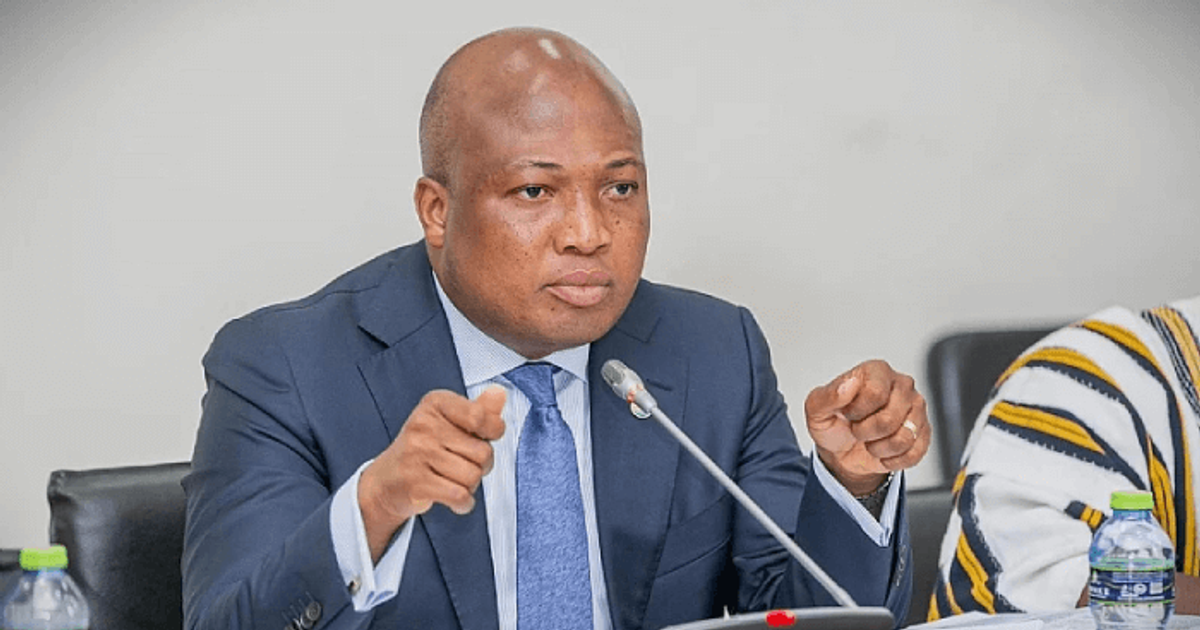
Ghana has taken a decisive step toward securing legal and diplomatic reparations from South Africa following a wave of xenophobic violence that has displaced hundreds of its citizens and severely strained bilateral relations. In a bold move, the Ghanaian government is systematically documenting the losses suffered by its nationals—ranging from destroyed businesses to abandoned investments—paving the way for formal compensation claims. This initiative positions Ghana as the second African nation in recent weeks to demand accountability from Pretoria, following Nigeria’s similar push earlier this month.
A Systematic Approach to Claims Documentation
During a high-profile media briefing, Ghana’s Minister for Foreign Affairs, Samuel Okudzeto Ablakwa, outlined the government’s structured response to the crisis. The Ministry of Foreign Affairs is establishing a comprehensive register of claims, a critical step in compiling evidence of financial and property losses incurred by Ghanaians during the violence. This database will serve as the foundation for both legal proceedings and diplomatic negotiations aimed at securing restitution for affected citizens.
Ablakwa emphasized the severity of the situation, noting that many returnees were not only stripped of their livelihoods but also left without recourse for recovery. “The Government is establishing a register of claims that would enable the Ministry to pursue legal and diplomatic processes for compensation on behalf of affected Ghanaians,” he stated. “This includes businesses, investments, and other property destroyed during the xenophobic attacks.”
The move reflects a proactive and methodical approach, ensuring that any future claims are backed by verifiable documentation—a requirement South Africa has previously cited as a precondition for addressing similar requests from Nigeria.
Parallels with Nigeria’s Compensation Demand
Ghana’s strategy mirrors Nigeria’s earlier efforts, which gained global attention when President Bola Tinubu announced the country’s intention to document abandoned businesses, homes, and assets left behind by Nigerian citizens fleeing South Africa. The Nigerian government argued that victims—many of whom were forced into poverty overnight—deserved restitution for lost livelihoods and called for the prosecution of perpetrators.
However, South Africa’s response to Nigeria’s request was reserved and conditional. Pretoria rejected the idea of blanket compensation, insisting that any claims must adhere to South Africa’s legal framework and be substantiated by detailed evidence. The South African government reiterated its stance that the violence was not state-sanctioned but rather the result of criminal acts by extremist groups. While acknowledging the severity of the attacks, authorities pledged to investigate the incidents thoroughly and bring those responsible to justice.
Ghana’s decision to follow a similar path—systematically recording losses before formalizing claims—suggests a strategic escalation in its diplomatic approach. Unlike Nigeria, which has framed its demand as a collective economic loss, Ghana is positioning its case as both a humanitarian and legal matter, leveraging international platforms to amplify its cause.
Beyond Evacuation: Ghana’s Multifaceted Reintegration Strategy
While legal and diplomatic efforts gain momentum, Ghana’s government is also implementing a comprehensive reintegration program for affected citizens. The crisis has already forced thousands of Ghanaians to abandon their lives in South Africa, with 926 nationals repatriated in the first phase of Ghana’s evacuation program using three chartered flights. A second phase, launched on July 26, aims to bring back an additional 1,000 citizens, with 132 already returned and more scheduled for departure.
To ease the transition, the government has introduced a multi-tiered support package, including:
– A GHS5,000 (approximately $600 USD) reintegration grant per returnee.
– Transport allowances to cover travel costs back to Ghana.
– Free registration for the National Health Insurance Scheme (NHIS) to ensure access to healthcare.
– Employment support, with 200 job opportunities already secured through partnerships with private-sector companies.
A multi-agency task force, comprising representatives from labor, education, and economic development ministries, is conducting skills assessments to match returnees with suitable employment opportunities. This holistic approach aims to mitigate the economic fallout of the violence while fostering long-term stability for affected families.
The Underlying Crisis: Systemic Xenophobia in South Africa
The recent violence is not an isolated incident but part of a persistent pattern of anti-foreigner hostility in South Africa, particularly in cities like Durban. Over the past year, vigilante groups such as March and March and Operation Dudula have gained notoriety for intimidating African migrants, conducting suspicious identity checks, and targeting foreign-owned businesses. These groups often operate with impunity, fueled by localized grievances over unemployment and resource scarcity.
The attacks have claimed at least two Ghanaian lives, with reports suggesting that Nigerian citizens have also suffered fatalities. Ghana’s government has repeatedly condemned the violence, demanding transparent investigations and the prosecution of perpetrators. However, the slow pace of justice has led Accra to seek regional intervention.
In a strategic move, Ghana has petitioned the African Union (AU) to place xenophobic attacks in South Africa on its agenda for the upcoming summit. The country has also secured backing from the Economic Community of West African States (ECOWAS), arguing that recurring violence against African migrants undermines continental integration and the African Continental Free Trade Area (AfCFTA).
By framing the issue as a regional concern, Ghana is not only pressuring South Africa to take action but also aligning its efforts with broader African solidarity. This diplomatic coalition could potentially increase international pressure on Pretoria to address the crisis more decisively.
South Africa’s Response: Diplomacy vs. Denial
South Africa’s government has publicly condemned the violence, insisting that it does not condone xenophobia and that the attacks were criminal acts, not government policy. However, critics argue that the slow response and lack of accountability for past incidents have emboldened extremist groups.
In recent weeks, Pretoria has attempted quiet diplomacy to repair relations with Ghana, particularly after President Cyril Ramaphosa’s delayed visit to Accra. While South African officials have offered condolences and pledged support for investigations, many African nations—including Ghana and Nigeria—remain skeptical of the government’s commitment to long-term solutions.
The failure to prosecute past perpetrators and the persistent rise of vigilante groups suggest that structural issues—such as unemployment, inequality, and scapegoating of migrants—remain unaddressed. Until these root causes are tackled, the cycle of violence is likely to continue unabated.
The Way Forward: Justice, Accountability, and Regional Unity
Ghana’s decision to demand legal compensation is not merely about financial restitution but also about holding South Africa accountable for its failure to protect African migrants. By documenting losses systematically, the government is setting a precedent for future claims and signaling that impunity will not be tolerated.
For South Africa, the path forward requires more than empty condemnations. The government must:
1. Accelerate investigations into recent attacks and prosecute known perpetrators.
2. Disband or dismantle vigilante groups like March and March and Operation Dudula.
3. Address systemic unemployment and inequality to reduce the scapegoating of migrants.
4. Engage in meaningful dialogue with African nations to prevent future crises.
Meanwhile, Ghana’s proactive stance—combined with regional solidarity—could force South Africa to confront its xenophobic undercurrents. If successful, this could set a precedent for other African nations facing similar challenges, ultimately strengthening continental unity in the face of shared adversity.
As the situation evolves, one thing is clear: Ghana is not alone in its demand for justice, and the African continent will continue to hold South Africa accountable until real change is achieved.
(A visual representation of Ghanaian citizens being evacuated from South Africa, highlighting the scale of the repatriation efforts.)
