


At about 10:00 a.m. on Oshodi Road, beside Bus Terminal 1, Mr Israel Ekom carefully arranged sachets of water, soft drinks and groundnuts on a wooden plank by the roadside.
Barely 10 minutes later, a young man wearing a reflective jacket approached him. Without much conversation, he collected N100 from Ekom and handed him a receipt.
“Ticket,” he said. “If you don’t pay, I will carry your goods.”
For Ekom, 32, and thousands of other street traders in Oshodi-Isolo, that is how the business day often begins — not with the first customer, but with a payment to people they say they do not know or cannot properly identify.
Across Oshodi and the Isolo Market axis, street trading has become a survival economy for residents struggling with inflation, unemployment and rising living costs. From sachet water, bread and soft drinks to phone accessories and fabrics, traders have turned pavements, walkways and roadsides into makeshift shops.
But behind the daily struggle to make a living, traders say they face another burden: persistent and sometimes multiple collections by individuals demanding money from them.
Ekom said he pays N100 every morning to one group that issues receipts marked “Oshodi-Isolo Market Revenue”. By evening, however, another group often arrives.
“They don’t give receipts. They just say, ‘Fumi lowo mi’ — give me my money,” he said.
According to him, refusing to pay can have consequences. “If I refuse either of them, they seize my goods,” he stated.
For Mr Paul Solomon, 24, who sells phone accessories from a wheelbarrow on Araromi Street, the payments can occur several times in a single day.
“I pay N100 three times a day — morning, afternoon and evening. That is N300 every day,” he said.
His experience with the Lagos State Environmental Sanitation Corps, popularly known as Kick Against Indiscipline (KAI), has also left him wary.
“Some time ago, KAI arrested me and I paid N25,000 bail to come out,” he said.
A bread seller, Mrs Ramota Alade, who operates on Ariyibi Street, said she pays as much as N500 daily.
The traders said their biggest difficulty is identifying who is authorised to collect money and who is simply exploiting their vulnerability.
“Some wear vests, some don’t. Some give receipts, while others don’t. We don’t even know who they are. They have no identification cards. All they say is, ‘Fumi lowo mi’,” one of the traders said.
For many of the traders, the roadside is not their preferred place of business. They say they simply cannot afford the cost of renting a formal shop.
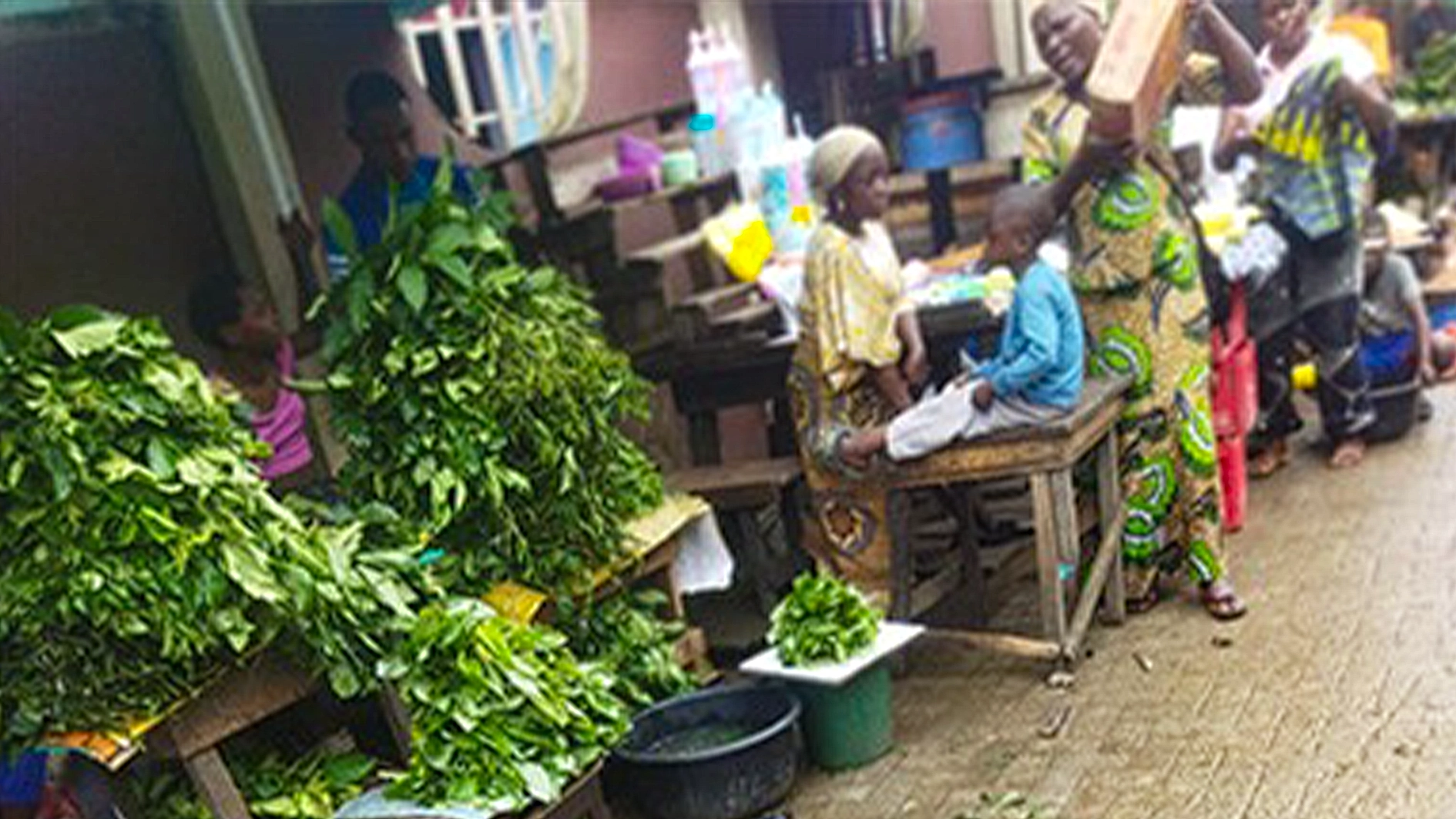
Solomon said securing a shop in the area cost more than small traders can afford.
“The least a shop can cost is about N1.3 million for two years. That includes agent fees, commission and rent. Yearly rent alone can be about N500,000,” he said.
With the rising cost of food, transportation, accommodation and education, he said, whatever profit they make from roadside trading is quickly swallowed by household expenses.
The situation has also pushed people with formal education into street trading. Some traders interviewed said they hold Ordinary National Diploma (OND), Higher National Diploma (HND) and university degrees but were forced into petty trading after failing to secure stable employment.
For them, the roadside is less a choice than a means of survival.
The financial burden does not end with the traders. Residents say the various payments demanded from sellers are eventually reflected in the prices of goods.
A resident, Mr Ramon Malik, said goods sold on the roadside are often considerably more expensive than those sold inside the market.
“A pair of shoes that sells for N6,000 inside the market can be N10,000 on Oshodi Road,” he said. “They have added the ticket money to the price of the goods.”
Mrs Success Emmanuel, who lives on Araromi Street said she has noticed a similar difference in the price of fabrics.
“A yard of cloth that costs N800 in the shop can sell for N1,500 from street traders,” she said.
Miss Deborah Nwachukwu, however, noted that some items maintain almost the same prices inside and outside the market.
“Drinks, biscuits, pepper and tomatoes are usually sold at almost the same price because they are sold everywhere. Traders cannot add too much to the price,” she said.
The proliferation of roadside trading has also created problems for pedestrians and motorists.
Residents said traders have gradually taken over parts of walkways and roads, forcing pedestrians to share already congested spaces with vehicles and other road users.
A journey that should take five minutes on foot can now take 20 minutes, some residents complained.
Under Lagos State environmental laws, however, hawking and street trading are prohibited on major roads, walkways, pedestrian bridges and around public buildings.
Section 10(1) provides penalties for offenders, ranging from a N90,000 fine or six months’ imprisonment with hard labour for a first offence, to N135,000 or nine months for a second offence and N180,000 or one year for a third offence.
The law also provides for the disposal of confiscated goods. Perishable items are to be donated to motherless babies’ homes, while non-perishable goods are to be auctioned in December.
But the enforcement regime has left traders caught between the law and those they accuse of exploiting it.
Speaking with The Guardian, the Secretary to Oshodi-Isolo Local Council, Leke Banjoko, said the council was not aware of the alleged extortion because it had not received any formal complaint from commuters, motorists or market leaders.
“Anyone being extorted should write to the council. We will report it to the Ministry of Environment,” he said.
Banjoko also advised traders to first channel their complaints through the market leadership.
“Issues should first go to Baba Loja and Iya Loja before coming to us,” he said.
The Public Relations Officer of LAGESC, Mr Lukman Ajayi, also denied that KAI officials were authorised to collect money from street traders.
He said the state government remained firmly opposed to street trading and that the responsibility of KAI personnel was enforcement, not the collection of unofficial payments.
“No KAI officer will demand money or fines. Our job is to arrest. If anyone has proof of extortion — receipt, video or the name of the personnel — bring it to our office. That personnel will be dealt with,” Ajayi said.
He added that the government had no plan to relocate street traders because street trading was never an approved government programme.
“The only safe place to trade is inside the market,” he said.
For traders such as Ekom, however, the reality remains more complicated. Every morning, he returns to the roadside with his wooden plank, hoping to sell enough water, drinks and groundnuts to support himself.
But before the first customer arrives, he must prepare for another possibility — someone approaching to demand a “ticket.”
Caught between an environmental law that prohibits street trading, the high cost of formal shops and alleged unofficial collections, Ekom and other traders face a daily dilemma: leave the roadside and risk losing their only source of income, or stay and continue paying what they describe as the price of survival.
