


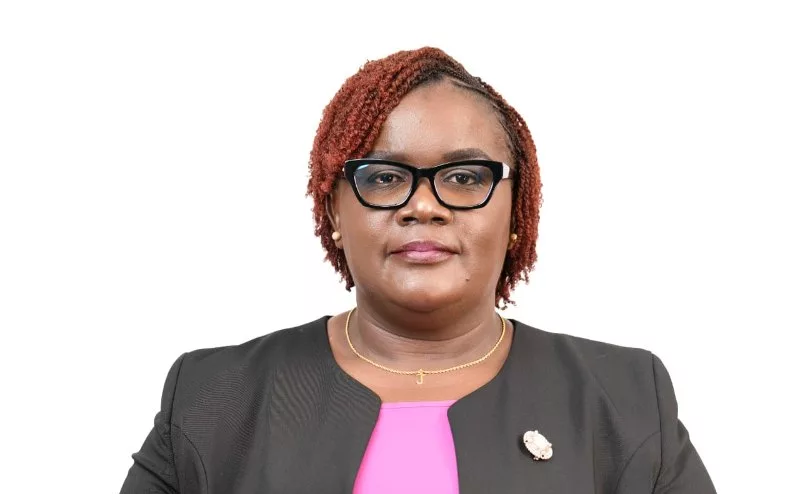
 Hon. Jacqueline Ingutiah, MBS, an advocate of the High Court of Kenya and a member of the Judicial Service Commission representing the Law Society of Kenya.
As Kenya marks its second official Katiba Day, the Constitution of
2010 is worth celebrating not as a finished monument, but as a living promise
that each generation must choose to keep.
On
27 August 2010, thousands of Kenyans gathered at Uhuru Park to witness the
culmination of a struggle that had occupied generations: the promulgation of
the Constitution of Kenya, 2010.
It was a moment of extraordinary hope. Last
year, 27 August was formally proclaimed Katiba Day. This year, we mark its second official
commemoration and sixteen years since the Constitution was promulgated.
We often speak of the Constitution as a document, yet its deeper significance lies in the promise it makes about the relationship between the people and public power.
That promise begins with perhaps its
most consequential declaration: “All sovereign power belongs to the people of Kenya.”
Those words establish the foundation upon which the entire constitutional order
rests.
Every institution created, every public office established and every
authority exercised by the State draws its legitimacy from the people and must
ultimately be exercised in their interest. The Constitution transforms
public office from a source of privilege into an obligation of service and
accountability.
Article 10
placed human dignity, equity, social justice, inclusiveness, equality, human
rights, integrity, transparency and accountability at the heart of governance.
The Constitution also deliberately created commissions and independent offices to
ensure that these values would not remain aspirations on paper, but would find
expression in the everyday exercise of State power. These institutions were
given an important assignment, to place checks around power.
They protect
constitutional values, scrutinise the exercise of public authority, promote
integrity and accountability, safeguard democratic institutions and provide
avenues through which citizens can challenge excesses and abuse.
At their best, their independence allows them to speak when others may be constrained, scrutinise where power may resist scrutiny and demand accountability where institutional interests might prefer silence.
Constitutional commissions and independent offices should never be viewed as inconvenient appendages to executive, judiciary or parliament. Their capacity to question, investigate, advise, challenge and sometimes disagree with those exercising power is not evidence of institutional dysfunction, it is part of the constitutional design.
Sixteen years later, however, we must ask the harder question, has that design worked? The success of constitutional commissions cannot be measured simply by the fact that they exist or by the number of years they have operated.
The more meaningful test is whether their work has helped make public power more accountable, more transparent and more responsive to the citizen. There has undoubtedly been progress.
Sixteen years into the constitutional order, commissions and independent offices have matured into important pillars of Kenya’s accountability architecture. They have helped give institutional meaning to constitutional values and provided important checks on the exercise of public authority.
But
we should also acknowledge the strains, persistent underfunding, limitations in
institutional capacity and periodic attempts to encroach upon institutional
independence can weaken the very bodies that the Constitution created to check
excess.
An accountability institution without adequate resources or sufficient
institutional space may retain independence in law while struggling to exercise
it fully in practice.
The question before us, therefore, is no longer simply whether these institutions have grown. It is whether they have been given independence, resources and institutional space necessary to do the difficult work for which the Constitution created them.
The true test of constitutional checks is not when institutions agree, but when those entrusted with oversight have the courage and independence to question power, demand accountability and insist on constitutional limits.
The Constitution is not a finished monument. It is a living charter, and each generation must choose it again. It would therefore be a disservice to Katiba Day to pretend that the work is done. Sixteen years on, the promise of 2010 has, in some respects, been realised; in others, it is still unfolding; and in yet others, it remains contested.
However, that should not be a reason for cynicism. Constitutionalism was never going to be completed on 27 August 2010. Promulgation gave us the framework. Living by it is the work of generations.
For those of us in the legal profession, Katiba Day should carry an additional meaning. The late Senior Counsel Pheroze Nowrojee described the Kenyan advocate as, in an important sense, a constitutional office-holder. There is something profound in that description.
Our oath of admission binds us to the Constitution and to the administration of justice. We are therefore not simply practitioners working within a constitutional system. We are among those entrusted with keeping it alive. The privilege of practising law carries with it a corresponding responsibility to defend the constitutional space within which law and justice are possible.
The Constitution does not promise us a perfect State, but it gives us values, institutions and mechanisms through which we can continuously insist upon a better one. Each generation must resist the temptation to treat constitutional safeguards as important only when they serve its immediate interests.
The framers of 2010 did not hand us a monument to admire. They entrusted us with a promise to keep. That is why Katiba Day should be more than a commemoration. It should be an audit of our constitutional fidelity.
Sixteen years later, it asks each of us as a citizen, public officer, state officer or public institution, a simple but demanding question
“Have we kept faith with the Constitution we undertook to obey, preserve, protect and implement?’
Happy Katiba Day.
Hon. Jacqueline Ingutiah, MBS, is an advocate of the
High Court of Kenya and a member of the Judicial Service Commission
representing the Law Society of Kenya. She writes here in her personal
capacity.
