A recent opinion piece by Prof. Michael Kpessa-Whyte, Director-General of the State Interests and Governance Authority (SIGA), has sparked an important conversation about the nature of public service and leadership in Ghana.
In his article, “The Real Honour is Service, Not Paid Recognition,” he recounted declining an invitation to receive a “Best CEO of the Year” award after discovering that participation required either a sponsorship package of GH¢50,000 or the purchase of a dinner table costing GH¢25,000.
More importantly, he used the experience to caution public officials against diverting attention and resources to self-glorifying ceremonies when citizens are demanding improved governance, better public services, and greater accountability.
Kpessa-Whyte’s position on this issue is crystal-clear but profound: public office is a trust, not a platform for self-aggrandizement, and the honest, true measure of leadership lies not in plaques, titles, and public applause, but in the quality of services delivered, institutions strengthened, and lives improved.
While Kpessa-Whyte’s opinion is rooted in contemporary Ghanaian realities, it resonates strongly with two influential social thinkers: the sociologist Max Weber and the contemporary philosopher Alain de Botton, whose ideas can serve as critical lenses for understanding both the ethical obligations of public officials and the socio-psychological temptations that often accompany political power.
Politics as a Calling, Not a Career of Prestige
Max Weber in his famous lecture Politics as a Vocation (1919), made a critical distinction between those who live “for politics” and those who live “off politics.” To Weber, politics must be a calling, and a passion which he referred to a vocation pursued out of commitment to a cause greater than oneself.
The primary objective of the politician should be grounded in an altruistic willingness to serve society and advance the people’s collective goals.
By contrast, others may pursue politics primarily for personal gain, prestige, influence, or status. Weber recognized that power naturally generates honor and recognition. While political actors may often enjoy social prestige because they occupy these positions of authority, Weber warned that they should guard against one of the greatest menaces in political life: vanity.
This cautioning is particularly relevant for political actors in Ghana’s democratic dispensation today. Especially in the age of social media, where political success and performance are assessed through media exposure, public ceremonies, and symbolic achievements rather than concrete policy outcomes.
We see this media script play out all the time, where, for instance, instead of pursuing policy initiatives that can solve long-standing structural problems like the ongoing flooding in Accra and developing pragmatic policies and plans to mitigate the unnecessary accidents and deaths on our roads, we see our ministers rent cameras and bloggers in “Rambo-style” fashion, berating citizens just to create illusions of performance.
This makes Kpessa-Whyte’s critique timely and critical. When he posits that Ghanaian ministers and public appointees should focus on service delivery rather than collecting awards, he is essentially echoing Weber’s ideal of politics as a vocation: one that is centered on the idea of political responsibility.
Our public officials travel a lot in the course of their public life, and I am very sure they delight in the comfortabilities they enjoy in the countries they visit, that is why they keep going back to “visit”, even when they could engage virtually for some of these partnerships they create unnecessary travel needs for.
They should be motivated, as public officials, to derive satisfaction from solving our public problems, improving our institutions, and creating opportunities for our citizens, rather than accumulating titles and accolades. This way, our citizens can also enjoy the bare necessities they [politicians] travel abroad to enjoy.
This is why Kpessa-Whyte’s observation that “the real award” should be a public institution that functions better, a citizen who receives services more efficiently, or a young person who gains opportunities because government works effectively, reflects a deeply Weberian understanding of public leadership. It places outcomes above symbolism and public welfare above personal recognition.
The Psychology of Recognition
Yet if public service should be about delivery rather than decoration, why are public officials often attracted to awards, honours, and ceremonial recognition?
This is where the work of Alain de Botton becomes particularly enlightening. In his influential book Status Anxiety, de Botton explores humanity’s deep desire for recognition, respect, and social validation. He argues that people do not merely seek wealth or power for their material benefits; they seek them because they confer status. Status, in turn, provides something emotionally valuable: the feeling of being respected, admired, and acknowledged by others.
It is a truism that the defining features of modern society are the persistent anxiety surrounding social status. Especially in Ghana, people like to be recognized and acknowledged. From nowhere, the culture has evolved where everyone with a minor political role wants to be addressed as “honorable. Our salvation entrepreneurs [pastors] and domestic economic entrepreneurs, not wanting to be left out, have adopted the title “Dr” to make themselves feel relevant.
While recognition serves as a form of social affirmation, its absence can create feelings of inadequacy, insecurity, and self-doubt. This anxiety about self-worth, to paraphrase de Botton, explains why, particularly in Ghana, we are such a ‘credentialist’ society, in which individuals believe that their social standing reflects their personal worth.
Consequently, public recognition in Ghana becomes more than a reward; it becomes evidence of one’s value and significance. This attraction to awards and honors among our political elites, and perhaps elsewhere, is not merely a matter of ego; it reflects a socially complex, deeper human desire for validation.
Our public officials, like everyone else, are susceptible to status anxiety. They may seek these awards because such honors reassure them that they are respected, successful, and important. The danger, however, is that this pursuit can detach them from genuine achievement as public officials, as it risks them prioritizing their visibility over effectiveness and for applause.
The Ghanaian Context
The issues raised by Kpessa-Whyte are particularly significant in our current political and economic environment and should not be belittled or subjected to the derision of jealousy, as some allege. They are the grounding principles of accountability upon which this Fourth Republic rests.
Our citizens are increasingly frustrated and worried about the quality of public services they receive, about youth unemployment, abysmal healthcare delivery, confusing educational outcomes, infrastructure development, and the prudent mismanagement of public resources.
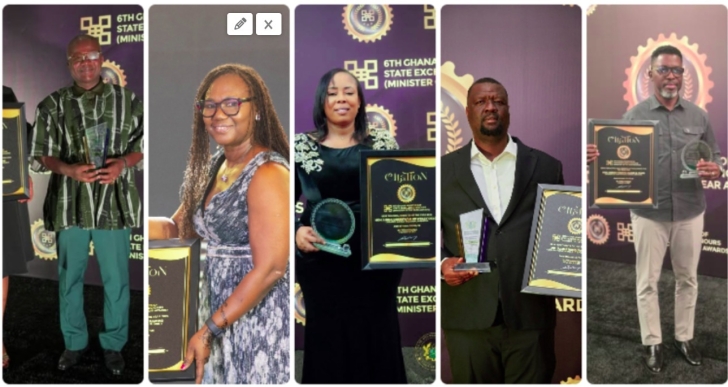
Against this backdrop of pent-up frustrations, and on a night when the rains were making people homeless due to flooding, the sight of ministers attending a lavish, paid-to-play, manufactured award ceremony seemed disconnected from the realities faced by ordinary Ghanaians.
This tends to erode public trust in the government and its institutions, especially when that trust largely depends on the perception that leaders are committed to serving the public interest. When our ministers and officials appear more interested in personal recognition than institutional performance, they undermine that trust.
Also, a negative public perception is created when citizens, right or wrong, begin to think that public resources are being used to prop up such questionable award schemes.
This raises critical ethical concerns that send the wrong message about the priorities of the government. Kpessa-Whyte, in his write-up, is speaking to broader public questions about how our leaders and, in this case, ministers should be measured, and he is unequivocal in his argument that they should be judged on the basis of their performance, accountability, and public interest.
As the Director-General of SIGA, it is right within his scope of responsibility to caution his colleagues about working to improve citizens’ lives through effective governance.
Recognition is not the enemy
It is crucial that readers do not misinterpret this response as a blanket rejection of all forms of public recognition. Acknowledging ministers for exceptional performance is not inherently problematic. In fact, when ministers genuinely excel, granting awards or recognition can positively impact public life. Such accolades can foster excellence, inspire innovation, celebrate integrity, and provide models of effective leadership for others to follow.
The core issue lies not in recognition itself but in the criteria used for granting it. Awards that arise from transparent assessment processes, independent evaluations, and clear evidence of achievement can enhance public institutions and promote a culture of excellence. They can spotlight best practices and appropriately reward genuine contributions to national development. Problems emerge when recognition becomes transactional, opaque, or severed from measurable performance.
When awards are effectively purchased rather than earned, they lose their moral authority and public credibility. Instead of celebrating excellence, they risk commercializing prestige. This distinction is vital. A society requires mechanisms to honor outstanding contributions to public service; however, such recognition must be firmly rooted in merit, transparency, and accountability to maintain public legitimacy.
As I read Kpessa-Whyte’s opinion, I see his attempt to advance a broader vision of public leadership that could benefit Ghana, which I would find worth embracing. Couched in his piece is the idea that our ministers and public officials must recognize that politics is fundamentally a vocation, albeit an altruistic passion, that requires responsibility, discipline, and commitment to the public good. Our ministers and leaders should aspire to be assessed by outcomes rather than appearances.
And while we should reward and celebrate those who genuinely perform, our leaders must never lose sight of the fact that their desire for recognition can become destructive when it dominates their understanding of success and self-worth. My take from Kpessa-Whyte is that public office is a trust that must be exercised with humility, as the purpose of true leadership is not self-celebration but public service.
In an era where visibility is often mistaken for achievement, this message deserves serious attention. As President Obama reiterated during his visit some time ago, Ghana’s democratic future depends not only on strong men but strong institutions and on a political culture that values substance over symbolism.
History rarely remembers leaders for the number of awards they received. We very well remember the achievements of Kwame Nkrumah, Kofi Abrefa Busia, Jerry John Rawlings, John Agyekum Kufuor, John Evans Atta Mills, Nana Addo Dankwa Akufo-Addo, and will also remember John Dramani Mahama not for the awards they accumulated but for the institutions they built, the reforms they implemented, the opportunities they created, and the lives they transformed. For Ghanaian ministers, public appointees, and political leaders, that remains the only honor truly worth pursuing.
The writer, Michael Augustus Akagbor PhD, is a sociologist and the Programmes Manager with oversight for Human Rights, Social Inclusion, and Gender at the Ghana Center for Democratic Development (CDD-Ghana).
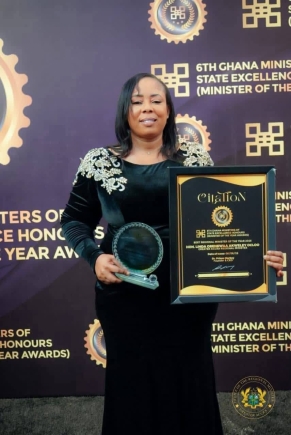
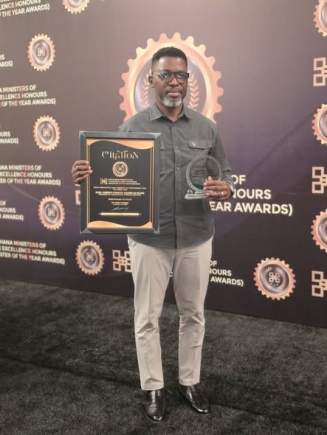
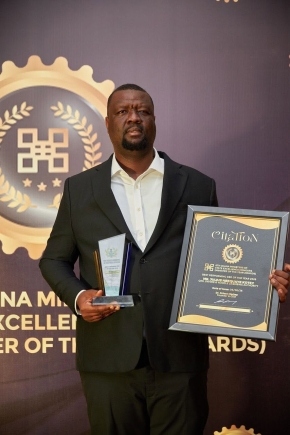
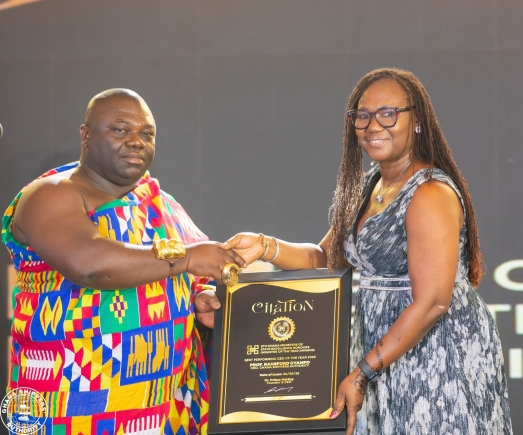
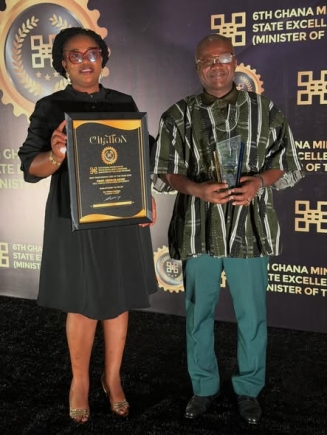
Full list of winners
The following individuals were recognised at the 6th edition of the awards:
Overall Best Minister – Dr Cassiel Ato Forson (Minister for Finance)
Best Male Performing Minister – Emmanuel Armah-Kofi Buah (Minister for Lands and Natural Resources)
Best Regional Minister – Linda Obenewaa Akweley Ocloo (Greater Accra Regional Minister)
Best Deputy Minister – Dorcas Affo-Toffey (Deputy Minister for Transport)
Best Female Minister – Rita Akosua Adjei Awatey (Eastern Regional Minister)
Most Impactful New Member of Parliament of the Year – Kwame Asare Obeng (A Plus)
Best MP – Rockson-Nelson Dafeamekpor
Best Female CEO – Ruth Dela Seddoh (National Service Authority)
Best Performing CEO of the Year – Julius Neequaye Kotey (Driver and Vehicle Licensing Authority)
Best Performing CEO (State Companies) – Prof Ransford Gyampo
Best Performing CEO – Prof George Agyei (Ghana Standards Authority)