


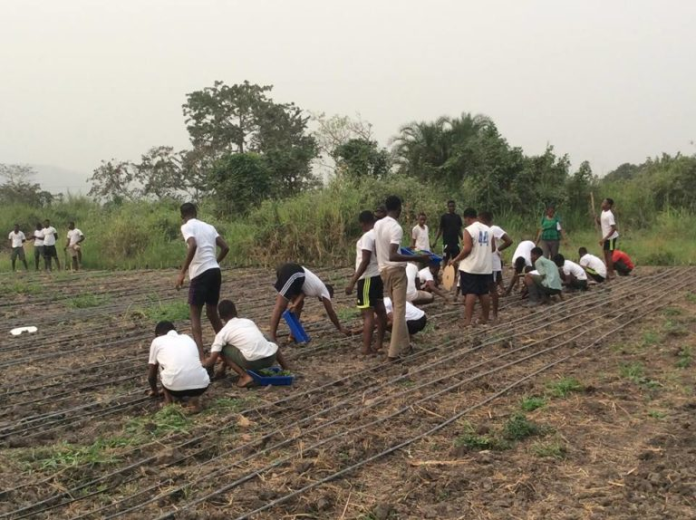

A University of Cape Coast agricultural economist is calling for agriculture to be introduced into Ghana’s basic school curriculum, warning that declining enrolment in farming-related university programmes is quietly eroding the skilled workforce the country needs to achieve food security.
Dr. Frank Ackah, a Senior Lecturer at the University of Cape Coast, said students at the tertiary level are increasingly gravitating toward arts, business and humanities, leaving agriculture departments underpopulated and the sector short of the researchers, extension officers and commercial farmers it needs.
“At the basic level, agriculture is not even part of the curriculum,” he said, arguing that early exposure is the most effective way to build lasting interest in a sector that most young Ghanaians currently see as unattractive or low-status.
Dr. Ackah said introducing agriculture at the basic school level would create a pipeline of students with foundational knowledge of farming practices, crop science and horticulture before they reach secondary and tertiary education. When paired with practical learning tools such as school gardens, hands-on training and mentorship, the approach could shift perceptions and inspire students to pursue the sector further.
“Students that are graduating from agricultural institutions can go on to teach at the basic level,” he added, describing a self-reinforcing cycle in which trained graduates feed back into the education system and sustain interest across generations.
He also pointed to the decay of technical training infrastructure as a compounding problem. Horticulture schools and parks and gardens programmes that once served as practical skills pathways for young Ghanaians have weakened significantly, leaving a gap in both workforce capacity and on-farm innovation that university enrolment trends alone cannot fill.
The warning carries added weight following Burkina Faso’s indefinite ban on tomato exports to Ghana, which has exposed the country’s dependence on imported produce and raised questions about whether domestic farmers have the knowledge, seed quality and technical support needed to fill the gap. Dr. Ackah said those structural problems are rooted in years of underinvestment in agricultural human capital.
He stressed that curriculum reform must be accompanied by renewed investment in research, improved seed varieties and stronger extension services. Without closing both the knowledge gap and the technology gap simultaneously, Ghana risks remaining structurally reliant on food imports regardless of how much irrigation infrastructure is built.
“If we don’t do the research, we will not get anywhere. If we don’t get good varieties, we will not get anywhere,” he said.
