


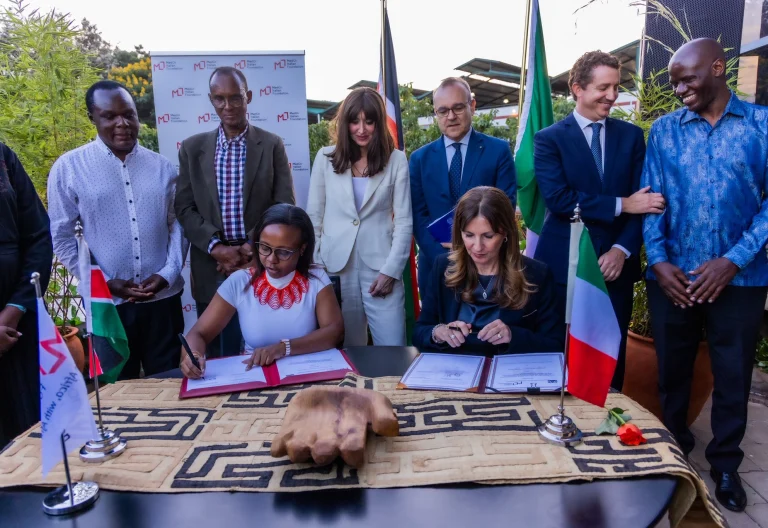
Kenya and Italy have formalized a strategic partnership aimed at transforming sustainable fisheries management, advancing renewable energy solutions for aquaculture, and enhancing research collaboration within the burgeoning blue economy sector. The Memorandum of Understanding (MoU), signed during the official launch of the Med-Or Italian Foundation Africa Office in Nairobi on February 8, 2026, marks a significant milestone in deepening bilateral relations between the two nations.
Build the future you deserve. Get started with our top-tier Online courses: ACCA, HESI A2, ATI TEAS 7, HESI EXIT, NCLEX-RN, NCLEX-PN, and Financial Literacy. Let Serrari Ed guide your path to success. Enroll today.
A Strategic Foundation Established in Nairobi
The signing ceremony coincided with the inauguration of Med-Or Italian Foundation’s first overseas office on the African continent, positioning Kenya as a strategic hub for the foundation’s engagement across Africa. Principal Secretary for the Blue Economy and Fisheries Betsy Njagi, representing Cabinet Secretary for Mining, Blue Economy, and Maritime Affairs Hassan Joho, formalized the agreement in the presence of Italy’s Minister of University and Research, Anna Maria Bernini.
“We signed a Memorandum of Understanding to advance sustainable fisheries, renewable energy solutions for aquaculture, and research collaboration in the Blue Economy,” Njagi stated in her social media announcement following the event. The Principal Secretary described the partnership as a key milestone in strengthening the Kenya-Italy partnership, reflecting shared commitment between the two nations on sustainable development and innovation in sectors increasingly critical to food security, job creation, and climate resilience.
The Med-Or Italian Foundation, which evolved from its original establishment in 2021 by Italian aerospace and defense company Leonardo into the Med-Or Italian Foundation on January 1, 2025, brings together major Italian industrial groups including Enel, Eni, Ferrovie dello Stato, Fincantieri, Poste Italiane, and Snam. The foundation’s mission centers on promoting cultural initiatives, research, and education in science while strengthening links and international relations between Italy and regions spanning the Mediterranean, the Sahel, the Horn of Africa, and beyond.
Kenya’s Blue Economy: Vast Potential Meets Operational Challenges
The partnership arrives at a crucial juncture for Kenya’s blue economy sector, which government officials estimate contributes approximately 2.5 percent to the national GDP and generates an estimated Ksh. 178.8 billion (approximately $1.4 billion) to the economy annually. However, experts believe that if fully exploited, the sector has the potential to generate revenue approaching Ksh. 500 billion each year.
Kenya’s fisheries sector plays a crucial role in job creation and income generation, directly supporting approximately 135,000 fishers and fish farmers, with about 1.5 million fish workers in total engaged in processing, trading, selling fish, and supplying fish feed and fishing accessories. As of 2023, total aquatic food production stood at about 161,300 metric tonnes, valued at USD 280 million.
Despite these impressive figures, Kenya’s blue economy faces significant structural challenges. Japanese fisheries economist Professor Haruko Yamashita, during a recent visit to Kenya, highlighted a striking paradox: despite the country’s access to the Indian Ocean, major freshwater lakes including Lake Victoria, and expansive rivers, she was served imported fish at a Nairobi hotel. Recent figures indicate fish imports of around 9,960 tonnes in 2024, mainly from Tanzania (65 percent), China (12 percent), and South Korea (4 percent).
Kenya’s aquatic foods production is largely led by inland capture fisheries, with an estimated 67 percent of total production coming from vast lakes, rivers, and dams. Africa’s largest lake, Lake Victoria—shared with Tanzania and Uganda—alone accounts for 80 percent of Kenya’s fish production. However, catches are declining due to increasing population pressures, overfishing, climate change, alien species invasion, and excessive nutrient land run-off.
Strategic Focus Areas of the Kenya-Italy Partnership
According to Principal Secretary Njagi, the MoU focuses on three interconnected pillars that align with Kenya’s broader efforts to unlock the economic potential of its marine and aquatic resources while ensuring environmental sustainability.
Sustainable Fisheries Management
The partnership emphasizes advancing sustainable fisheries management practices that address the structural challenges plaguing Kenya’s sector. Professor Yamashita described Kenya’s fisheries challenge as an “aporia”—a structural dilemma that cannot be solved by a single policy intervention. The sector is crowded with people who depend on fishing informally for survival, yet the state lacks clear data on who qualifies as a fisher and who does not.
Italy brings decades of Mediterranean fisheries management experience to this partnership, potentially offering Kenya valuable insights into regulatory frameworks, monitoring systems, and sustainable catch management. The collaboration could help Kenya strengthen its Monitoring, Control and Surveillance (MCS) capacity within its Exclusive Economic Zone to prevent Illegal, Unregulated and Unreported (IUU) fishing and increase security in territorial waters.
Renewable Energy Solutions for Aquaculture
A particularly innovative aspect of the partnership focuses on promoting renewable energy solutions to support aquaculture development—an area where Kenya has identified significant growth potential but faces infrastructure challenges.
Kenya’s renewable energy potential in coastal regions includes solar, wind, tidal, and wave energy. The Kenyan coast experiences an approximate 4-meter spring tidal range, creating the necessary water velocities for operation of submerged turbines that require water currents of 1.0 to 2.5 meters per second. However, this tidal energy resource has not yet been tapped, nor has the significant wave energy potential.
Italy’s expertise in renewable energy infrastructure and marine technology could prove transformative for Kenya’s aquaculture sector. The integration of solar power, wind energy, and potentially tidal systems could address critical infrastructure gaps that currently limit aquaculture expansion, particularly in providing reliable power for water circulation systems, aeration, feed production, and cold chain facilities.
Research Collaboration and Knowledge Exchange
The third pillar emphasizes enhancing research collaboration within the blue economy sector, building on recent partnerships Kenya has established with international research institutions.
In October 2025, Kenya signed a separate Memorandum of Understanding with WorldFish to strengthen cooperation in advancing Kenya’s blue economy and fisheries sector. That agreement established a framework for creating a learning hub that demonstrates best practices and new technologies while fostering technical skills across Kenya’s fisheries and aquaculture sector.
The Italy-Kenya partnership complements these existing initiatives by adding European research capacity and innovation networks to Kenya’s growing portfolio of blue economy collaborations. Minister Bernini emphasized that the foundation’s active presence in Kenya represents “a concrete investment in training, knowledge, and innovation, essential levers for solid and lasting growth.”
The Med-Or Foundation’s Strategic Positioning in Africa
The choice of Nairobi for Med-Or’s first overseas office reflects Kenya’s central role as a strategic hub for Africa as a whole. Umberto Tavolato, Med-Or’s Director for Special Projects who leads the Nairobi office, described the decision as recognizing Kenya’s role as a “bridge” to Africa, just as Italy aspires to be for Europe.
Located in Gigiri, Nairobi’s diplomatic district that hosts numerous UN agencies and embassies, the new office will serve as the central hub for the foundation’s continent-wide programs. Kenya stands out for its political stability, economic dynamism, and growing ability to attract international investment, as well as being a key commercial, technological, and logistics hub for the region.
Tavolato noted that Med-Or already works with numerous countries across Africa, with training projects active in eleven nations. Initiatives span the agricultural sector in Ethiopia, training public officials in Somalia, and cybersecurity capacity-building programs involving officials from multiple African countries including Kenya. The foundation’s work extends to post-conflict reintegration projects, such as the RESeed project in Ethiopia’s Tigray region, which aims to reintegrate former combatants into agricultural projects.
One decision can change your entire career. Take that step with our Online courses in ACCA, HESI A2, ATI TEAS 7, HESI EXIT, NCLEX-RN, NCLEX-PN, and Financial Literacy. Join Serrari Ed and start building your brighter future today.
Kenya’s Ambitious Blue Economy Agenda
The partnership with Italy aligns with Kenya’s increasingly ambitious blue economy agenda, which government officials have identified as a critical pillar for national development. Cabinet Secretary Hassan Joho recently announced that President William Ruto has approved negotiations for Sh32 billion in additional funding to boost the blue economy sector.
This follows previous investments, including a Sh10 billion loan from the World Bank under the Kenya Marine Fisheries and Socio-Economic Development (Kemfsed) project secured during President Uhuru Kenyatta’s administration. Principal Secretary Njagi has stated ambitious targets, noting that Kenya has already created over 100,000 jobs through the blue economy, with a focus on growing the sector by at least Sh200 million by 2027.
The State Department for Blue Economy and Fisheries, created through Executive Order No. 1 of January 2023, operates under the Ministry of Mining, Blue Economy and Maritime Affairs. The department comprises two technical directorates—Fisheries and Aquaculture Development, and Blue Economy Development—supported by four state corporations: Kenya Marine and Fisheries Research Institute (KMFRI), Kenya Fisheries Service (KeFS), Kenya Fish Marketing Authority (KFMA), and Kenya Fishing Industries Corporation (KFIC).
International Momentum and the 2026 Ocean Conference
Kenya’s partnership with Italy gains additional significance as the country prepares to host the 2026 United Nations Ocean Conference. President William Ruto has emphasized that Kenya will use the conference to showcase youth-driven blue economy solutions, highlighting the country’s strategic position to harness ocean resources and expertise to drive innovation and entrepreneurship among young people.
“By focusing on youth-driven solutions, Kenya aims to create new opportunities for employment, entrepreneurship, and economic growth,” President Ruto stated during the Tokyo International Conference on African Development (TICAD9) in Yokohama, Japan. The conference will provide a platform for Kenyan youth to showcase their skills and ideas in sustainable ocean resource management, aquaculture, and marine-based industries.
By hosting this major international conference, Kenya aims to position itself as a leader in promoting youth-driven blue economy solutions while attracting investments and partnerships to support its sustainable development goals. The timing of the Italy partnership provides Kenya with additional technical capacity and international credibility as it prepares to host global ocean stakeholders.
Addressing Infrastructure and Technology Gaps
One of the most pressing challenges the Kenya-Italy partnership could address involves infrastructure and technology gaps that currently limit the sector’s growth potential. Professor Yamashita identified the cold chain as the priority area for intervention—the temperature-controlled supply system crucial from catch to consumer, using ice or refrigeration to slow spoilage, maintain quality, and extend shelf life.
“The supply of ice is not a big headache, and its provision would be of great help to local fisherfolk by increasing their income,” Professor Yamashita noted. Recent initiatives have already demonstrated the potential impact of such interventions. Solar freezers installed in Kilifi County are showing ways to increase incomes for women through reduced fish loss and waste.
Italy’s technological expertise in renewable energy infrastructure could prove particularly valuable in scaling such solutions. The integration of solar-powered cold storage facilities, processing equipment, and transportation infrastructure could transform post-harvest handling and market access for Kenyan fisherfolk, particularly in remote coastal and lakeside communities.
Aquaculture Innovation and Inclusion
The partnership’s focus on renewable energy solutions for aquaculture aligns with Kenya’s growing interest in Integrated Multi-Trophic Aquaculture (IMTA) systems. WorldFish, through the Asia-Africa BlueTech Superhighway project, has been investigating how IMTA can create sustainable livelihoods for women and youth in Kenya’s coastal counties of Kilifi, Kwale, and Mombasa.
IMTA systems, which combine different species at various trophic levels to create more efficient and environmentally sustainable production systems, are creating promising opportunities for new income revenue streams while improving water quality. The testing and refining of these systems could benefit significantly from Italian renewable energy technology that provides reliable, affordable power for system operation.
Research shows that gender roles strongly influence participation in aquaculture, with young men generally involved in pond construction, fish feeding, and harvesting, while women are largely confined to post-harvest tasks. The partnership’s emphasis on innovation and technology transfer could help address these barriers by creating more diverse opportunities for participation across the value chain.
Building on Italy’s Africa Strategy
The Kenya partnership represents a key component of Italy’s broader strategy to deepen engagement with Africa through a more operational, on-the-ground approach. As described by Decode39, Italy is moving “from political messaging to operational partnerships” in Africa, with research, innovation, and human capital at the core.
Minister Bernini’s visit to Kenya coincided with the Nairobi AI Forum, framed as an execution-oriented working platform focused on infrastructure, cross-border partnerships, and access to finance. The minister emphasized investing in skills and human capital to support “economic and social transformation processes based on responsibility, innovation, and the enhancement of local territories and communities.”
Med-Or Foundation President Marco Minniti articulated the foundation’s approach: “With the inauguration of the Nairobi headquarters, Med-Or is taking a step consistent with its vision: working in Africa, with Africa. Direct presence on the ground allows us to build stronger and more equal relationships with governments, institutions and local stakeholders, reinforcing a cooperation model that focuses on dialogue, skills and mutual respect.”
Future Outlook and Implementation Challenges
While the MoU represents a significant diplomatic and strategic achievement, the true measure of its success will lie in implementation. Kenya’s blue economy sector faces multiple governance gaps that could complicate partnership effectiveness, including fragmented institutional frameworks, inadequate regulatory enforcement, limited technical capacity at county levels, and insufficient coordination between national and county governments.
The sector’s development requires addressing complex challenges ranging from ecosystem degradation and climate change impacts to licensing bureaucracy, weak extension services, market instability, and inadequate financing. Women and youth face particular barriers including limited awareness and technical knowledge, social stigma around certain roles, and structural constraints including poor water quality and unpredictable weather.
Successful implementation will require not just technical cooperation but also investments in capacity building, institutional strengthening, and inclusive approaches that ensure benefits reach marginalized communities. The partnership’s emphasis on renewable energy solutions could prove transformative if it addresses these structural barriers while providing the infrastructure needed to scale sustainable aquaculture and fisheries management practices.
Alignment with Sustainable Development Goals
The Kenya-Italy partnership directly supports multiple United Nations Sustainable Development Goals (SDGs), particularly SDG 14 (Life Below Water) which calls for conservation and sustainable use of oceans, seas, and marine resources. The collaboration addresses specific targets including improving sustainable management of fisheries, increasing economic benefits from sustainable use of marine resources, and enhancing scientific knowledge and research capacity.
Kenya has committed to achieving specific objectives by 2027, including improving management of both offshore and inshore fisheries, providing frameworks for supporting smallholder aquaculture development, and increasing monitoring and surveillance to prevent illegal fishing. The partnership with Italy provides technical expertise, research collaboration, and potential financing mechanisms to accelerate progress toward these objectives.
The focus on renewable energy integration also supports SDG 7 (Affordable and Clean Energy) and SDG 13 (Climate Action) by promoting shift from fossil energy dependence toward cleaner energy sources while building climate resilience in coastal and aquatic food production systems.
Conclusion: A Model for South-South-North Cooperation
The Kenya-Italy blue economy partnership represents an emerging model for triangular cooperation that combines European technical expertise and innovation capacity with African operational context and development priorities. By establishing a permanent on-the-ground presence through the Med-Or Foundation’s Nairobi office, Italy demonstrates commitment to sustained engagement beyond episodic projects or policy declarations.
For Kenya, the partnership provides access to Italian research institutions, renewable energy technology, sustainable fisheries management expertise, and potential financing channels at a crucial moment in the country’s blue economy development trajectory. The alignment of this partnership with Kenya’s preparation for the 2026 Ocean Conference creates opportunities for showcasing concrete collaboration outcomes on a global stage.
Principal Secretary Njagi’s emphasis that “this partnership reflects our shared commitment to sustainable development, innovation, and strengthening international cooperation for the benefit of our communities and future generations” captures the aspirational dimension of the agreement. However, translating aspiration into impact will require sustained effort, adequate resourcing, effective coordination across multiple institutions, and genuine commitment to the inclusive, sustainable approaches both nations have pledged to pursue.
As Kenya continues developing its blue economy potential—estimated to be capable of generating more than double its current economic contribution—partnerships like the Italy MoU offer pathways to access the technology, expertise, and investment needed to realize that potential while avoiding the unsustainable exploitation patterns that have characterized fisheries development in many other regions. The success of this partnership could provide a replicable model for how African nations can leverage strategic international collaborations to advance both economic development and environmental sustainability in their marine and aquatic sectors.
Ready to take your career to the next level? Join our Online courses: ACCA, HESI A2, ATI TEAS 7 , HESI EXIT , NCLEX – RN and NCLEX – PN, Financial Literacy!🌟 Dive into a world of opportunities and empower yourself for success. Explore more at Serrari Ed and start your exciting journey today! ✨
Track GDP, Inflation and Central Bank rates for top African markets with Serrari’s comparator tool.
See today’s Treasury bonds and Money market funds movement across financial service providers in Kenya, using Serrari’s comparator tools.
photo source: Google
By: Montel Kamau
Serrari Financial Analyst
10th February, 2026
Article, Financial and News Disclaimer
The Value of a Financial Advisor
While this article offers valuable insights, it is essential to recognize that personal finance can be highly complex and unique to each individual. A financial advisor provides professional expertise and personalized guidance to help you make well-informed decisions tailored to your specific circumstances and goals.
Beyond offering knowledge, a financial advisor serves as a trusted partner to help you stay disciplined, avoid common pitfalls, and remain focused on your long-term objectives. Their perspective and experience can complement your own efforts, enhancing your financial well-being and ensuring a more confident approach to managing your finances.
Disclaimer: This article is for informational purposes only and does not constitute financial advice. Readers are encouraged to consult a licensed financial advisor to obtain guidance specific to their financial situation.
Article and News Disclaimer
The information provided on www.serrarigroup.com is for general informational purposes only. While we strive to keep the information up to date and accurate, we make no representations or warranties of any kind, express or implied, about the completeness, accuracy, reliability, suitability, or availability with respect to the website or the information, products, services, or related graphics contained on the website for any purpose. Any reliance you place on such information is therefore strictly at your own risk.
www.serrarigroup.com is not responsible for any errors or omissions, or for the results obtained from the use of this information. All information on the website is provided on an as-is basis, with no guarantee of completeness, accuracy, timeliness, or of the results obtained from the use of this information, and without warranty of any kind, express or implied, including but not limited to warranties of performance, merchantability, and fitness for a particular purpose.
In no event will www.serrarigroup.com be liable to you or anyone else for any decision made or action taken in reliance on the information provided on the website or for any consequential, special, or similar damages, even if advised of the possibility of such damages.
The articles, news, and information presented on www.serrarigroup.com reflect the opinions of the respective authors and contributors and do not necessarily represent the views of the website or its management. Any views or opinions expressed are solely those of the individual authors and do not represent the website’s views or opinions as a whole.
The content on www.serrarigroup.com may include links to external websites, which are provided for convenience and informational purposes only. We have no control over the nature, content, and availability of those sites. The inclusion of any links does not necessarily imply a recommendation or endorsement of the views expressed within them.
Every effort is made to keep the website up and running smoothly. However, www.serrarigroup.com takes no responsibility for, and will not be liable for, the website being temporarily unavailable due to technical issues beyond our control.
Please note that laws, regulations, and information can change rapidly, and we advise you to conduct further research and seek professional advice when necessary.
By using www.serrarigroup.com, you agree to this disclaimer and its terms. If you do not agree with this disclaimer, please do not use the website.
www.serrarigroup.com, reserves the right to update, modify, or remove any part of this disclaimer without prior notice. It is your responsibility to review this disclaimer periodically for changes.
Serrari Group 2025
