

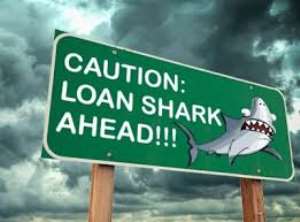
Ghana is facing a silent financial emergency, and it is unfolding not in banking halls or trading floors, but on mobile phones — quietly, ruthlessly, and largely unchecked. In the name of “financial inclusion,” a dangerous ecosystem of digital loan sharks has taken root in our fast-growing digital economy. They promise instant cash, no collateral, and ridiculously low interest rates. What they deliver instead is economic bondage, psychological abuse, and the systematic humiliation of Ghanaian citizens. I have written previously on this subject in “Why Predator Loan Apps Must Be Regulated” and “What Every Ghanaian Must Know About Predator Loan Apps.” I have also published “Digital Loan Sharks on the Rise in Ghana,” where I warned that unless urgent action is taken, digital lending could become one of the most abusive sectors in Ghana’s financial system. Despite these interventions, the menace continues. I receive calls almost daily from victims — market women, students, unemployed youth, drivers, traders, and salaried workers who have been trapped, harassed, and publicly humiliated over loans as small as GH¢50 or GH¢100. This article is therefore written not merely as commentary, but as a call to action.
When Lending Becomes Exploitation
Let us examine a real transaction from one of these digital lenders:
- Loan amount approved: GH¢130
- Amount disbursed to borrower: GH¢89
- Total repayment required: GH¢134.81
- Loan tenure: 7 days
In plain terms, a borrower receives GH¢89 and is required to repay GH¢134.81 within one week. This represents an effective interest rate of over 50% in seven days. No licensed bank or regulated microfinance institution in Ghana is permitted to lend under such terms. This is not microcredit. It is not innovation. It is usury, cleverly disguised through technology, jargon, and misleading advertising.
Misleading Advertising and Deceptive Practices
These loan apps often advertise eye-catching but false promises: “0.1% interest,” “loans up to GH¢8,000” and “repayment up to 180 days.” In reality, borrowers are disbursed far smaller amounts, saddled with hidden fees, and forced into repayment windows as short as five to seven days. If a pharmaceutical company mislabels medicine, it is sanctioned. If a food producer misrepresents ingredients, it is prosecuted. Why, then, should financial deception be tolerated simply because it is digital? Deceptive advertising in lending is not a minor infraction, it is a deliberate strategy to lure vulnerable people into debt traps.
Who Regulates These Digital Lenders?
This is the most critical question of all. Many of these digital loan apps are not licensed by the Bank of Ghana. Some are merely registered with the Registrar-General’s Department, a process that does not confer legal authority to engage in lending. Lending money to the public is a regulated financial activity, and only entities licensed by the Bank of Ghana are permitted to do so. Yet, these apps operate freely — advertising aggressively, disbursing loans, harvesting data, and enforcing repayment through intimidation. The regulatory gap is glaring and dangerous.
Harassment Is Not Debt Collection
Perhaps the most disturbing feature of predatory digital lending is how repayment is enforced. Borrowers report constant phone calls, sometimes more than ten times a day, verbal abuse and insults, threats to publish names and photos, messages sent to contacts harvested from borrowers’ phones, and public shaming on WhatsApp and social media. These practices violate basic principles of privacy, dignity, and fairness. They may also breach Ghana’s Data Protection Act, the Criminal Offences Act, and electronic communications laws. Defaulting on a loan, especially one obtained under deceptive terms is not a criminal offence. Poverty is not a crime. Financial hardship does not strip a citizen of their dignity.
Foreign Control, Capital Flight and National Security Concerns
Several of these digital loan apps reportedly have foreign ownership or control structures, with links to Kenya, Nigeria, India, or other jurisdictions. Often, Ghanaian fronts are used to register shell companies while real control, data processing, and profits reside abroad. This raises serious concerns. Ghanaian personal data may be exported and misused, profits may be repatriated without proper taxation, enforcement becomes difficult when operators are outside Ghana, and financial sovereignty and consumer protection are weakened. Why should unlicensed or foreign-controlled entities be allowed to harvest Ghanaian data and extract wealth from vulnerable citizens without oversight? This is no longer just a consumer protection issue. It is an economic justice and national security issue.
Even Licensed Operators Must Be Scrutinized
This discussion must also extend to licensed digital lenders and telcos. Platforms operated by major telecommunications companies offer digital loans that many consumers struggle to understand. Interest is often disguised as “service fees”, “processing charges”, or “access fees.” While these institutions may be licensed, licensing alone does not guarantee fairness. Transparency, proportional pricing, and consumer education must be enforced. Regulation must move beyond approval to active supervision.
What Other African Countries Are Doing
Ghana is not alone in facing the challenges of digital lending. However, several African countries have taken decisive steps to regulate the sector and protect consumers.
- Kenya: Licensing, Transparency and Consumer Protection — Kenya has emerged as a continental leader in regulating digital credit. The Central Bank of Kenya introduced the Digital Credit Providers Regulations, requiring all digital lenders to obtain licenses before operating. The regulations mandate full disclosure of interest rates and fees, data protection compliance, prohibition of harassment and public shaming, and strict penalties for unlicensed operators. Hundreds of digital lenders were forced to apply, and many were denied licenses. Kenya has demonstrated that innovation can coexist with firm regulation.
- Nigeria: Enforcement and Heavy Penalties — Nigeria’s Federal Competition and Consumer Protection Commission has introduced comprehensive regulations for digital lenders. These rules require mandatory registration, transparent pricing, and ethical debt collection practices. Unlicensed operators face heavy fines, delisting from app stores, and potential criminal liability. Importantly, Nigeria has worked with Google and other platforms to remove illegal loan apps from digital marketplaces.
- Uganda, Tanzania and Others — Uganda has introduced guidelines requiring digital lenders to comply with conduct standards to operate legally. Tanzania has brought digital lending under its Microfinance Act, mandating licensing and disclosure requirements.
Across Africa, regulators are recognizing a simple truth. Digital credit is still credit, and must be governed by the same principles of fairness, accountability, and consumer protection.
Ghana Is Falling Behind
Ghana was once praised for its financial sector reforms. The Bank of Ghana acted decisively during the banking and microfinance clean-up, withdrawing licenses and restoring confidence. Why, then, are digital loan sharks allowed to flourish? If banks can be shut down for regulatory breaches, digital lenders should not be untouchable simply because they operate through apps.
What Must Be Done, and Done Urgently
The solutions are neither radical nor unattainable:
- Publish and regularly update a public list of all BoG-licensed digital lenders
- Shut down and prosecute all unlicensed digital loan apps
- Enforce strict rules on interest disclosure and advertising
- Criminalize harassment, defamation, and data abuse in debt collection
- Establish a Digital Lending Consumer Charter
- Launch nationwide public education campaigns
- Work with app stores to delist illegal lenders
- Provide accessible complaint and redress mechanisms for borrowers
Official Complaint and Reporting Channels
1. Cyber Security Authority (CSA) — for cybercrime, online harassment, data abuse or threats from unlicensed loan apps
- Phone/SMS/Call: 292 (short code)
- WhatsApp: 0501603111
2. Bank of Ghana (BoG) — for complaints about financial institutions, regulated lenders and unfair loan practices
- Phone: 0302 665 005 and 0302 665 252
- Email: [email protected]
- WhatsApp: 0596912354 or 0501502270
3. National Information Technology Agency (NITA) — for digital tech and cybersecurity-related complaints
4. Ghana Police Service — Cyber Crime Unit
- Ghana Police Helpline: 18555 or 191– Report serious cybercrime, threats, extortion or criminal harassment to the Police, especially when online predators escalate to threats or blackmail.
NOTE: Additional Useful Steps
- Document everything (screenshots, call records, chats, contracts/agreement details, etc.) before reporting.
- Start by complaining to the lender/provider directly (if they exist), then escalate to regulators.
- If the lender is unlicensed or illegal, regulators like CSA and BoG are key for escalation and alerts.
My Thoughts
Digital lending is not inherently evil. Properly regulated, it can support financial inclusion and economic activity. But unregulated digital lending is a breeding ground for abuse. The dignity of Ghanaian citizens must matter more than the profits of unregulated apps. Silence is no longer an option. Delay is no longer neutral. If Ghana can clean up its banks, it can clean up its digital lending space. The digital economy must not become a hunting ground where the poor are preyed upon and the powerful look away. This menace must end. And it must end now. I am not an Ombudsman, nor do I act on behalf of Mr. Kofi Kapito or the Consumer Protection Agency. My duty as a columnist is not to settle disputes, but to raise public consciousness and consistently expose the dangerous, abusive direction some predatory digital lenders are towing our financial space. With Ghana’s cyber and digital financial laws now passed, complainants must know that their suffering is no longer invisible or legally irrelevant. While I cannot prosecute or recover losses, I urge victims to document every threat, humiliation, illegal charge, and data abuse, and to formally report these practices to regulators and law-enforcement agencies mandated to act. This is also a direct call to those institutions. Enforcement must now match legislation. Silence, delay, or indifference only empowers predators. Public exposure, lawful complaints, and regulatory action must work together if consumer protection is to mean anything beyond words on paper.
FUSEINI ABDULAI BRAIMAH
+233208282575 / +233550558008
[email protected]

