


Ghana must significantly strengthen investment in literacy and lifelong learning to prevent large numbers of citizens from being left behind by technological change, shifting labour market demands and the growing digitalisation of essential services.
Stakeholders in the education sector have identified inadequate and unpredictable funding, unequal access, limited learning materials, insufficiently trained personnel and digital exclusion as some of the major challenges threatening efforts to provide second-chance education and skills development to people outside the formal education system.
They have also called for stronger collaboration among the government, development partners, civil society organisations, communities and the private sector to make literacy programmes more relevant to livelihoods, employment, entrepreneurship and social participation.
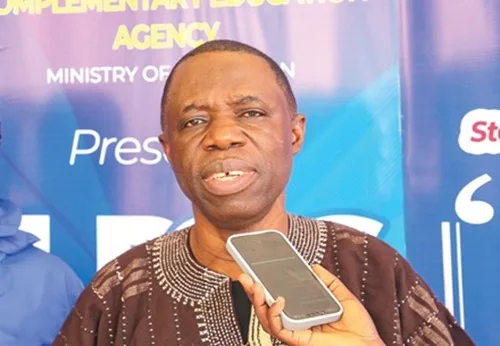
The call was made at a stakeholder engagement organised by the Complementary Education Agency (CEA) ahead of the 2026 International Literacy Day, which falls on September 8, on the theme: “Emerging Issues, Challenges and Opportunities in Literacy and Lifelong Learning in Ghana”.
The engagement brought together stakeholders in the complementary education space to examine emerging challenges and explore opportunities for ensuring that every Ghanaian, regardless of age, gender or location, has access to learning opportunities.
Programmes
Speaking at the engagement, the Executive Director of the CEA, Daniel K. Ashiamah, said the agency was mandated under the Complementary Education Agency Act, 2020 (Act 1055), to provide complementary basic education, functional literacy, remedial education and occupational skills development.
He said the programmes targeted people who had dropped out of school, those who could not continue with formal education and adults who lacked employable skills.
Mr Ashiamah said although resources remained a challenge, other factors, including economic difficulties, conflict and migration, also contributed to children being excluded from education.
He said the agency was also concerned about parents who lacked the skills and economic capacity to provide adequately for their children, stating that occupational skills being provided included dressmaking, bakery, masonry, carpentry, plumbing and electrical work.
Mr Ashiamah said equipping adults with such skills would enable them to earn incomes and improve their ability to meet the needs of their families, urging corporate Ghana and the international community to support the CEA to expand its programmes and ensure that people who had missed out on formal education or skills training were not left behind.
“Every citizen of Ghana must be catered for by the law. That should be their right,” he said.
The Head of Office and UNESCO Country Representative, Edmond Moukala, said literacy had moved beyond the traditional ability to read and write.
He said modern literacy required people to interpret information, communicate across different platforms, think critically and apply knowledge to solve everyday problems.
Mr Moukala said the rapid growth of artificial intelligence, automation and changes in the global labour market meant that learning could no longer end at school.
He said the country needed an ecosystem in which people could continuously acquire knowledge and skills throughout their lives.
He identified unequal access, programme relevance, digital exclusion, the needs of vulnerable groups, sustainability of funding and inadequate data as major challenges.
Mr Moukala further warned that the increasing migration of government and financial services to digital platforms risked creating a new form of illiteracy for citizens without digital skills.
He called for deliberate inclusion of persons with disabilities, underserved rural communities, women and girls.
2027 Bid
Mr Moukala called on the CEA and other stakeholders to begin preparations for the country’s proposed hosting of the 2027 Global Commemoration of International Literacy Day in Accra.
He said the event would position the country as a continental leader in human capital development and provide an opportunity to showcase its innovations to the global community.
Pillars of literacy
Speaking on behalf of the Minister of Education, Haruna Iddrisu, the Technical Adviser to the ministry, Professor George K. T. Oduro, said literacy and lifelong learning were essential to individual and national development.
He said a learning society must provide opportunities for people to continue acquiring knowledge, skills and confidence regardless of age or circumstances.
The minister identified language, mathematics, science and cultural literacy as four pillars that needed to be strengthened.
He said language literacy enabled people to read, write, communicate and comprehend information, while mathematics literacy equipped citizens to solve problems, manage household budgets, interpret data and make informed decisions.
Science literacy, he said, enabled citizens to understand the natural and technological world and respond to health and environmental challenges.
Cultural literacy, he added, helped people understand and preserve the country’s diverse histories, languages, values and traditions while promoting peaceful coexistence and national integration.
“Learning can no longer be confined to the classroom. It must occur at home, in communities, workplaces and through digital platforms,” he said.
