


The United Nations’ official adoption of November 27 as the International Day of Early and Forced Child Marriages has been hailed as a historic victory for human rights defenders worldwide.
For Kenya, where child marriage remains a persistent obstacle to youth development and child rights, advocates view the global designation as a crucial turning point to intensify local interventions, tighten enforcement frameworks and scrutinise structural inequalities.
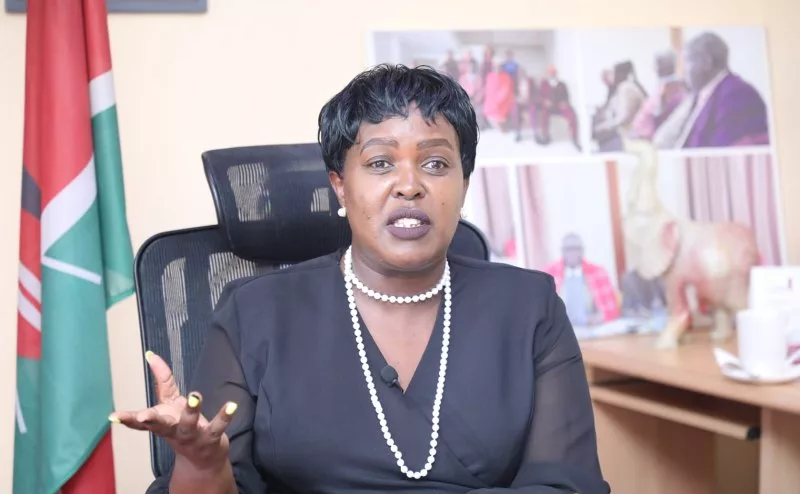
Former Anti-FGM Board CEO Bernadette Loloju says child marriage is a devastating global crisis that robs millions of girls of their youth, education and autonomy every year.
“It’s a big win for human rights campaigners in the world, because early marriage is something that continues making women poorer, making communities poorer, and making women unable to realize their dreams,” Loloju explains.
“You don’t get an education, you don’t get a career, you don’t enjoy your young self, you don’t enjoy your space. And then this leads to gender-based violence, because when you’re married young, you don’t have a career, you don’t have opportunities, you’re not economically empowered, and then you immediately start getting children.”
According to data from the Kenya Demographic and Health Survey (KDHS), approximately 13% of Kenyan girls are married off before reaching the age of 18.
While national averages show a gradual downward trend over recent decades, the practice remains heavily concentrated in Arid and Semi-Arid Lands (ASAL) and rural regions.
Counties such as Tana River, Marsabit, Samburu, Garissa and Migori record some of the highest prevalence rates, surpassing 30% to 40% in certain communities, driven heavily by extreme poverty, retrogressive cultural norms and low literacy levels.
Angelina Cikanda, Programme Development Manager at the Centre for Rights Education and Awareness (CREAW), says the international day provides an essential mechanism to keep duty bearers at both national and county levels under scrutiny.
“For Kenya, this means it’s a call to action to look back at our communities and cultural practices and be able to take bold steps towards protecting girl child,” Cikanda notes.
She adds that the framework demands active accountability: “It is a day that you’re boldly requested to stand up for the children, stand up for their rights… and it’s a call to action that everybody needs to be accountable.”
Echoing these sentiments, Loloju stresses that achieving meaningful progress requires confronting the deeply entrenched patriarchal drivers of the practice. She points out that early marriages are frequently treated by fathers in pastoralist communities as a survival or economic strategy.
“A girl is an additional family member who can get married, and he (father) can get a few cows or a few coins… by making sure every girl who is 9, 10, or 12 years old goes to get married,” Loloju states.
She underscores the shift needed in community mindsets, noting that men must be primary allies in the fight and that daughters must be viewed as equal members of society.
“Women are not objects to be used. Women are equal people.”
Rozilla Lenanyokie, a champion and youth advocate from Samburu County, co-chair of the Youth Advisory Panel under Girls Not Brides Kenya, and a third-year International Relations student at United States International University (USIU Africa), says establishing November 27 is an important milestone because it provides a global moment to raise awareness, hold governments and communities accountable, and keep the issue visible.
However, Lenanyokie, a beneficiary of Samburu Girls Foundation, stresses that the international day alone will not end child marriage, asserting that the real focus must be on what is done on that day within Kenya to amplify the voices of girls and young people, strengthen policy implementation and invest in root-cause solutions.
“One of the biggest solutions I advocate for is education,” Lenanyokie states, explaining that when girls are educated, they gain greater confidence, economic independence and opportunities to make critical life decisions.
In pastoralist communities where education is still undervalued for girls, she argues that the conversation must shift away from merely stopping early marriage to asking what alternatives are offered.
“We must make education accessible and valuable. We shall support families and communities to understand its importance to create opportunities for girls to build the future they want.”
Lenanyokie further emphasises that young people must not just be included in these dialogues but trusted to lead them, noting that true impact stems from turning awareness into action year-round.
Kenya was among 20 African nations that co-sponsored the initiative alongside Uganda, Rwanda and Zambia.
Addressing the 114th Plenary Meeting of the UN General Assembly, Sierra Leone First Lady Fatima Maada Bio, who championed the initiative, underscored the global urgency of the mandate.
“We cannot speak credibly of gender equality while millions of girls are denied the right to determine the course of their own lives. Ending child marriage is not only a human rights imperative; it is an investment in human capital.”
The establishment of November 27 provides a structured platform for annual reviews and, according to advocates, could help keep the fight against child, early and forced marriage at the forefront of national policy.
Advocates say the designation offers an opportunity to strengthen accountability, share best practices and sustain efforts to address child, early and forced marriage in Kenya and globally.
