


Saturday 05th September, 2026 10:42 PM|

The impact of Kenya’s expected El Niño-enhanced rains could depend not only on the intensity of individual storms but also on how long the rainfall persists, a senior meteorologist has warned.
Richard Muita, Director of Regional Meteorological Services-Eastern, in an interview on a local TV station on Saturday, September 5, 2026, said the interaction between El Niño and the Indian Ocean Dipole (IOD) could result in rainfall above normal across much of Kenya.
“El Niño does not work in a vacuum,” Muita said, describing the IOD as another important driver of rainfall in East Africa.
He said the IOD was expected to be strong and could coincide with the El Niño signal during the coming rainy season.

“When the El Niño signal comes at the same time the Indian Ocean Dipole is strong, like what we expect this time, when they combine, it’s like they talk to each other. Then I guess the gates of hell open,” Muita said.
The broader regional forecast supports the expectation of wetter conditions. The IGAD Climate Prediction and Applications Centre (ICPAC) said in its August outlook that El Niño was expected to strengthen during the remainder of 2026, while a positive IOD was also expected to develop. Its forecast indicates an increased likelihood of wetter-than-normal conditions across much of the Greater Horn of Africa, including parts of Kenya, during the October-December season.
But Muita said the eventual impact should not be judged only by the intensity of individual storms.
Cumulative rainfall matters
He pointed instead to the cumulative effect of rainfall that persists.
“For instance, once it starts raining, you know it can continue raining. So the cumulative effect is what brings the problem that we look at in terms of the intensity and the impact,” he said.
That means the duration and distribution of rainfall could be important in determining the severity of flooding and other hazards, particularly in areas that are already vulnerable.
Muita said the forecast indicated that much of Kenya would receive above-average rainfall.
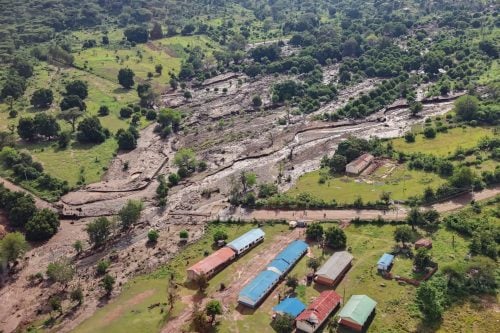
The impacts, however, would vary by location, he said.
He identified areas where floods and mudslides have occurred in the past, as well as major river catchments including the Nzoia and Tana, and areas around lakes where water levels have already been under pressure.
Regions face uneven risks
He also highlighted low-lying parts of eastern Kenya, particularly areas inhabited by pastoralist communities.
“Those are some of the areas that may have a more intense direct impact compared to the more highland areas like central, western Kenya and parts of the Rift Valley,” Muita said.
The forecast is not a prediction that every part of Kenya will experience the same conditions. ICPAC’s regional outlook shows considerable variation in the rainfall probabilities and amounts, with particularly strong wet signals in parts of eastern Kenya and elsewhere across the Greater Horn.
Muita also compared the expected pattern with the 1997-98 El Niño, but did not say that Kenya would experience an identical repeat of that event.
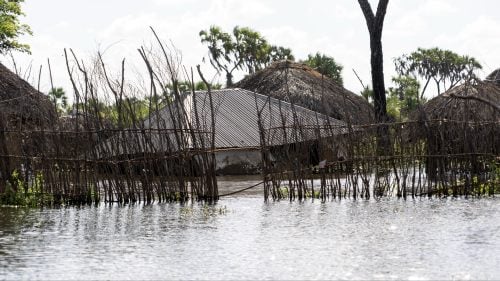
He distinguished the coming season from the heavy rains Kenya experienced in 2023, saying those rains were “not actually El Niño driven” and were associated with other climate drivers.
The distinction does not necessarily conflict with the current regional outlook. ICPAC has identified both 1997 and 2023 as analogue years for the 2026 October-December season because wetter-than-normal conditions were observed across much of the region during those years. It cautions, however, that every El Niño event is different and that the current forecast remains the main reference for preparedness.
For communities in exposed areas, Muita urged vigilance and cooperation with government agencies and humanitarian organisations, including the Kenya Red Cross.
He said Kenyans should be prepared to take appropriate action if the rains reach their areas, with the aim of protecting lives and property.
The forecast therefore does not point to a single uniform threat across Kenya. The potential impacts will depend on where the rain falls, how much accumulates and how long it persists, as well as the vulnerability of affected communities and catchments.
For people in flood- and landslide-prone areas, Muita’s message was straightforward: remain alert, follow official warnings and be ready to act before hazardous conditions reach their communities.
