


Monday 31st August, 2026 02:50 PM|

Thousands of passengers faced delays and cancellations at Jomo Kenyatta International Airport (JKIA) after aviation workers resumed industrial action, reviving a labour dispute that has simmered for months despite government intervention and court orders.
The latest strike is not about a single demand. Instead, it combines a decade-long salary dispute, stalled collective bargaining agreements, accusations of anti-union practices and frustration over what workers say are unfulfilled promises made after negotiations with the government.
Here’s what’s driving one of Kenya’s biggest aviation labour disputes in years.
Why are aviation workers on strike?
The Kenya Aviation Workers Union (KAWU) is leading the industrial action, representing employees across several aviation institutions, including the Kenya Airports Authority (KAA) and the Kenya Civil Aviation Authority (KCAA).
The union says it resumed the strike after a July 27 back-to-work agreement failed to produce meaningful progress on outstanding grievances within the agreed 30-day negotiation period.
KAWU Secretary-General Moss Ndiema has accused KAA and KCAA of failing to honour commitments made during negotiations brokered by Roads and Transport Cabinet Secretary Davis Chirchir.
“We did sign a back-to-work formula, but unfortunately KAA and KCAA failed to meet our demands,” Ndiema said, adding that the employers had not demonstrated sufficient commitment to resolving the dispute.
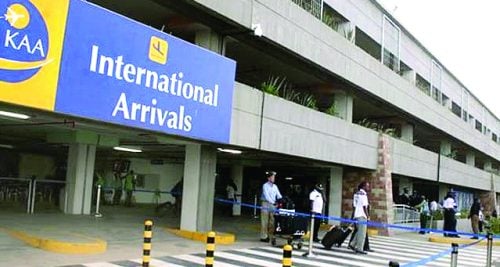
The four biggest issues behind the dispute
1. A salary dispute stretching back to 2015
The biggest grievance centres on workers at the Kenya Civil Aviation Authority, who argue they have gone without salary increments for more than a decade.
According to KAWU, employees are demanding implementation of outstanding salary awards dating back to 2015, while KCAA maintains that the backdated payments cannot simply be implemented as demanded.
The salary dispute has become symbolic of wider frustrations over delayed labour agreements across the aviation sector.
2. Unfinished Collective Bargaining Agreements
A second major issue is the failure to conclude or implement Collective Bargaining Agreements (CBAs).
The union says repeated negotiations have failed to translate into signed agreements that improve workers’ pay and conditions. Earlier strike notices issued in July specifically cited persistent violations of CBAs involving KCAA, KAA, Kenya Airways and Jambojet.
3. Allegations of anti-union practices
The dispute has also expanded beyond salaries.
KAWU has accused Kenya Airports Authority Managing Director Moses Wekesa of frustrating union activities and interfering with workers’ rights.
Among the union’s complaints is the deployment of National Youth Service (NYS) personnel at JKIA, which workers argue undermines regular aviation employees during industrial disputes.
4. Broken trust after government mediation
The current strike is particularly significant because it comes after government mediation had appeared to prevent disruption.
In July, Transport Cabinet Secretary Davis Chirchir brokered a framework agreement that suspended an earlier nationwide strike notice.
That agreement gave the parties 30 days to negotiate their respective disputes.
Workers now argue that the promised progress never materialised, leading them to reactivate the strike.
Why JKIA feels the impact immediately
Unlike many industries, aviation relies on multiple interconnected workers performing highly specialised roles.
At JKIA, disruptions can quickly affect:
- Air traffic coordination
- Passenger processing
- Aircraft turnaround
- Ground handling
- Cargo movement
- Safety and regulatory operations
Because many of these functions cannot easily be replaced, even a partial work stoppage creates delays across the airport’s operations.
Which flights are affected?
The disruption has affected both domestic and international travellers.
Several airlines experienced delays, while RwandAir cancelled two flights after reporting air traffic control issues linked to the disruption in Nairobi.
Passengers reported waiting for hours, with some stranded for more than 12 hours as airlines adjusted schedules.
Why JKIA matters beyond Kenya
The strike’s impact extends beyond Nairobi because JKIA is one of Africa’s busiest aviation hubs.
The airport:
- Connects flights to more than 50 countries.
- Handled over 9 million passengers in 2024.
- Processed more than 364,000 tonnes of cargo.
Serves as Kenya’s primary international gateway and an important East African transit hub.
That makes disruptions at JKIA significant not only for travellers but also for exporters, importers and regional airlines.
Is this the first JKIA strike?
No. The aviation sector has experienced several major labour disputes in recent years.
Notable examples include:
- February 2026: Workers downed their tools over unresolved CBA disputes, causing flight delays before government mediation restored operations.
- July 2026: KAWU issued a nationwide strike notice affecting KCAA, KAA, Kenya Airways and Jambojet before negotiations temporarily suspended the action.
- 2024: Airport workers protested against the proposed 30-year lease of JKIA to India’s Adani Group, leading to significant disruptions and legal challenges.
The repeated disputes have highlighted long-running tensions over labour relations within Kenya’s aviation industry.
