


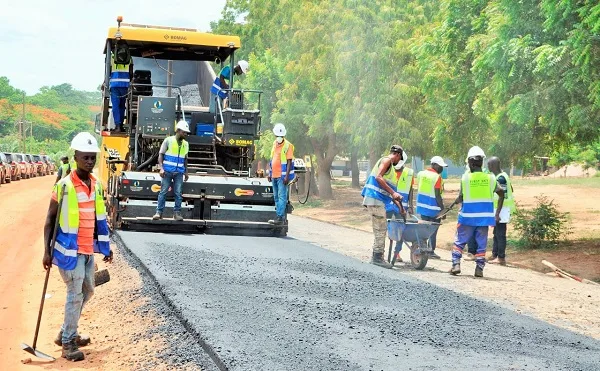
Ghana’s road maintenance financing gap has worsened, with available resources covering only 37% of the country’s estimated road maintenance needs in 2024, down from 45% between 2018 and 2021, according to the World Bank.
The World Bank, in its latest Ghana Economic Update: Reset for Growth – Sustaining Macroeconomic Recovery and Unlocking Transport for Transformation, said the persistent financing shortfall is contributing to the deterioration of Ghana’s road network and undermining the returns on investments in road infrastructure.
The report estimates that Ghana’s trunk road network alone, with a replacement value of about $10 billion, requires approximately $685 million annually for maintenance, equivalent to 0.83% of GDP.
However, the resources available have remained significantly below this requirement, creating what the World Bank describes as a long-standing structural challenge in the road sector.
The report said the implementation of the Earmarked Funds Capping and Realignment Act contributed to the decline in the share of maintenance needs financed, with coverage falling to 37% in 2024.
The financing challenge, the World Bank added, has also been compounded by weaknesses in the flow of Road Fund resources. Between 2016 and 2020, only 58% of accrued road user charge revenues were transferred to approved maintenance budgets, with the remainder redirected elsewhere in the national budget.
Similarly, between 2018 and 2021, available Road Fund revenues covered only 45% of actual maintenance needs, against a government target of 65%.
The World Bank noted that the government released only 50–60% of appropriated Road Fund amounts in 2022 and 2023, while arrears had accumulated to GH¢5.75 billion by the end of 2024.
The report warned that the financing gap becomes increasingly expensive as roads deteriorate, noting that rehabilitation of roads allowed to fall into poor condition can cost five to seven times more than preventive maintenance.
The consequences are already evident in the condition of Ghana’s road network. As of the end of 2025, the country’s approximately 94,000-kilometre road network was estimated to have only 47% of roads in good condition, while 32% were in fair condition and 21% were in poor condition.
The World Bank further noted that only 35% of trunk roads were in good condition, while 64% of urban roads and 65% of feeder roads were rated fair or poor under the earlier assessment. The situation fell short of the government’s 2021–2025 target of having 60% of roads in good condition.
The implications extend beyond the physical condition of roads. According to the report, inadequate maintenance disproportionately affects poorer regions, reduces market access and can push up farm-gate prices, particularly during the rainy season.
Feeder roads are particularly important for agricultural communities because they connect production areas to markets. Yet routine maintenance achievement has averaged only 45%, compared with a 65% target, the World Bank said.
The financing shortfall is also threatening the economic returns from road investments. The World Bank cited Ghana’s Second Transport Rehabilitation Project, whose economic rate of return fell from 38% at appraisal to 16% at completion, with inadequate maintenance identified as a major factor behind the decline.
