


Saturday 29th August, 2026 11:11 PM|
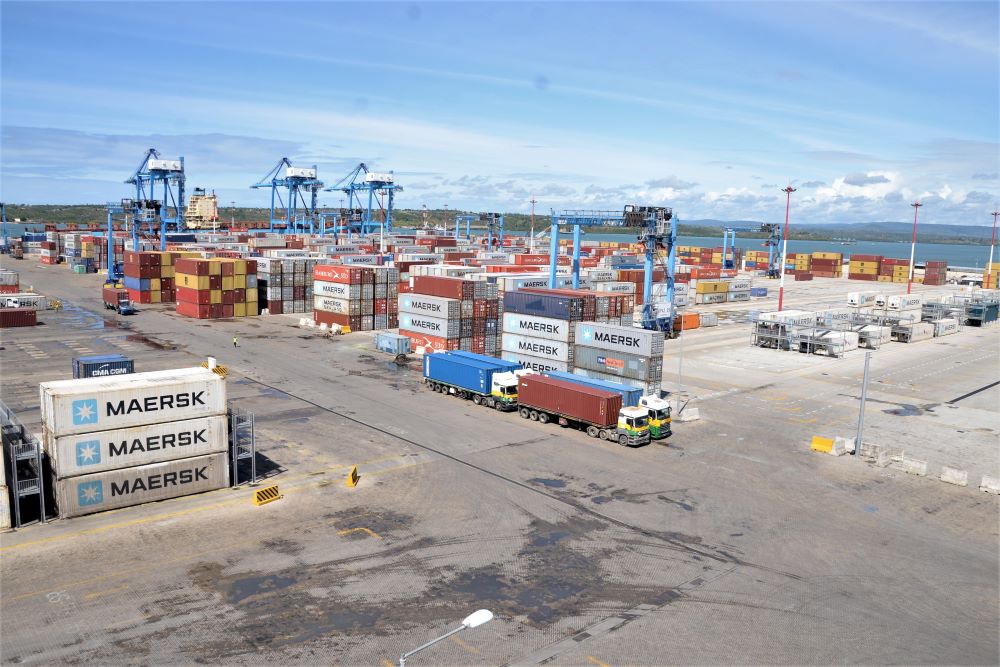
Kenya’s Mombasa port could play a bigger role in East Africa’s industrialisation if the region turns its transport links into integrated production corridors, with the World Bank identifying Kenya as an anchor economy whose infrastructure investments already generate benefits for neighbouring landlocked countries.
The World Bank report, Integrating Africa: From Threads to Hubs, says Kenya’s economic weight within the East African Community (EAC) gives it an important role in providing regional public goods, including transport infrastructure that connects markets beyond its borders.
It specifically points to investments in the expansion of the port of Mombasa and rail upgrades, saying they directly benefit neighbouring landlocked states.

The finding highlights an opportunity for Kenya to move beyond being a transit gateway and become a central link in regional production networks, where goods and inputs move between several East African economies before reaching final markets.
The report does not predict that Mombasa will itself become a manufacturing hub. Rather, its analysis suggests that ports, railways and trade corridors can support industrialisation when they are combined with regional markets, compatible regulations and policies that allow businesses to organise production across borders.
For Kenya, that puts Mombasa Port, the Northern Corridor and EAC trade at the centre of a broader question: can East Africa use its existing connectivity to build factories, suppliers and value chains around the region’s major transport routes?
Mombasa’s regional edge
Mombasa’s significance comes from the markets connected to it. The Northern Corridor links the Kenyan coast with Uganda and other landlocked economies, meaning improvements in Kenya’s transport infrastructure can have consequences for businesses and consumers well beyond the country’s borders.
The World Bank describes Kenya as an “anchor” state in the EAC, saying anchor economies can advance regional initiatives because they capture a large share of the benefits while generating spillovers for neighbouring countries.
In the EAC, it says Kenya’s investments in Mombasa and rail infrastructure demonstrate this dynamic because the projects benefit landlocked neighbours as well as Kenya itself.
That regional reach matters for manufacturing because factories need more than access to a port. They need reliable supplies of raw materials and components, predictable transport and access to enough customers to justify investment.
The World Bank argues that regional integration can help African economies overcome the limitations of relatively small domestic markets by allowing firms to reach greater regional demand and specialise across borders.
Building regional chains
The opportunity is already visible in some EAC industries. The report says processed foods and beverages are the leading regional value-chain sector in the EAC, accounting for 17 per cent of regional value-chain activity. It also identifies regional activity in textiles, horticulture and other manufacturing-related sectors.
Kenya’s plastics and packaging trade is cited by the World Bank as an example of how small and medium-sized economies can specialise in sectors linked to regional value chains. The report says such activities can generate higher domestic value added and stronger links with other parts of the economy than traditional resource exports.
For Kenyan manufacturers, a deeper EAC market could therefore create opportunities to supply firms in Uganda, Tanzania, Rwanda and other regional markets, while companies elsewhere in East Africa could become suppliers to Kenyan industries.
That model would change the role of Mombasa. Instead of serving mainly as the point through which finished imports and exports pass, the port and its connected corridors could support a network in which raw materials, components and semi-processed goods move between countries as part of longer regional production chains.

The integration test
Infrastructure, however, is only part of the equation. The World Bank warns that many African corridor projects fail to deliver their full potential because countries do not sufficiently coordinate the systems that allow infrastructure to operate across borders.
“The hardest part is not the road but rather the absence of shared common standards, data exchange systems, or governance arrangements that make roads transboundary,” the report says.
EAC customs interconnection illustrates both the progress and the remaining challenge. The report says Kenya, Uganda, Tanzania, Rwanda and Burundi have interconnected their customs systems, but implementation remains incomplete and differences between national information-technology systems continue to complicate regional integration.
For Mombasa to become a stronger industrial gateway, therefore, the region would need more than additional port capacity or rail investment. Customs systems, standards, data exchange, regulations and transport procedures would also need to work across national borders.
The World Bank says regional value chains remain at an early stage of emergence rather than fully embedded networks, showing that the opportunity is significant but not guaranteed.
For Kenya, the prize is potentially larger than moving more cargo through Mombasa. If East Africa can connect its markets and production systems more effectively, Kenya’s coastal gateway could help anchor a regional manufacturing network capable of attracting investment, expanding exports and creating higher-value economic activity across the EAC.
