


Sunday 30th August, 2026 12:12 AM|

Kenya and its East African Community (EAC) neighbours could unlock cheaper and more competitive regional trade by tackling the hidden costs of moving goods across borders, with customs delays, fragmented logistics and differing regulations accounting for a large share of Africa’s trade costs, the World Bank says.
About 60 per cent of Africa’s trade costs come from unilateral, behind-the-border sources, according to the World Bank report Integrating Africa: From Threads to Hubs. These include inefficient customs procedures, fragmented logistics, regulatory barriers and inadequate infrastructure.
The finding shifts the focus of trade policy beyond tariffs to the systems that determine how quickly and predictably goods move once businesses begin crossing borders.
For Kenyan companies selling into Uganda and other EAC markets, those costs can affect transport times, inventory requirements and the reliability of supply chains, particularly for food, construction materials and manufactured products.
The report describes Africa’s borders as “economic choke points”, saying their costs can be reduced through streamlined customs, mutual recognition of standards and interoperable border systems.
Where costs accumulate
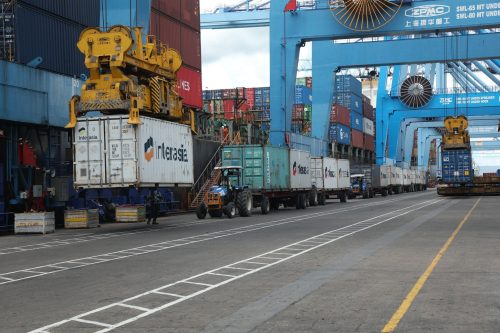
The cost of regional trade can build up at several stages between a producer and the final buyer. A shipment may face transport costs, inspections, permits, customs procedures and storage expenses before reaching its destination. When processes are slow or unpredictable, businesses can also face higher inventory costs and longer delivery times.
For agricultural products, delays can be particularly costly because some goods are perishable and require appropriate storage or faster movement to market.
The World Bank says domestic trade costs are especially important for staple-food systems such as maize, cassava and rice, where delays, spoilage and price differences can undermine both farmers and consumers.
But the report cautions against viewing the problem simply as a lack of physical infrastructure.

It identifies discretionary inspections, inefficient permits and non-transparent clearance procedures as important sources of domestic trade costs and recommends single national trade and logistics windows that integrate customs, transportation, food safety and tax clearance through a unified digital system.
The report also recommends monitoring trade corridors using indicators such as average clearance times, truck turnaround and spoilage rates.
For Kenya, that puts greater emphasis on the efficiency of the Northern Corridor, which connects the port of Mombasa with Uganda and other landlocked markets.
Malaba shows what works
The Kenya-Uganda border offers one example of the potential gains from better regional coordination.
The report says customs interconnection at the Malaba One-Stop Border Post reduced clearance times from five days to less than 24 hours.
The improvement illustrates how connecting customs systems and coordinating border procedures can reduce the time goods spend waiting for clearance.
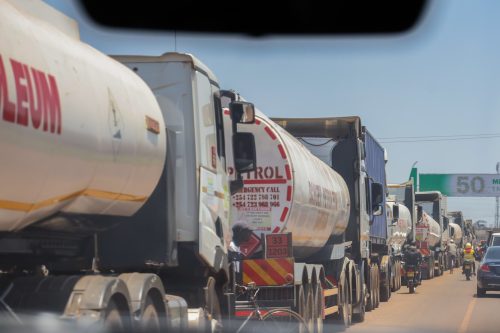
Malaba’s importance extends beyond Kenya and Uganda because it sits on the Northern Corridor, a major route for goods moving from Mombasa towards the region’s landlocked economies.
The World Bank also highlights the Central and Northern Corridor transport observatories, which monitor freight movement along East Africa’s two major corridors linking the ports of Mombasa and Dar es Salaam with landlocked countries.
However, the report says one-stop border posts require more than physical facilities to deliver their full benefits. They need aligned laws, shared data platforms and adequate staffing, while customs systems must be able to exchange information effectively.
Many cross-border infrastructure projects, it says, face problems not because physical assets are missing but because “customs systems do not speak to each other.”

EAC needs one market
The stakes are significant because regional trade provides a pathway for African businesses to achieve scale beyond their relatively small domestic markets.
The report says African exporters involved in regional trade tend to be more diversified and productive, while regional trade can support industrialisation by embedding production within local and regional economies.
The EAC already has emerging regional production networks. Processed foods and beverages account for 17 per cent of regional value-chain activity, making them the leading regional value-chain sector in the bloc. The report also identifies strong EAC trade links in textiles and horticulture, with Kenya and Uganda acting as regional nodes.
That means reducing the cost of crossing borders could have implications well beyond freight companies. More predictable trade can help manufacturers source inputs, enable food businesses to reach larger markets and allow firms to organise production across several EAC countries.
The World Bank argues that reducing regional trade frictions requires “harmonized rules, shared digital platforms, streamlined documentation, and mutual recognition of procedures.”
For Kenya-EAC trade, the challenge is therefore no longer only about whether tariffs are low enough. It is whether the infrastructure, regulations, customs systems and data networks behind those borders work efficiently enough for businesses to treat East Africa as a genuinely connected market.
