


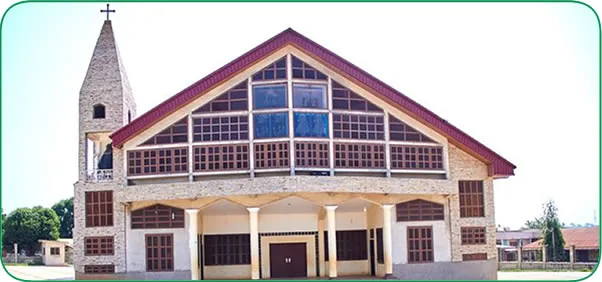
The Catholic Diocese of Konongo-Mampong says the priest it suspended indefinitely has been found at the Police Training Centre in Koforidua in the Eastern Region.
The Diocese disclosed this in a statement issued on August 27, 2026, in response to criticism surrounding the whereabouts and welfare of Rev. Fr. Samuel Adapore.
Fr. Adapore was suspended from sacred functions on August 24, 2026, and barred from publicly administering the sacraments, celebrating or concelebrating Mass, and officiating at other liturgical services.
In the latest statement, the Diocese said Fr. Adapore was found at the training centre after independently deciding to enrol in a programme to join the Ghana Police Service.
According to the Diocese, he chose “on his own and singular volition” to be enlisted as a private person and undergo training at the centre.
The Diocese did not indicate when Fr. Adapore arrived at the facility or provide further details about his decision to pursue a career in the Police Service.
The disclosure comes amid criticism on social media over the Diocese’s handling of the priest’s absence and subsequent suspension.
Critics had questioned whether sufficient efforts were made to establish Fr. Adapore’s whereabouts and welfare before the disciplinary action was taken.
Questions were also raised about the canonical basis and procedure for the suspension, with critics citing Canons 533 and 1717 and questioning whether the priest’s right to defend himself had been respected.
The Diocese, however, rejected the suggestion that concern for Fr. Adapore’s welfare was incompatible with taking disciplinary action.
“The Church can ask whether a priest is safe while also determining whether he has abandoned his assignment without authorisation, and can seek his whereabouts while regulating his ministry,” it said.
The Diocese said an unexplained departure by a priest from his parish places an obligation on the Bishop to ensure that pastoral services continue for the faithful.
It also rejected suggestions that the suspension amounted to abandoning Fr. Adapore.
The Diocese explained that a suspension from sacred functions restricts the exercise of certain priestly functions but does not mean the priest has ceased to be a priest or that the Church has rejected him.
“The Church is, in effect, saying: ‘You are still our brother and our priest, but you cannot presently exercise certain priestly functions because of the circumstances surrounding your conduct,’” the Diocese said.
It maintained that canonical discipline can serve a restorative purpose by safeguarding ecclesial order, repairing scandal and encouraging reform.
The Diocese also cautioned against demands for the public disclosure of every step taken to establish the priest’s welfare, saying confidentiality and his personal dignity must be protected.
The Diocese said the matter should not be framed as a conflict between the Bishop and Fr. Adapore, but rather as a challenge of balancing the priest’s welfare and dignity with the Diocese’s responsibility to the faithful and the discipline of the Church.
