


Thursday 27th August, 2026 10:39 AM|
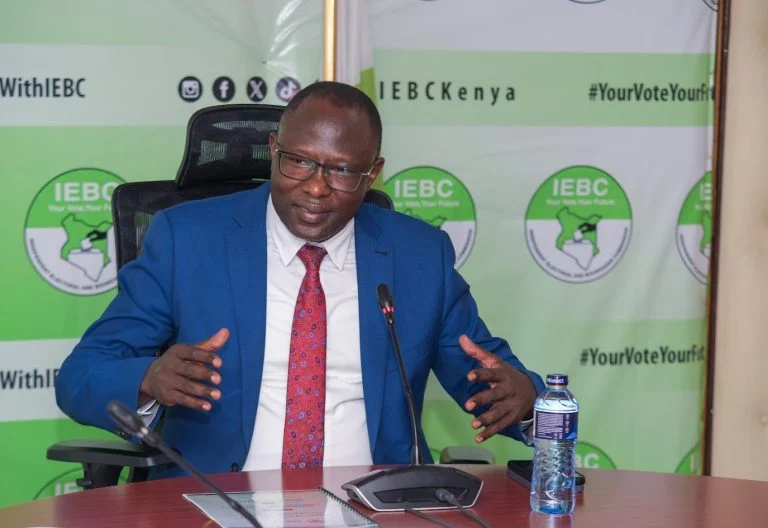
Sixteen years after Kenya promulgated a Constitution intended to strengthen electoral accountability and public confidence in state institutions, the Independent Electoral and Boundaries Commission (IEBC) is still facing a trust and credibility test as the country prepares for the 2027 General Election.
The Constitution came into force on August 27, 2010, after Kenyans voted overwhelmingly for a new political and governance framework in a referendum earlier that month.
It introduced stronger constitutional safeguards for elections, requiring them to be free and fair and administered by an independent body in an impartial, neutral, efficient, accurate and accountable manner.
Article 86 requires electoral systems to be simple, accurate, verifiable, secure, accountable and transparent, while Article 88 provides for the IEBC and sets out its constitutional mandate.
But 16 years later, public confidence in the institution remains unresolved.

That assessment is not based only on political criticism. In its judgment on the 2022 presidential election, the Supreme Court said Kenya had a longstanding background of distrust in the administration of elections and that the reaction to the 2022 results showed the IEBC had not yet secured universal public confidence and trust in its internal management of elections.
The issue is again becoming prominent as the commission prepares for the 2027 polls.
IEBC has been undertaking preparations and electoral reforms, including work on the framework for the 2027 election and management of the voters’ register. The commission has also been engaging Parliament on electoral reforms.
Against that background, a new dispute over election technology has put the commission’s credibility under political scrutiny once again.
Trust after 2010
The 2010 Constitution was intended to address weaknesses in Kenya’s electoral and governance institutions following years of contested elections and, most recently, the violence that followed the disputed 2007 presidential poll.
The IEBC was given constitutional independence and responsibility for conducting and supervising elections and referendums.
But the experience of elections since 2010 shows that creating an independent institution does not automatically create public trust.
The 2017 presidential election was the most significant test.
The Supreme Court annulled the August 8, 2017 presidential election, finding that it had not been conducted in accordance with the Constitution and applicable law. The court said irregularities and illegalities affected the integrity of the election and ordered the IEBC to conduct a fresh presidential poll.

The decision demonstrated the strength of the constitutional system: an election could be challenged and nullified through the courts.
It also exposed the consequences for public confidence when the institution managing an election is found to have fallen short of constitutional requirements.
In 2022, the legal outcome was different as the Supreme Court upheld William Ruto’s election after rejecting petitions challenging the result. It also examined the technology used by the IEBC and found that the system met the constitutional standards of integrity, verifiability, security and transparency.
Yet the same judgment made an important observation: the IEBC had still not achieved universal public confidence and trust.
That distinction is central to understanding the commission’s challenge in 2026.
An election can survive legal scrutiny while the institution responsible for conducting it continues to face political and public scepticism.
Scrutiny before 2027
The latest dispute involves the IEBC’s tender for an Integrated Elections Management System (IEMS), which is expected to form part of the technology infrastructure for the 2027 election.

The tender was advertised on August 11, 2026, and is scheduled to close on September 1, according to reporting on the procurement notice.
Former Deputy President Rigathi Gachagua has questioned the transparency of the process, claiming that the tender specifications could favour South Korean technology company Miru Systems.
Gachagua claimed that the outcome had already been predetermined in favour of the company, but he did not provide evidence establishing that the tender had been awarded or that the procurement had been manipulated.
“You are well aware that what Kenyans do not know is that the tender process and result has already been preconceived and is awaiting rubber stamping to MIRU SYSTEMS CO. LTD of South Korea,” Gachagua said.
He challenged the commission to disclose how the technical specifications were developed and approved.

“Can IEBC produce documentary evidence showing who drafted the technical specifications for Tender No. IEBC/OIT/01/2026–2027, including all internal committee minutes, technical working papers, market surveys, and approval records?” he asked.
Gachagua also questioned the Ksh30 million tender security and called for greater disclosure about the procurement’s commercial scope and technical requirements.
The claims remain unproven and should not be treated as evidence that the election will be rigged or that a particular company has already won the tender.
But politically, the dispute illustrates why procurement decisions involving election technology are especially sensitive.
The IEBC is not only buying equipment. It is making decisions about systems that will be used to identify voters, manage election information and support the administration of a contest whose outcome will determine Kenya’s next government.
The commission’s response to scrutiny will therefore be as important as the procurement itself.
Credibility before polling
The IEBC’s credibility challenge extends beyond the current tender as the commission must demonstrate that the voters’ register is accurate and secure, that election technology is properly tested, that results can be verified and that procedures are applied consistently to all candidates and political parties.
The Constitution provides the benchmark. Article 86 requires electoral systems to be accurate, verifiable, secure, accountable and transparent. Article 81 requires elections to be administered by an independent body in an impartial, neutral, efficient, accurate and accountable manner.
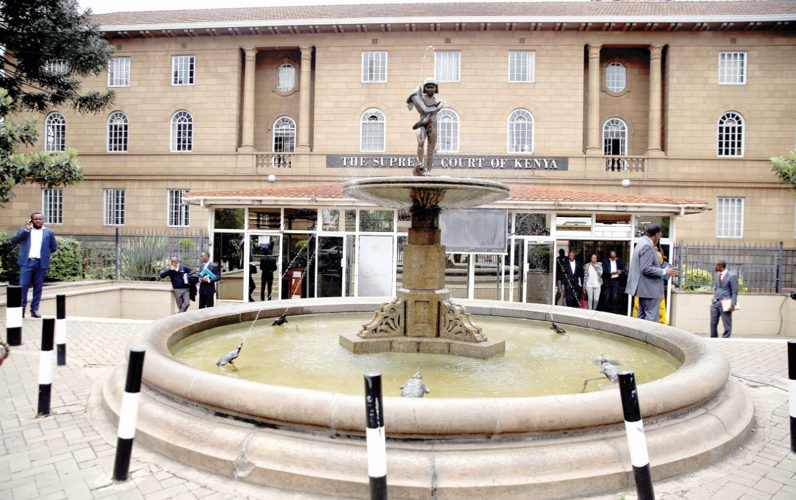
The Supreme Court’s 2022 judgment also provides an important lesson. It found that the technology used in that election met the constitutional standards, even while acknowledging the wider problem of distrust surrounding the electoral process.
That means the IEBC’s task before 2027 is not simply to satisfy a court after an election.
It must build confidence before voters cast their ballots.
Transparency over procurement, voter registration, technology testing, results transmission and dispute resolution can help reduce the space for speculation. Equally, political leaders have a responsibility to distinguish allegations from evidence when making claims about the electoral process.
That responsibility has become more important as political rhetoric about the 2027 election intensifies.
The IEBC has already presented its 2027 election preparedness framework to Parliament and has been involved in discussions on electoral law reforms.
Those preparations provide an opportunity to address weaknesses before they become election-day controversies.
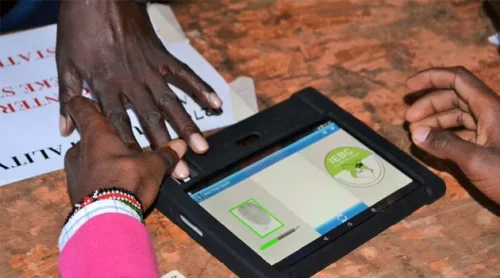
Sixteen years after the 2010 Constitution, Kenya has stronger legal mechanisms for challenging presidential elections than it had before the new constitutional order.
The Supreme Court’s 2017 decision showed that an election could be nullified when constitutional and legal requirements were not met. The 2022 ruling showed that an election could also withstand intense legal scrutiny.
But the persistence of distrust demonstrates that constitutional safeguards and court judgments are only part of the credibility equation.
As Kenya moves towards 2027, the IEBC still faces the question that has followed it through successive elections: can it convince voters, political parties and candidates that the electoral process is independent, transparent, secure and credible?
The answer will depend not only on what the commission does on election day, but on how openly and consistently it manages the process in the months leading to the vote.
Sixteen years after the Constitution promised a more accountable electoral system, public confidence in the institution administering elections remains one of the country’s unfinished democratic tests.
