


By Emelia B. Addae
Accra, Aug. 26, GNA – Stakeholders from government, financial institutions, regulatory agencies, private sector and academia, have proposed the establishment of a dedicated Ghana-China Zero-Tariff Fund to help Ghanaian exporters overcome financing constraints and take advantage of China’s zero-tariff market access.
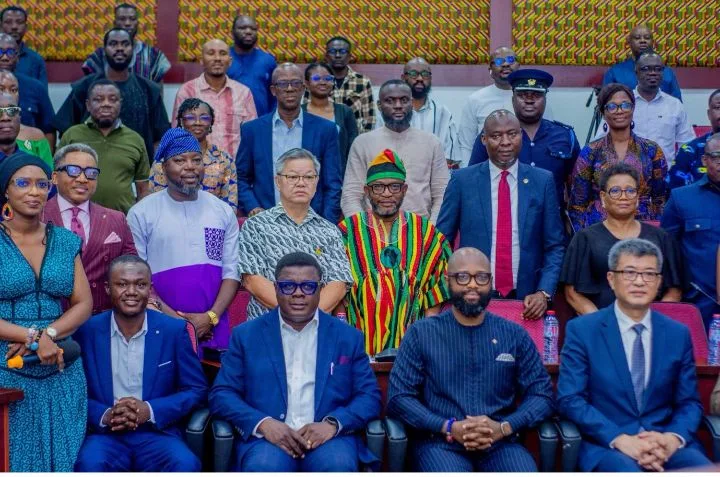
The proposal emerged from the Ghana-China Zero-Tariff Policy Roundtable in Accra, convened by the China Europe International Business School (CEIBS Africa) and the Africa-China Centre for Policy and Advisory (ACCPA).
The high-level forum brought together Ghanaian and Chinese stakeholders to examine barriers preventing expanded market access from translating into increased exports and stronger economic opportunities.
During an interactive Zero-Tariff Policy Lab, participants identified access to finance as a major obstacle, particularly for small and medium-sized enterprises seeking to increase production, aggregate supplies, invest in processing and meet potential demand from the Chinese market.
They proposed a dedicated financing mechanism to support businesses seeking to export under the zero-tariff framework and urged financial institutions, to move beyond conventional lending models by developing products tailored to emerging Ghana-China trade opportunities.
Participants argued that financing should cover the entire export value chain rather than focus only on individual exporters.
Using the cashew sector as an example, they explained that businesses seeking to expand exports would require financing to aggregate produce from farmers, strengthen supply chains and increase production.
They suggested contract farming finance as one option that could enable businesses to support out-growers while securing reliable supplies.
Warehouse financing, fintech-enabled financing, and equipment leasing, were also identified as potential tools for addressing funding gaps across different stages of the value chain.
Participants further examined how development finance institutions, including Ghana EXIM Bank and Development Bank Ghana, could be deployed more effectively to support export-oriented businesses.
The discussions highlighted the close link between export financing and Ghana’s productive capacity.
Participants noted that businesses could struggle to meet growing demand from China without adequate financing, sufficient supplies and investment in processing facilities.
In the cashew industry, they proposed a phased strategy that combines immediate export opportunities with long-term investment in domestic processing.
Participants also pointed to the potential of Ghanaian and Chinese joint ventures to provide financing, equipment and technology for local production and processing.
The roundtable further noted that while zero tariffs created market access opportunities, exporters would still require adequate financing and productive capacity to produce, process and deliver goods competitively.
Participants therefore maintained that the proposed Ghana-China Zero-Tariff Fund should form part of a broader export-financing ecosystem rather than operate simply as another lending facility.
They also identified standards and certification, production scale, regulatory requirements, logistics and market linkages as key constraints that must be addressed alongside financing.
The stakeholders noted that addressing those challenges would be critical to achieving sustained export growth under China’s zero-tariff policy.
They said Ghanaian businesses would need adequate financing and productive capacity to fully benefit from opportunities in the Chinese market.
GNA
Edited by Christabel Addo
Reporter: Emelia B. Addae
Email: [email protected]
