


Tuesday 18th August, 2026 10:29 PM|

The bullet-riddled aftermath of Zambia’s presidential election has sent a chill across East Africa, nowhere more keenly felt than in Kenya, where the Independent Electoral and Boundaries Commission (IEBC) already faces a crisis of confidence over its capacity to deliver a credible vote in 2027.
As Lusaka reels from armed raids, opposition arrests, and accusations of technology-driven manipulation, Nairobi’s political class draws uncomfortable parallels. They warn that the same playbook of claimed state interference, bribery, and biometric tampering could be deployed on Kenyan soil.
Zambia’s electoral commission briefly suspended the counting and announcement of results on Friday, citing violence against polling staff and theft of marked ballot papers. The chaos followed a government raid in which security forces seized weapons and arrested 11 people, including senior opposition figures, involved in an insurrection plot.
“It was an attempt on my life. Colleagues were shot in my presence, leading opposition candidate Brian Mundubile said.
The Zambian government has framed the arrests as a national security victory. Top civil servant Patrick Kangwa claimed that those detained held “high-grade military weapons”, ammunition, and other materials intended for an armed insurrection. Among those arrested was Patrick Mwansa, the husband of Tasila Lungu, daughter of former Zambian President Edgar Lungu – a move that has deepened suspicions of a politically motivated purge.
President Hakainde Hichilema secured re-election with roughly 60 per cent of valid votes against Mundubile’s 38 per cent. The opposition has rejected the outcome, citing voting irregularities and the possible alteration of results forms. Mundubile had earlier claimed victory, and his camp is expected to mount a legal challenge.

Nairobi’s deepening anxieties
For Kenya, the Zambian scenario is more than distant news. It is a dress rehearsal for anxieties already simmering ahead of 2027. The IEBC, still struggling to rebuild public confidence after previous disputed polls, now finds itself at the centre of fresh accusations.
Opposition leaders, lawmakers, and civil society voices are questioning the integrity of the voter registration process.
Central to the controversy are claims that influential political figures have openly suggested that votes could be manipulated in favour of President William Ruto’s re-election bid, yet no action has been taken against them.
Wiper Patriotic Front leader Kalonzo Musyoka has emerged as one of the most vocal critics of the commission, accusing it of remaining silent even after senior politicians made remarks widely interpreted as endorsing electoral malpractice.

Speaking during an interview with Kameme TV, Kalonzo questioned why leaders making inflammatory comments about the next election had neither been censured nor investigated.
“Kama jamaa anaweza sema uchaguzi unaokuja hata kama kura hazitatosha tutaongeza, huyo ni mtu wa aina gani?” Kalonzo posed.
“Hajashikwa, na hatujasikia IEBC ikimkemea mtu kama huyo.”
In a written response to this publication, IEBC Chairman Erastus Ethekon defended the commission’s record.
“The Independent Electoral and Boundaries Commission remains committed to conducting free, fair, and credible elections,” Ethekon said.
“Allegations of electoral malpractice are taken seriously, and where evidence is presented, the commission takes appropriate action within its mandate.”
Ethekon added that the commission had not received formal complaints regarding the remarks referenced by Kalonzo and urged political leaders to channel concerns through legal mechanisms rather than public pronouncements.

Technology and security fears
The technology question further binds the two countries. In Zambia, opposition leaders have focused on the procurement and deployment of biometric kits, claiming that the government apparatus is positioning itself to manipulate the vote through digital means. The electoral commission’s brief suspension of counting, coupled with reports of theft of marked ballot papers, has only fuelled those suspicions.
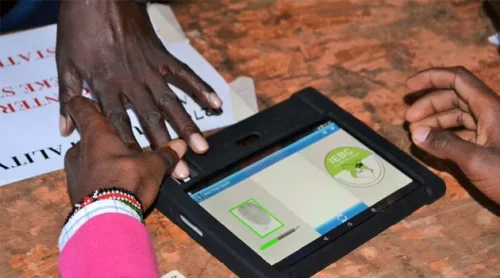
In Kenya, similar anxieties surround the KIEMS kits and Smartmatic technology. Opposition figures warn that the same vulnerabilities – pre-loaded results, transmission glitches, and lack of independent verification – could be exploited in 2027.
However, the IEBC Chairperson Erastus Ethekon has assured Kenyans the electoral body is committed to delivering credible polls.
“I wish to assure all Kenyans that the Commission has listened to your expectations. We have reflected on lessons from previous electoral cycles and carefully considered recommendations from election observation missions, court decisions, post-election evaluations, and stakeholder engagements. These lessons have informed the reforms, priorities, and operational improvements contained in the documents we launch today,” Ethekon said.
Moreover, the security dimension has taken on renewed urgency following Interior Cabinet Secretary Kipchumba Murkomen’s declaration that monitoring former Deputy President Rigathi Gachagua’s activities will be his primary focus until the 2027 General Election.
Speaking at Kaptilol Grounds in Elgeyo-Marakwet County on Saturday, Murkomen accused Gachagua of orchestrating violence and vowed to deal firmly with him, claiming he posed a threat to national security and public order.
“Rigathi Gachagua, my business now until Kenya crosses 2027 safely is to monitor your activities in the Republic of Kenya,” Murkomen stated.
“Hiyo kazi nitafanya usiku na mchana, you’re my single most point of focus because of the threat you’re posing as the father of violence.”
“Now that you’ve abrogated the duty of instilling fear and violence, naming Kenyans and blackmailing them, I want to tell you that we will deal with you firmly.”
The Interior CS further said, without providing evidence, that Gachagua had been soliciting money from political aspirants, intimidating some of them, and using the funds to organise criminal gangs.
“I know that you have been collecting money from potential aspirants, intimidating some of them, promising them certificates,” Murkomen claimed.
“We know the money you’re collecting, you’re using it to prepare goons, we will deal with you.”

Murkomen also claimed that Gachagua had been intimidating businesses that had declined to finance his political activities, adding that security agencies were monitoring his every move.
“You must know that we know all your activities, intimidating businesses that have refused to give you campaign money, using goons and criminals in Mt Kenya and other parts,” he said.
“I want to tell you that we’re monitoring your activities every minute. Nikitoka hapa nataka kujua ulipitia wapi na watu wa gani unatembea nao.”
The Zambian episode raises the spectre of security forces being used against political opponents. The raid that netted Mundubile and other opposition figures, complete with an exchange of gunfire and allegations of a foreign-backed insurrection, mirrors the kind of heavy-handed state response that Kenyan opposition leaders have long feared. Murkomen’s declaration that Gachagua is his “single most point of focus” until 2027 has amplified those fears, with critics viewing it as a targeted political operation disguised as security work.
Kenya’s history offers sobering context. The 2007 post-election violence left over 1,000 people dead and displaced hundreds of thousands. The 2017 election was nullified by the Supreme Court – a first in Africa – over irregularities in the transmission of results. The 2022 election, while largely peaceful, was also marred by opposition claims of manipulation.

What happens next?
The coming months will be critical for both nations. In Zambia, the opposition is expected to lodge a legal challenge, though it is unlikely to succeed. The risk of localised political violence remains, even if widespread unrest appears contained.
In Kenya, the IEBC faces mounting pressure to demonstrate its independence and competence. The commission has promised to conduct a comprehensive review of the Ol Kalou by-election and address the concerns raised by critics.
On his part, the United Democratic Alliance (UDA) Secretary General Hassan Omar reiterated the ruling party’s confidence in its democratic prospects.
“The Kenya Kwanza administration maintains solid national popularity,” Omar said.
“We do not need electoral malpractices to secure a second term in 2027. Our development record will speak for itself.”
Omar urged the opposition to focus on issue-based campaigns rather than unfounded rigging allegations, stating that Kenyans are tired of doomsday predictions about elections and that all should work towards peaceful, credible polls.
