


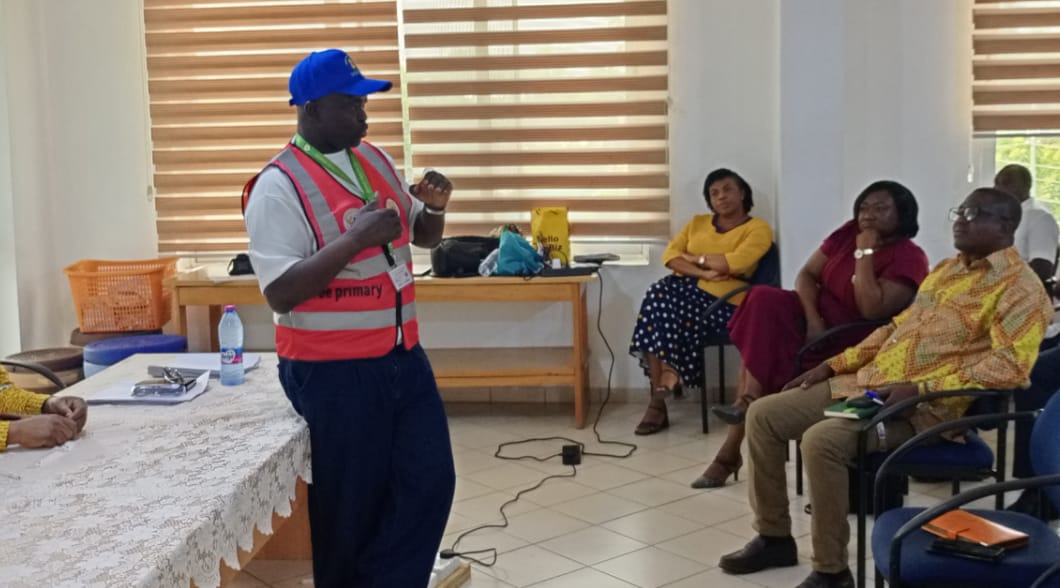
Dr Samuel Kaba Akoriyea, the Director-General (DG) of the Ghana Health Service (GHS), says health staff scheduled to undertake community and home-based services under the Free Primary Health Care (FPHC) programme will be issued staff Identification (ID) cards.
He said the ID cards would contain unique security codes to help members of the public to verify their identity and prevent imposters from operating in the name of the GHS.
He said ID cards would be provided at no cost to health workers, particularly Community Health Nurses (CHNs), as part of measures to strengthen the implementation of the FPHC programme.
Dr Akoriyea said this when he addressed a two-day Trainer of Trainers programme on FPHC in Bolgatanga.
The training brought together GHS directors, senior managers and their teams from the national and regional levels.
The DG said each staff member would receive an ID linked to the Service’s database, and that the card could be scanned to establish whether the bearer was a legitimate health worker.
“Each one of you will have the first ID card at no cost with a security code, especially for the community health nurses,” the DG said.
Dr Akoriyea said the move was necessary because under the FPHC programme, CHNs would conduct home visits and outreach activities, which created the possibility of people to falsely present themselves as health personnel.
“ID card will come with a code, when is scanned, we will know whether the bearer is a health worker or not. The codes will come from our database,” the DG explained.
He warned that anyone who attempted to impersonate a health worker would be exposed through the verification system, saying “So if anybody goes in our name, the person will be caught, because that person will not be part of our database.”
Dr Akoriyea added that the ID system was intended not only to improve security during community-based services but was further intended to strengthen accountability and public confidence in the FPHC programme.
He said the system formed part of a broader three-pillar approach to delivering the FPHC programme.
He said the programme had three pillars and explained that the first pillar would involve the home visit, outreach services to be undertaken by CHNs, and community health durbars to identify health conditions early and refer patients to CHPS compounds, health centres and polyclinics.
He said the second pillar would introduce patient navigators to serve as a link between patients and health facilities, help patients secure appointments and ensure that information from health facilities was communicated back to community health workers for follow-up.
Dr Akoriyea indicated that patients would also receive reminders ahead of appointments.
He expressed hope that the FPHC programme would eventually ensure that patients could access essential health services without having to pay individuals at the point of service.
