


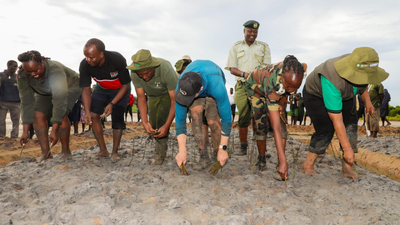
Kenya has set a new world record after 4,124 Scouts and other participants planted mangrove seedlings simultaneously at the Jomvu Kuu Mangrove Site in Mombasa County. The record-breaking event brought thousands of people together for a conservation effort aimed at restoring Kenya’s coastal ecosystems. The initiative was organised by the Kenya Scouts Association in partnership with the Kenya Forest Service and the M-PESA Foundation. A total of 4,196 people participated in the planting exercise, but 4,124 were successfully verified for the record after meeting the required conditions. The attempt surpassed the minimum threshold of 3,000 participants required for the Guinness World Records category. Participants manually planted native mangrove seedlings under supervision from forestry officials and stewards. Beyond the record itself, the event was intended to highlight the importance of mangroves in protecting coastlines, supporting marine biodiversity and strengthening communities against the effects of climate change.
4,124 Scouts plant mangroves simultaneously in Kenya
The record attempt brought together 4,124 successfully verified participants at the Jomvu Kuu Mangrove Site in Mombasa County. They planted mangrove seedlings at the same time as part of a carefully organised exercise designed to meet Guinness World Records requirements. The event was led by the Kenya Scouts Association with support from the Kenya Forest Service and the M-PESA Foundation. Officials and stewards were present to supervise the planting and ensure participants followed the required rules. The event attracted 4,196 participants in total, but only 4,124 were ultimately counted towards the record after verification. The figure exceeded the required threshold of 3,000 participants. The exercise was also connected to International Day for the Conservation of the Mangrove Ecosystem. By turning a large-scale restoration activity into a record attempt, organisers hoped to attract attention to the importance of protecting Kenya’s coastal habitats while encouraging young people to take part in environmental conservation.
Kenya breaks the previous mangrove planting record
The 4,124 participants surpassed the previous Guinness World Records benchmark for the most people planting mangrove trees simultaneously. The record attempt required participants to follow specific conditions before they could be counted. The planting had to involve mangrove seedlings and participants were required to plant them correctly according to the prescribed guidelines. Machinery was not permitted during the exercise. Kenya Forest Service officers and appointed stewards helped monitor the activity and verify compliance. Guinness World Records then reviewed the evidence submitted from the event before confirming the achievement. The distinction is important because the record was not based simply on the number of people who attended the conservation event. It measured how many participants successfully carried out the required planting activity at the same time. The final figure of 4,124 therefore represented those who met the verification requirements rather than the entire crowd present at the site.
Why mangroves are important for coastal ecosystems
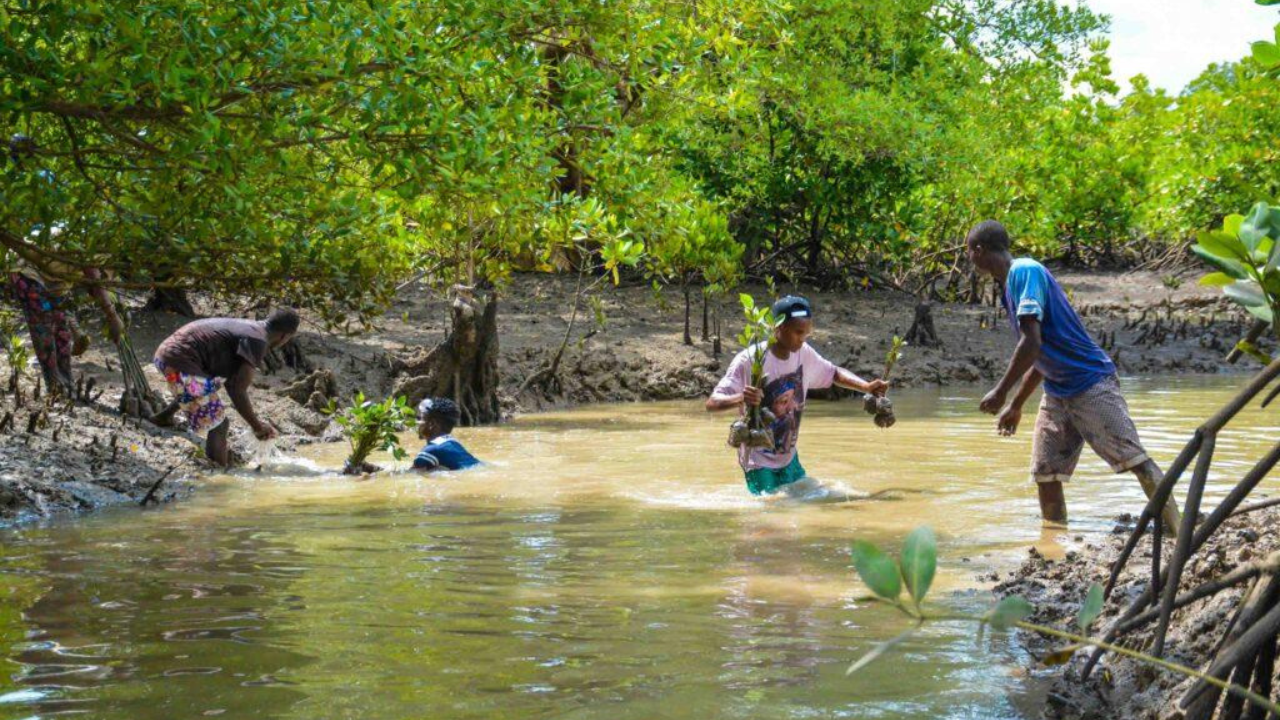
Mangrove forests are among the most important ecosystems found along tropical and subtropical coastlines. Their complex root systems help stabilise shorelines and can reduce erosion by holding sediment in place. They also provide shelter and breeding grounds for fish, crabs, birds and other wildlife. Many species depend on mangrove habitats during parts of their life cycles. The forests also benefit coastal communities by supporting fisheries and helping protect settlements from waves and storm impacts. Another major benefit is their ability to capture and store carbon in their vegetation and especially in the soils beneath them. This makes mangroves important in discussions about climate change as well as biodiversity. However, mangrove forests can be damaged by development, pollution, overharvesting and changes to coastal conditions. Restoration efforts such as the Mombasa planting event are intended to rebuild degraded habitats and improve the resilience of coastal ecosystems.
The record is part of Kenya’s wider tree-growing programme
The mangrove planting event is connected to Kenya’s wider efforts to restore degraded landscapes and increase tree cover across the country. Kenya has been implementing its 15 Billion Tree Growing Programme, which aims to grow 15 billion trees by 2032. The programme covers different ecosystems and includes efforts to restore forests, watersheds and other degraded areas. Mangroves are particularly important because they provide environmental benefits that extend beyond the immediate planting site. Restored coastal forests can help protect shorelines while supporting marine ecosystems and local livelihoods. Government agencies have also been working with communities and conservation organisations to encourage tree growing and restoration. The participation of thousands of Scouts gives the programme a strong youth component. It also demonstrates how environmental campaigns can involve large numbers of people in practical activities rather than relying only on government agencies or professional conservation groups.
Participants had to meet strict planting requirements
The number of people attending the event was higher than the final number recorded for the Guinness achievement. Reports said 4,196 people participated in the exercise, while 4,124 were successfully verified. This difference reflects the strict conditions attached to the record attempt. Participants had to plant the mangrove seedlings according to the rules and meet the requirements set for the category. The planting was carried out manually without machinery, while officials and stewards monitored the exercise. These procedures helped establish that the participants were genuinely taking part in the simultaneous planting activity. The distinction also prevents a large gathering from automatically being treated as a world record. Guinness World Records requires evidence to demonstrate that the specific conditions for a record category have been satisfied. In this case, the final figure of 4,124 was therefore based on verified participants rather than simply the number of people who arrived at the Mombasa site.
Mangroves can help Kenya tackle coastal erosion
Kenya has a long coastline along the Indian Ocean, making coastal ecosystems important to both the environment and local communities. Mangrove forests can act as natural buffers along shorelines by reducing the impact of waves and helping hold coastal sediments together. Their roots create habitats for marine organisms and provide nursery areas for species that contribute to fisheries. This makes mangrove conservation relevant not only to wildlife but also to people whose livelihoods depend on coastal resources. Climate change adds another challenge because rising sea levels and changing weather patterns can increase pressure on coastal environments. Protecting and restoring mangroves can form part of a broader strategy for strengthening coastal resilience. However, planting trees alone is not enough. Newly planted seedlings need suitable conditions and protection from human activities and environmental pressures. Their long-term survival will determine whether the record-breaking event produces lasting ecological benefits.
Kenya has previously set another mangrove record
The latest achievement is not Kenya’s first Guinness World Records title involving mangrove restoration. In April 2026, environmentalist Antoine Moses planted 47,460 mangrove saplings in 24 hours in Mombasa. That achievement involved a single person and belonged to a different record category. The Scouts’ latest achievement instead focused on the largest number of people planting mangroves simultaneously. The two records highlight different approaches to environmental campaigns. One demonstrated what an individual could accomplish over an extended period, while the latest event demonstrated the scale that can be achieved through coordinated community participation. Both records were connected to mangrove restoration in Kenya and helped draw international attention to the country’s coastal conservation efforts. The latest event also placed young people at the centre of the campaign, with Scouts participating in an activity that combined environmental education, community involvement and practical restoration.
The world record highlights Kenya’s conservation efforts
The Guinness World Records achievement gives Kenya’s mangrove restoration campaign a global platform, but the long-term value of the project will depend on what happens after the record attempt. Mangrove seedlings require suitable environmental conditions and protection if they are to mature into healthy forests. Continued monitoring and maintenance can therefore be as important as the initial planting itself. If the seedlings survive, they could contribute to healthier coastal habitats, support marine biodiversity and strengthen natural protection against erosion. The participation of 4,124 people also demonstrates the potential for large-scale public involvement in conservation. For the Kenya Scouts Association and its partners, the event combined a high-profile world record with a practical environmental objective. It showed how a record-breaking challenge can be used to draw attention to a wider conservation issue. Kenya’s challenge now is to ensure that the newly planted mangroves survive and become part of functioning coastal ecosystems.
