


Joyce Timbillah Awuni & Papa Oye Darko-Cobbina
2 minutes read
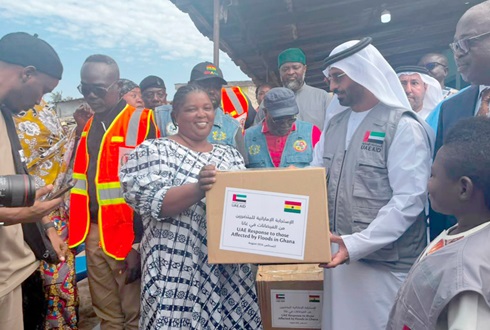
The United Arab Emirates (UAE) has donated relief items valued at US$1 million to support communities affected by the recent floods in Ghana.
The relief supplies, which included mattresses, clothes, blankets, cooking oil, sardines, beans, gari, spaghetti, drinking water and rice, are intended to provide immediate assistance to individuals and families whose lives have been disrupted by the floods.
The donation was presented by the Executive Director of Operation, UAE Aid Agency, Rashid Al Shamsi, on behalf of the President of the UAE, as a gesture of solidarity with the government and people of Ghana during the difficult period.
The UAE said the assistance reflected its commitment to supporting countries and communities in times of need and strengthening cooperation with Ghana in humanitarian and development efforts.
UAE solidarity
Speaking at the presentation ceremony in Accra last Monday, Mr Al Shamsi said the UAE respected the strength and patience demonstrated by affected communities and acknowledged the efforts of the Ghanaian Government and other stakeholders in responding to the disaster.
He said helping people in times of need was based on unity, continuity, cooperation and shared responsibility, and added that the UAE looked forward to strengthening its partnership with Ghana.
Climate emergency
The Minister of Climate Change and Sustainability, Seidu Issifu, expressed appreciation to the UAE Government, the UAE Aid Agency and the UAE Embassy in Accra for the donation.
Mr Issifu said President John Dramani Mahama had approved the Climate Emergency Resource Mobilisation Track to mobilise international support for immediate relief, recovery and long-term climate resilience.
“Today, we witness the tangible impact of that provision,” he said, describing the UAE response to Ghana’s appeal as a demonstration of the friendship between the two countries.
Mr Issifu said Ghana’s response must go beyond relief distribution and include investment in climate adaptation, resilient infrastructure, early warning systems and community preparedness.
NADMO resources
The Deputy Minister for the Interior, Ebenezer Okletey Terlabi, who represented the Interior Minister, Muntaka Mohammed- Mubarak, said the government, through NADMO and other institutions, remained committed to strengthening disaster preparedness, response and recovery, but the scale of some disasters required international cooperation.
The NADMO Coordinator, Dr Joseph Bikanyi Kuyon, said the relief items received so far were sufficient to meet the needs of victims but called for more resources to strengthen NADMO’s capacity to prevent and respond to disasters.
He mentioned excavators, tripods, payloaders and disaster monitoring equipment as some of the equipment required.
