


Challenging Heights has called for dedicated human trafficking courts and specialised investigative capacity after a weekend operation led by the Anti-Human Trafficking Unit of the Ghana Police Service rescued 33 girls from trafficking and sexual exploitation.
The organisation, which is providing care, medical attention, psychosocial support and shelter to the survivors, commended the officers of the Unit for the professionalism with which the operation was carried out.
Some of the 33 are believed to be children. Many are reluctant to disclose their ages, a familiar consequence of the coercion they have lived under, and Challenging Heights said it was working carefully to establish the facts.
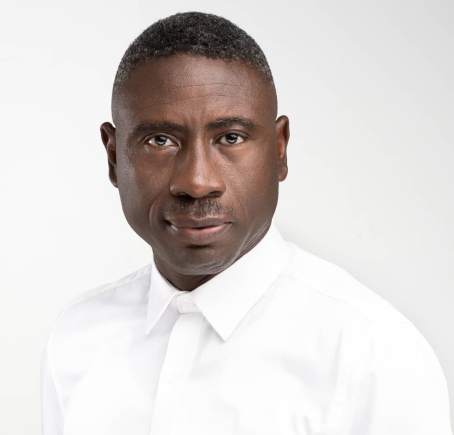
President of Challenging Heights, Dr. James Kofi Annan, who himself survived seven years of child slavery on Lake Volta, said the girls’ testimonies had changed the organisation’s assessment of what the country is dealing with.
“These girls paid their own way into Ghana and were then told to pay again for their own freedom,” he stated in a press statement. “A young woman who is told she must pay GH₵20,000 to redeem her freedom is certainly being sold back to herself.”
The girls told investigators they paid their own transport and travel costs, as well as money handed over to those who arranged the journey. On arrival, they were told they owed sums reaching GH₵20,000 to buy back their freedom. Until that money is paid, they are held as property and compelled to sell their bodies, with the earnings taken from them. They are set daily financial targets and punished when they fall short.
Challenging Heights described the operation as a “commercial operation with pricing, quotas, supervision and enforcement,” running on a chain of specialised roles: recruiters working in communities and increasingly online; transporters; immigration officials the organisation has reason to believe are compromised; madams who travel with the girls from Nigeria into Ghana; and senior madams who supervise those madams.
“Every link in that chain takes a profit, and every link must be prosecuted,” the organisation said.
While noting that Ghana has the law and that investigators and prosecutors have secured real convictions — with 273 investigations, 65 prosecutions and 25 convictions recorded in 2024 — Challenging Heights said what is missing is machinery equal to the networks being faced.
The organisation called on the Government of Ghana and the Judiciary to establish dedicated human trafficking courts without further delay, welcoming the Chief Justice’s announcement that specialised courts for human trafficking and cross-border crime are to be rolled out, and asking for a published timetable and judges trained in trafficking and trauma.
Challenging Heights also called for increased personnel and resourcing for the Anti-Human Trafficking Unit, the Ghana Immigration Service and specialised prosecution teams; for investigators to be equipped with sophisticated tools including financial investigation and asset tracing, digital forensics, analysis of online recruitment, and intelligence sharing with Nigerian counterparts; and for trauma-informed, specialised investigative and prosecutorial training to be institutionalised, with official complicity prosecuted wherever it is found.
“Thirty-three girls came out this weekend, and unless we reach the people at the top of this chain, all thirty-three will simply be replaced,” Mr Annan said.
Challenging Heights said it stood ready to work with the Ministry of Gender, Children and Social Protection, the Human Trafficking Secretariat, the Ghana Police Service, the Ghana Immigration Service, the Judicial Service and civil society partners to bring the networks to an end.
