


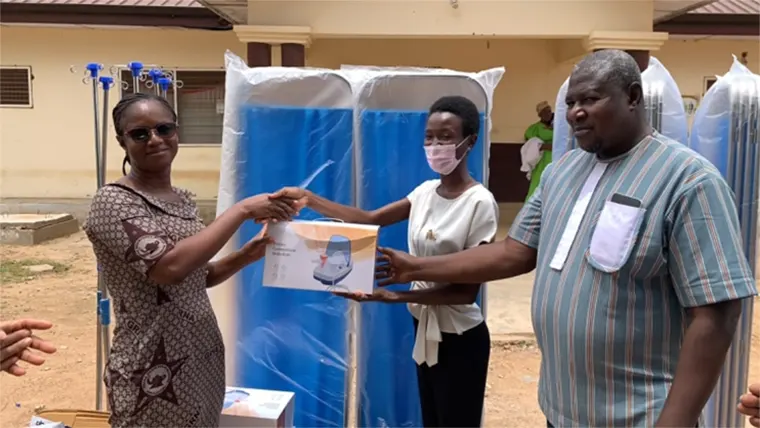
In a heartening display of professional dedication and selflessness, Dr. Ama Antwiwaa Adu-Appiah, a young female medical doctor, has donated the entirety of her GH¢20,000 cash reward—awarded by the Paga Youth Movement (PAYOM) for accepting a posting to the Paga Hospital—toward procuring essential medical equipment and supplies for the facility. Her decision underscores a growing but often overlooked challenge in Ghana’s healthcare system: the critical shortage of medical professionals in rural and border districts, particularly in the Upper East Region.
A Token of Recognition and Commitment
The award, presented on July 16, 2026, was a direct response to the persistent doctor shortage plaguing the Upper East Region. Unlike many of her colleagues who decline postings to remote areas, Dr. Adu-Appiah chose to serve at Paga Hospital, a facility where access to skilled medical personnel remains a significant concern. The Paga Youth Movement (PAYOM), recognizing her commitment, honored her with the cash reward, which she immediately reinvested into the hospital’s infrastructure.
A Strategic Donation for Enhanced Healthcare Delivery
Instead of using the funds for personal gain, Dr. Adu-Appiah allocated the GH¢20,000 toward purchasing high-priority medical equipment and consumables, significantly improving the hospital’s capacity to deliver quality healthcare. The donated items include:
- Three nebulisers – Essential for treating respiratory conditions, particularly in children and patients with chronic lung diseases.
- Two blood pressure monitoring machines – Critical for managing hypertension and cardiovascular health.
- One fetal Doppler machine – A vital tool for prenatal care, enabling doctors to monitor fetal heart rates and detect potential complications early.
- One vein finder – Facilitates intravenous procedures, reducing patient discomfort and improving efficiency in blood transfusions and medication administration.
- One haemoglobin analyser – Helps in diagnosing anemia and monitoring blood health, particularly important in regions with high malnutrition rates.
- Five drip stands and five ward screens – Enhance patient privacy and hygiene, reducing infection risks in hospital wards.
- One baby weighing scale – Ensures accurate monitoring of newborns’ health, crucial for early intervention in cases of low birth weight.
- Perfuser lines and two Veronica buckets – Improve infection control and patient care during medical procedures.
- Two handwashing basins – Promote hand hygiene, a key measure in preventing hospital-acquired infections.
- Six rolls of cotton wool and four packs of bottled water – Basic but essential supplies for wound care and patient hydration.
A Call to Strengthen Rural Healthcare Infrastructure
During the presentation of the equipment, Dr. Adu-Appiah emphasized that her decision was not just about personal comfort but about improving healthcare outcomes for the people of Paga and surrounding communities.
“Words would fail me to express how grateful I am to the Paga Youth Movement for the gift they gave me. I received it wholeheartedly. I have used the amount to purchase these medical items and equipment to make my working conditions more comfortable—not just for me, but for the entire medical team. These tools will significantly improve the quality and efficiency of healthcare services here.”
She also commended her colleagues, Dr. Didier Oteng and Dr. John Aberba, for their dedication to the hospital, as well as the nursing staff for their efforts in procuring the equipment efficiently. Dr. Adu-Appiah urged the hospital staff to maintain the new equipment properly to ensure its longevity and effectiveness in serving patients for years to come.
Acknowledgment from Hospital Management
The Nurse Manager, Zita Abdulaih, received the equipment on behalf of the hospital and expressed profound gratitude on behalf of the entire staff.
“On behalf of the Medical Superintendent, Dr. Oteng, management, nurses, midwives, and the entire staff of Paga Hospital, we are filled with joy to receive these wonderful gifts. Out of the many things you could have done with the money, you thought of us. We are very grateful. The equipment will be properly maintained and utilized to improve healthcare services for our community.”
Addressing the Broader Challenge of Doctor Shortages
Dr. Adu-Appiah’s gesture highlights a systemic issue in Ghana’s healthcare sector, particularly in rural and border districts. The Upper East Region has long struggled with doctor retention, with alarming statistics illustrating the problem:
- In 2021, none of the 10 posted doctors reported for duty.
- In 2022, only five out of 10 doctors assumed their posts.
- By 2025, only five out of 26 posted doctors reported, with many preferring to work at the Upper East Regional Hospital instead of district facilities.
The Paga Youth Movement not only recognized Dr. Adu-Appiah’s commitment but also pledged an additional GH¢10,000 toward rehabilitating and furnishing the hospital’s consulting room, further improving the working environment for healthcare professionals.
A Model of Professional Integrity and Community Service
Dr. Adu-Appiah’s actions reflect a commitment to public service that goes beyond professional obligations. By prioritizing the needs of her patients and colleagues over personal gain, she sets a high standard for medical ethics in Ghana’s healthcare system. Her story serves as an inspiration, not just for doctors, but for all professionals who choose to serve in underserved communities despite significant challenges.
As the Upper East Region continues to grapple with healthcare disparities, initiatives like this—where individuals and organizations collaborate to strengthen rural healthcare—remain crucial. Dr. Adu-Appiah’s donation is more than a gesture of gratitude; it is a call to action for sustained investment in medical infrastructure, ensuring that every Ghanaian, regardless of location, has access to quality healthcare services.
