


When Kenya announced its aim to establish a nuclear power plant, it did not envisage such strong resistance to the grand idea 16 years later. In 2010, the government expressed confidence that the plant would be fully operational by 2034, allowing Kenya to join South Africa on the elite list of countries operating nuclear facilities.
However, with the clock ticking towards those deadlines, the dream is becoming difficult to achieve due to rising resistance against the multi-billion-dollar project.
The challenge is that Kenya aims to become a globally competitive, newly industrialised, upper-middle-income nation by 2030. However, it cannot achieve this goal without a reliable, consistent energy supply, which a nuclear plant can provide.
This difficulty has begun to worry the government, given the limited options available to double the country’s energy supply to meet growing demand and drive much-needed economic growth.
Renewables, intermittency problem
Engineer Eric Ohaga, the director of nuclear energy infrastructure development at the Nuclear Power and Energy Agency (NuPEA), the body responsible for promoting and implementing Kenya’s nuclear power programme, is one of those worried about Kenya’s increasing energy demand vis-à-vis supply. According to Ohaga, Kenya’s energy demand stands at 2,325MW against an installed capacity of 3,300MW.
“This peak has been growing at a very steady rate. Last year, we were at 2,225MW, which means that in 12 months, demand grew by a whopping 100MW. This means we need to have a stable source of energy as we move toward 2030 and beyond,” said Ohaga.
Though Kenya has potential in renewable sources – such as geothermal, which provides 48% of the energy demand, hydro (28%), wind (14%) and solar (3%) – these sources need to be complemented to achieve a steady energy supply for industrialisation.
“Renewable energy sources have a problem of intermittency; hence, you need a stable energy baseload which nuclear energy can readily provide, complementing other sources,” Ohaga added.
Though an expensive undertaking – with Kenya’s project expected to cost upwards of KSh500bn ($3.86bn) – nuclear power is viewed as cost-effective due to its longevity and reliability. The plant is expected to produce an extra 2,000MW.
“In terms of long-term investment, nuclear energy is cost-competitive, especially when plants are well maintained and operated,” said the director general of the OECD Nuclear Energy Agency, William Magwood, during a webinar organised by the agency and NuPEA.
In addition, nuclear is the only low-carbon energy source with a small land footprint. It also boasts a high average availability factor, which is greater than 90% in some regions. With proper maintenance and upgrades, the lifespan of a nuclear plant can be extended to 100 years.
“Geothermal, solar and wind have a lifespan of 25 years; after that, they need to be decommissioned and reinvested afresh,” said Ohaga.
Kilifi clashes
Despite the solid explanation of why Kenya should embrace nuclear energy, communities living near sites identified as viable for the construction of the plant are yet to be convinced of its advantages, despite numerous public participation exercises undertaken by NuPEA.
In May 2024, residents violently clashed with security forces in Kilifi’s Uyombo village, one of the sites the government had identified as suitable for the construction of the nuclear plant due to its proximity to a permanent water body – the Indian Ocean. Nuclear plants require large amounts of water for cooling, hence the need to establish one near a water source.
Edward Chanzu, one of the residents who participated in the protests, has no regrets about rejecting the project. “We would have lost our entire livelihood. The nuclear waste would have been drained into our water bodies, killing the fish and destroying our [income].”
The residents were supported by local and international environmental lobby groups, including the Centre for Justice, Governance and Environmental Action.
“Uyombo lies within a UNESCO biosphere, meaning it is a biodiversity hotspot. It is an area that, if just left as it is, brings in more foreign exchange for this country and creates jobs for communities,” says Phylis Omido, the organisation’s executive director. “The area has beautiful marine life. It is one of the few places you can find dolphins in Kenya.”
Uyombo’s coastline lies in direct proximity to the Malindi-Watamu Arabuko-Sokoke biosphere reserve, which is known for its biodiversity.
Opposition spreads to Lake Victoria
Though residents initially welcomed the construction of the plant in Siaya County –NuPEA’s alternative site – following an endorsement from Raila Odinga, who hailed from the area, opposition has been growing against the project. On 21 May, residents held demonstrations rejecting the construction of the power plant near the shores of Lake Victoria.
The residents expressed fears that the project could devastate their livelihoods, which are dependent on fishing and small-scale farming. “We fear being exposed to radiation and nuclear waste polluting the lake we depend on,” says John Ochieng, a fisherman.
NuPEA counters safety fears
NuPEA chief executive Justus Wabuyabo accused environmental groups of misleading the public. “In Kilifi, we experienced resistance because of misinformation by groups that went ahead of us to spread fear, not facts, about nuclear energy. Some of the residents told us they had been told that the nuclear plant would result in all fish in the Indian Ocean dying.”
According to the CEO, although there are risks associated with nuclear projects, stringent measures are taken to minimise negative effects on humans and the environment. Kenya is pursuing the International Atomic Energy Agency‘s (IAEA) Milestone Approach that helps newcomers build the necessary national infrastructure for nuclear power.
“People are misled into thinking that nuclear waste is this green substance that comes out and pours into rivers and lakes, which is not true. Nuclear waste is carefully monitored and accounted for,” says Magwood. “The quantities are very small relative to other industrial waste. Countries isolate high-level nuclear waste in a deep geological repository.”
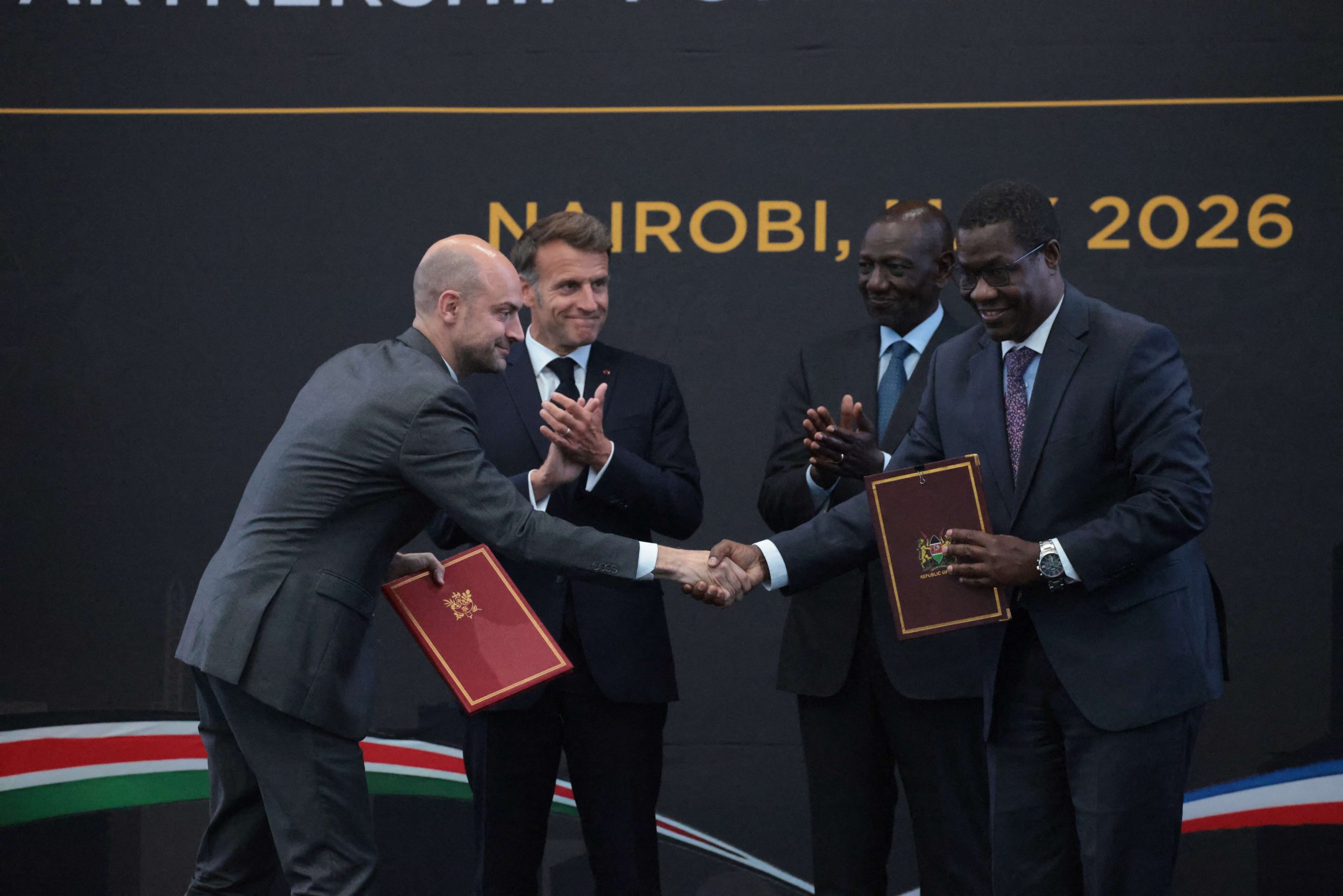
Kenya has also signed various memoranda of understanding with France, China and South Korea, known for their nuclear expertise. The country will also involve Scandinavian nations like Finland and Sweden, which have excelled in nuclear waste disposal. These two countries have set the global standard for how to permanently manage radioactive waste from nuclear plants.
Wabuyabo says a nuclear power plant has the potential to transform Siaya economically. He has assured residents that the implementation will only be made after broad consultations and an agreement is reached.
“Siaya will be transformed into a city. It will have wonderful roads, good hospitals, schools and job opportunities. Those working in the nuclear plant will require food, accommodation and entertainment, all of which will be provided by the people of Siaya.”
