

Accra, June 19 — In a landmark milestone for women empowerment and digital education in Ghana, 100 female educators have successfully graduated from the Women Educators in Internet and Technology (WEITech) initiative—a groundbreaking two-year programme designed to bridge the gender gap in technology adoption while revolutionizing teaching methodologies across the country.
A Visionary Initiative to Transform Education Through Technology
Launched by the DreamOval Foundation in collaboration with the Internet Society Foundation, the WEITech programme was meticulously crafted to address critical challenges faced by female educators, including underemployment, digital skill deficiencies, and limited access to modern pedagogical tools. By integrating digital literacy, entrepreneurship training, and educational technology, the initiative has equipped participants with the expertise to seamlessly integrate technology into classroom instruction.

Graduates pose for a group photo during the WEITech programme’s graduation ceremony at the University of Ghana.
The programme’s curriculum was structured to foster innovation, problem-solving, and digital fluency, ensuring that graduates could not only keep pace with technological advancements but also drive educational reform in Ghana. With funding from the Internet Society Foundation’s Skills Grant Programme, WEITech provided a sustainable pathway for women educators to transition from traditional teaching methods to tech-enhanced learning environments.
Empowering Educators to Lead the Digital Classroom Revolution
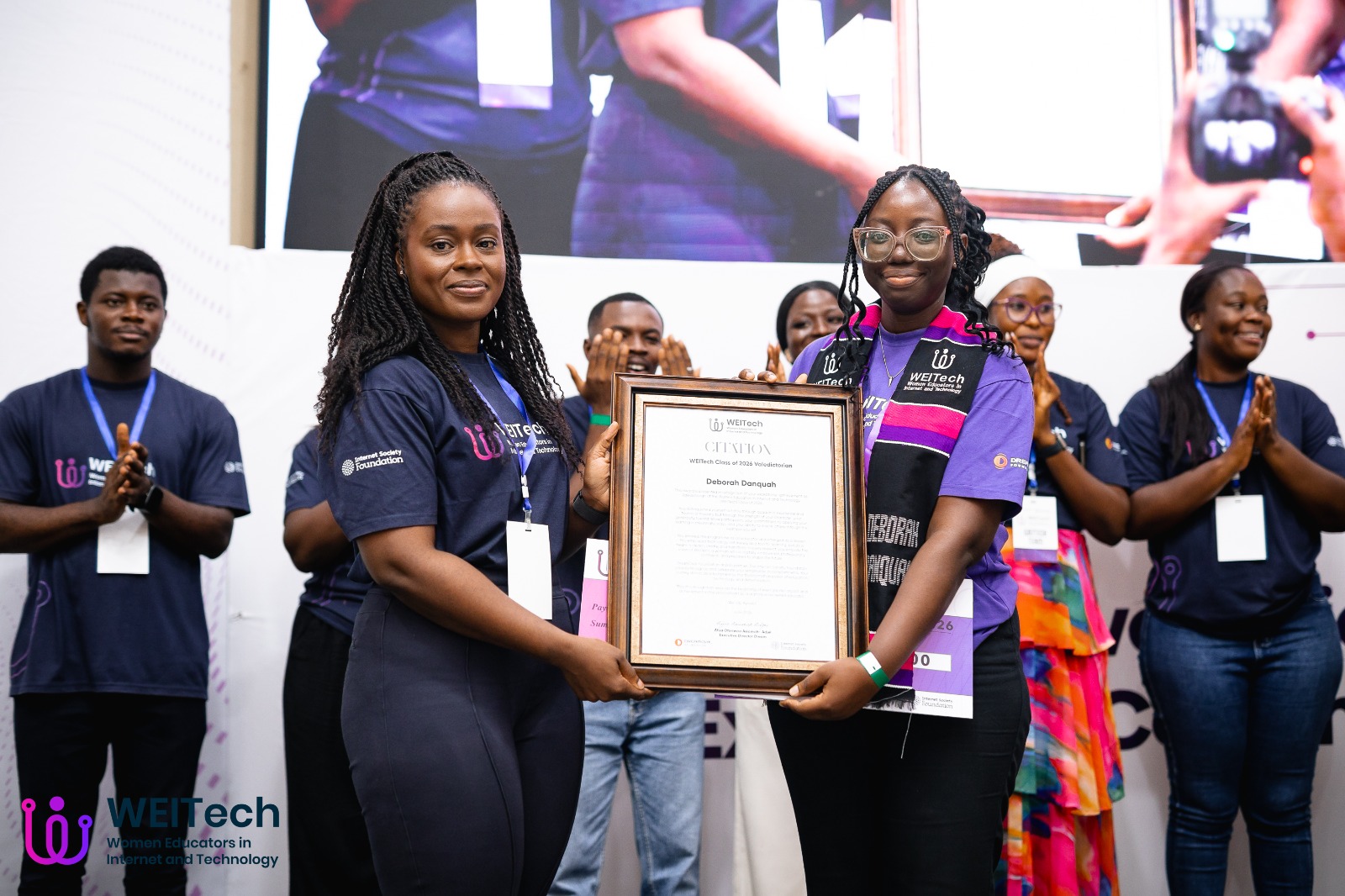
At the ceremonial graduation held at the University of Ghana, participants received certificates of completion, validating their newfound expertise in digital tool integration, online pedagogy, and educational innovation. Notably, several graduates who developed scalable digital solutions to address pressing challenges in Ghana’s education sector were awarded seed capital to further refine and deploy their innovations.
Speaking at the event, Ms. Afua Oforiwaa Asiamah-Adjei, Executive Director of the DreamOval Foundation, emphasized the programme’s transformative impact on both individual educators and the broader education sector. She stated:
“This initiative was designed to empower women educators with the skills necessary to harness internet technologies and digital tools for modern teaching. The modern classroom is no longer confined to textbooks—it thrives on innovation, and Ghana is now home to a new generation of educators who are leading this change. Our goal is not just to train them but to inspire them to become ambassadors of digital education across the nation.”
Ms. Asiamah-Adjei highlighted that the programme’s success underscored a strong and growing demand among female educators to adopt technology in teaching. She further noted that WEITech aligned with national digital skills development strategies, particularly those aimed at closing gender disparities in STEM (Science, Technology, Engineering, and Mathematics) fields.
Looking ahead, the DreamOval Foundation has expressed plans to expand the initiative nationally, ensuring that more women educators across Ghana can benefit from this life-changing training.
A Standout Graduate’s Journey: From Challenge to Innovation
Among the distinguished graduates was Ms. Deborah Danquah, an English teacher and the overall valedictorian of the programme. Reflecting on her experience, Ms. Danquah attributed her success to dedication, collaborative learning, and relentless consistency.
One of the most significant challenges she faced was time management and mastering complex technical skills required for her capstone project—an educational technology application designed to provide real-time feedback on essay writing, particularly for students preparing for English Language examinations.
“A major gap in current educational systems is that students often receive answers to objective questions but rarely get immediate feedback on their essay responses,” Ms. Danquah explained. “My application bridges this gap by offering instant, constructive feedback, helping students refine their writing skills more effectively.”

Ms. Deborah Danquah, the valedictorian, presents her innovative essay feedback application during the graduation ceremony.
Her project is not just limited to feedback mechanisms; it also includes features for virtual classroom management, student progress tracking, and interactive learning activities, which she plans to expand in the near future.
In her closing remarks, Ms. Danquah called on government stakeholders, policymakers, and private sector partners to invest in women’s participation in STEM fields, arguing that greater female involvement would accelerate innovation, economic growth, and technological advancement in Ghana.
“The seed funding provided by the WEITech programme will enable me to upgrade my application’s digital infrastructure, ensuring smoother performance and broader accessibility for students and teachers,” she added.
A Blueprint for Future Educational Transformation
The WEITech programme’s success is a testament to the power of targeted skill development in empowering women to lead change in traditionally male-dominated industries. By combining practical training with entrepreneurial support, the initiative has not only enhanced employability but also fostered innovation within Ghana’s education sector.
As the first cohort of WEITech graduates embarks on their new careers, their work serves as a blueprint for how technology can democratize education, ensuring that no student is left behind in the digital age.

Participants engage in a group discussion during a WEITech workshop, showcasing hands-on learning in digital tools and educational technology.
The graduation ceremony marked more than just the end of a programme—it symbolized the beginning of a new era where women educators are not just teachers but architects of Ghana’s digital future. With continued support from foundations, governments, and private entities, initiatives like WEITech have the potential to inspire a nation-wide movement, ensuring that technology and education go hand in hand for generations to come.