


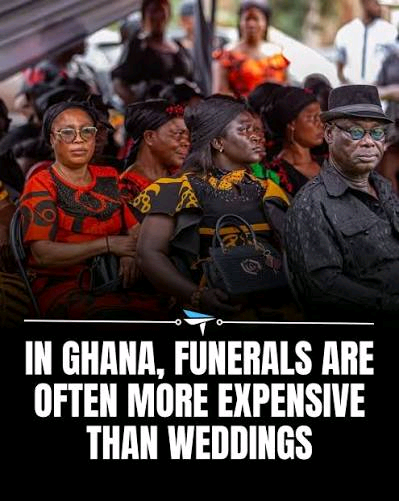
In Ghana, there is a popular saying that when a person dies, a library burns. The expression reflects the deep value Ghanaians place on human life, wisdom, and community. Funerals, therefore, are not merely ceremonies to bid farewell to the deceased. They are important social and cultural events that bring families, friends, and communities together.
Yet, as funeral celebrations continue to grow in scale and expense, an important question is emerging: Have we lost the balance between honoring the dead and protecting the welfare of the living?
Why Funerals Matter in Ghanaian Society
Funerals occupy a central place in Ghanaian culture for several reasons.
First, they are regarded as a cultural obligation. Across the country’s diverse ethnic groups—including the Akan, Ewe, Ga, Dagomba, and many others—a dignified burial is considered a final act of respect for the deceased. Families often feel a strong responsibility to organize a funeral that reflects the status and dignity of their loved one. Failure to do so can attract criticism and social disapproval.
Second, funerals have become symbols of social status. The size of the event, the number of guests, the quality of the casket, and the presence of prominent personalities often serve as indicators of a family’s standing in society. For some, funerals have evolved into occasions for public display rather than solemn remembrance.
Third, funerals provide opportunities for family reunion and reconciliation. Relatives travel from different parts of Ghana and abroad to attend funeral ceremonies. Long-standing disputes are sometimes resolved, family bonds are renewed, and social networks are strengthened during these gatherings.
Finally, many Ghanaians attach spiritual significance to funeral rites. Traditional beliefs and religious practices often emphasize the importance of proper burial and memorial ceremonies as a means of ensuring peace for the departed soul and closure for the family.
The Rising Cost of Dying
While funerals remain culturally significant, their financial burden has become a growing concern.
Today, funeral ceremonies can cost tens of thousands of Ghana cedis. Expenses typically include mortuary fees, body preparation, caskets, canopies, chairs, public address systems, food and drinks, commemorative cloth, photography, videography, and advertisements. In some cases, costs exceed what many families earn in several years.
The irony is difficult to ignore. Families that struggled to raise money for medical treatment often find themselves spending far more after death than they could afford during life. Some resort to loans, asset sales, or extensive fundraising efforts simply to organize what society considers a “proper” funeral.
This trend raises important questions about priorities and financial responsibility, particularly in a country where many households continue to face economic challenges.
The Positive Impact of Funeral Traditions
Despite concerns about cost, funeral culture continues to offer important social and economic benefits.
One of its greatest strengths is community support. Funeral donations frequently provide relief to bereaved families, especially in areas where access to formal insurance and social protection systems is limited. In many communities, collective support serves as an informal safety net during times of loss.
Funerals also contribute significantly to local economies. Caterers, musicians, seamstresses, florists, transport operators, carpenters, photographers, and event organizers all benefit from funeral-related activities. For many small businesses, funeral weekends represent important sources of income.
In addition, funeral rituals provide emotional and psychological support. Public mourning allows families and friends to grieve together, reducing feelings of isolation and helping individuals process loss.
Furthermore, funeral ceremonies preserve cultural heritage. Traditional music, drumming, dancing, storytelling, and funeral rites help pass cultural values and customs from one generation to another.
Towards Dignity Without Debt
The challenge is not to abolish funerals but to make them more sustainable.
Families should be encouraged to establish realistic budgets and avoid unnecessary delays that increase mortuary expenses. A funeral should reflect respect and love, not financial recklessness.
Religious institutions, traditional authorities, and community leaders can also play a role by promoting simpler ceremonies and discouraging excessive spending. The emphasis should shift from display and competition to remembrance and support.
Another innovative approach would be to encourage families to invest part of funeral contributions into education, healthcare, or welfare funds for surviving dependents. Such initiatives would ensure that the legacy of the deceased continues to benefit future generations.
Local authorities may also strengthen the enforcement of existing regulations regarding funeral duration, noise levels, and the use of public spaces to reduce disruptions and promote responsible practices.
Conclusion
Funerals remain one of the most important expressions of Ghanaian culture. They demonstrate our respect for the departed, our commitment to family, and our sense of community. At their best, they bring people together, preserve traditions, and provide comfort during difficult times.
However, when funerals become competitions in extravagance, they can impose unnecessary financial hardship on already grieving families.
The goal should not be to abandon our traditions but to reform them. We must find a balance between cultural preservation and financial responsibility. The true measure of respect for the dead is not the size of the funeral but the care we show to those they leave behind.
Ultimately, the greatest tribute we can pay to the departed is to ensure that the living are not burdened by debt, but empowered with hope and opportunity.
