


Welcome, and thank you for joining me on what has become one of the most personally meaningful articles I have written in years. After months of research into Nigerian diaspora patterns, migration data, and the lived experiences of Nigerians across four continents, I am genuinely excited to share what I have found. I have spent years following the journeys of Nigerians abroad, speaking with families split across Lagos and London, Abuja and Atlanta, and the picture that emerges is far more nuanced and fascinating than any single headline can capture.
So, where do most Nigerians go? The short answer is: everywhere. The longer, more interesting answer is what we are here to explore together.
Where Do Most Nigerians Move To?
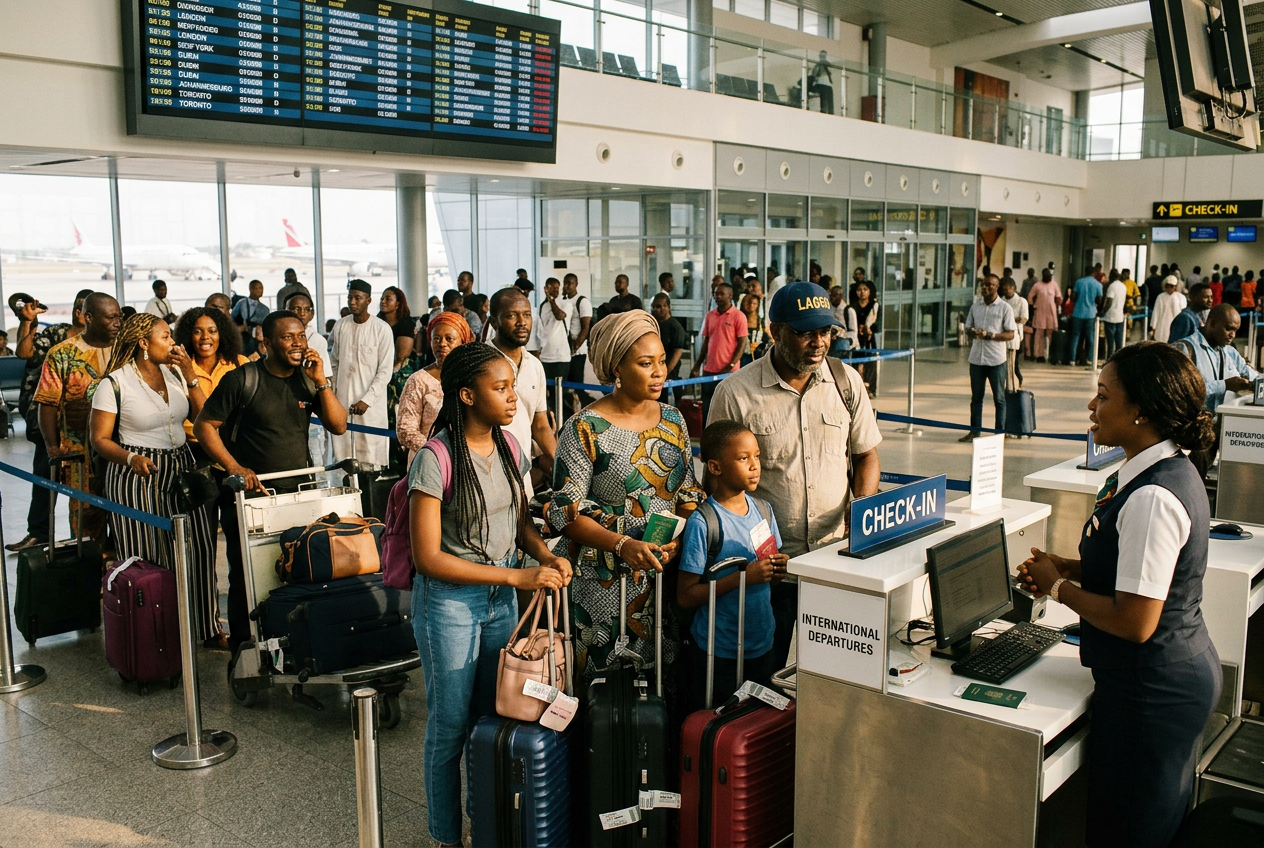
If you have spent any time in a major international city recently, the chances are you have encountered a Nigerian. It is not accidental. Nigeria, Africa’s most populous nation with over 220 million people, has produced one of the most geographically dispersed diaspora communities on the planet. According to the Nigerians in Diaspora Commission (NiDCOM), an estimated 17 million Nigerians live abroad, a figure that places Nigeria among the top source countries for international migration globally.
The broad strokes of where Nigerians settle have shifted considerably since the early days of migration in the 1960s and 70s. Back then, the United Kingdom was the dominant destination, largely because of colonial ties and the relative ease of movement for Commonwealth citizens. Today, the picture is far more diverse. The Nigeria Immigration Service tracks travel patterns and documents, and what their data consistently reflects is a people in constant, purposeful motion.
The United States, United Kingdom, and Canada form what many in the Nigerian community call the “Big Three” of diaspora destinations. They account for the largest concentrations of Nigerians outside Africa. Beyond them, you find significant and growing communities in Australia, Germany, Italy, the UAE, and South Africa. Interestingly, South Africa has become a particularly important destination within Africa itself, drawing Nigerians seeking economic opportunity without crossing oceans.
I once sat with a retired educator in Enugu who had sent four of his six children abroad across three different continents. “Each one went where the opportunity was,” he told me, gesturing almost as if his children were simply following a compass. That image has stayed with me.
The primary drivers of this movement remain consistent across generations. Economic pressure sits at the top, closely followed by access to better educational institutions, professional opportunities, family reunification, and in some cases, security concerns. The Guardian Nigeria has examined how worsening economic conditions from the 1980s onwards triggered an unprecedented wave of emigration to Europe and America, a tide that has not reversed. If anything, it has accelerated.
Here is a practical guide to understanding the Nigerian migration journey, based on patterns I have observed and documented over many years:
- Identify the pull factor. Most Nigerians move for a specific reason: a scholarship, a job offer, family sponsorship, or a skilled worker visa. The destination follows the opportunity.
- Choose the right visa pathway. The UK Skilled Worker Visa, US EB visa categories, and Canada’s Express Entry points system are the most commonly used routes. Research the one that matches your qualifications earliest.
- Build a financial cushion before departure. Aim for at least six months of living expenses in the destination country’s currency before you travel. The cost of settling is almost always higher than anticipated.
- Connect with the Nigerian community abroad before arrival. Almost every major city has a Nigerian association, church, or professional network. Reaching out before you land reduces the isolation that catches many new arrivals off guard.
- Sort your documentation meticulously. Ensure your NBS credentials, degree certificates, and professional qualifications are verified and apostilled. Many Nigerian migrants face delays because of document issues that could have been resolved at home.
- Plan for the japa reverse. This might sound counterintuitive, but experienced migrants consistently advise maintaining active ties to Nigeria through investments, property, or business interests. The ones who return successfully are those who never fully cut the cord.
- Understand the remittance landscape. If you intend to send money home, register with a reliable platform and understand the NiDCOM Diaspora Registry and relevant financial guidelines to avoid unnecessary charges and delays.
What Country Loves Nigeria the Most?
This is one of my favourite questions to explore, partly because the answer involves both hard data and something far softer: affection, cultural influence, and diplomatic warmth.
If we measure purely by Nigerian population numbers, the United States emerges as the country with the deepest Nigerian presence. But if we are asking which country has developed the most genuine cultural, economic, and social affinity with Nigeria, the United Kingdom makes an exceptionally strong case.
The historical ties between Nigeria and Britain run deeper than most people acknowledge. English remains Nigeria’s official language directly because of British colonial rule, and that shared linguistic foundation has allowed Nigerians in the UK to integrate into professional life with remarkable speed. Nigerian-born professionals have risen to prominence in British medicine, law, finance, politics, and the arts in numbers disproportionate to their percentage of the British population.
There is also the cultural dimension. Afrobeats, which was essentially birthed in Lagos, now dominates British radio and nightclub playlists to an extraordinary degree. Nigerian fashion weeks draw buyers from London. Nollywood films screen regularly in UK cinemas. The influence flows both ways, and that mutual exchange has created something genuinely warm between the two nations.
Canada deserves an honourable mention here. The Canadian government’s immigration policies have specifically and consistently favoured Nigerian applicants through the Express Entry system, and Canadians, on the whole, have welcomed Nigerian communities with a level of institutional warmth that Nigerians themselves often comment on. Nigerian churches, cultural associations, and businesses have thrived in cities like Calgary, Toronto, and Ottawa.
Nigerian Diaspora Population Across Key Destinations
The table below presents estimated Nigerian populations across the most significant destination countries, based on NiDCOM data, national census figures, and academic diaspora studies:
| Destination Country | Estimated Nigerian Population | Primary Concentration City/Region | Top Sector |
|---|---|---|---|
| United States | 380,000 (documented) | Houston, New York, DC metro | Medicine, engineering, finance |
| United Kingdom | 290,000+ | London (Peckham, Brixton) | Healthcare, law, finance |
| Canada | 120,000+ | Toronto, Calgary, Ottawa | Tech, education, services |
| Italy | 100,000+ | Rome, Turin, Naples | Labour, trade, services |
| Germany | 50,000+ | Frankfurt, Berlin, Hamburg | Engineering, academics |
| Australia | 45,000+ | Sydney, Melbourne, Brisbane | Healthcare, IT, academia |
| South Africa | 40,000+ | Johannesburg, Cape Town | Trade, business, services |
| UAE | 35,000+ | Dubai, Abu Dhabi | Business, trade, hospitality |
These figures represent documented, formally registered populations. The actual numbers, including undocumented residents, are widely considered to be considerably higher. The Guardian Nigeria’s in-depth report on Nigerians who fly two flags captures what these numbers can barely begin to convey: the human texture of a diaspora that contributes to host nations whilst yearning, in many cases, for home.
The economic contribution of this diaspora is staggering. At its peak, Nigerians abroad were sending home more than $25 billion annually in remittances, a figure that exceeded 80 per cent of Nigeria’s annual budget and represented roughly six per cent of GDP. As one Guardian Nigeria opinion piece noted, the concern about declining diaspora remittances should be taken seriously as a national economic indicator, not merely a cultural footnote. The Voice of Nigeria has reported consistently on NiDCOM’s efforts to maintain and strengthen these financial lifelines.
What City Has the Most Nigerians in the US?
If you were to ask Nigerian-Americans themselves which city feels most like a home away from home in America, the answer from a surprisingly large number of them would be Houston, Texas.
Houston holds the distinction of being home to the largest Nigerian population of any single city in the United States. Estimates from community organisations and census-adjacent surveys place the Houston Nigerian community at between 50,000 and 70,000 residents, a figure that community leaders themselves acknowledge could be significantly understated when informal residents are factored in.
The reasons are both practical and historical.
Houston’s oil and gas industry created the original gravitational pull. Nigeria is, of course, a major petroleum producer, and the world’s biggest energy companies clustered in Texas naturally attracted Nigerian engineers, geologists, and petroleum professionals from the 1970s onwards. Once a community reaches a critical mass, it sustains itself through networks, churches, restaurants, and cultural associations that make the city feel familiar. Walking through Houston’s Alief district, you encounter Yoruba spoken at suya stands, Igbo pop music drifting from hair salons, and Nigerian church congregations that would not look out of place in Ikeja or Enugu.
The Texas Medical Center, one of the largest medical complexes in the world, draws Nigerian doctors and nurses in enormous numbers. The University of Houston and Texas Southern University have consistently attracted Nigerian students for decades. And Houston’s cost of living, relative to cities like New York or San Francisco, makes it genuinely possible for a newly arrived Nigerian family to build a stable life without being instantly crushed by housing costs.
Beyond Houston, the New York metropolitan area arguably contains the largest overall concentration of Nigerians if you count the entire tri-state region together. The Washington DC metro area, particularly Prince George’s County in Maryland, also houses between 65,000 and 80,000 Nigerians across the broader DMV region. Dallas, Atlanta, and Minneapolis round out the significant American Nigerian hubs.
But city for city, Houston’s combination of economic opportunity, established community infrastructure, and cost of living keeps it the clear frontrunner for where Nigerians in America actually build their lives.
Which City Never Sleeps in Nigeria?
You already know the answer, don’t you? Anyone who has spent more than a weekend in Lagos will tell you without hesitation: Lagos is Nigeria’s city that never sleeps. And honestly, that description barely scratches the surface.
Lagos operates on a rhythm that defies the logic of clocks. At 2 a.m. on a Tuesday, the Lekki-Epe Expressway carries meaningful traffic. By 4 a.m., food vendors on the mainland are already setting up their stalls. The city doesn’t wind down. It shifts gears.
With a population of over 20 million people packed into one metropolitan area, Lagos is the economic engine of West Africa and contributes a disproportionate share of Nigeria’s GDP. It is home to Nigeria’s largest banks, most multinational headquarters, the Nollywood film industry, the global Afrobeats scene, and a nighttime economy worth nearly N1.5 trillion, according to market research by Oui Capital. Lagos ranked sixth best city for nightlife globally in 2024, according to Time Out Magazine, ahead of Rotterdam and Manchester. That is not nothing.
The New Afrika Shrine in Ikeja, founded by the legendary Femi Kuti as a continuation of his father Fela’s radical musical legacy, draws crowds every weekend that spill out into the street. Victoria Island’s rooftop bars overlook the Atlantic with cocktails that rival anything in Dubai or London. Landmark Beach turns into a sprawling outdoor festival during Detty December. And through it all, the street food vendors, the okada riders, the market women who start before dawn, they are the invisible infrastructure that keeps the whole organism alive through the night.
Where Do Most Nigerians Go? The Core Answer
So, bringing everything together, where do most Nigerians actually go?
The answer depends on which lens you apply. By sheer volume of international migrants, the United States absorbs the largest number of Nigerians. Canada has become the fastest-growing destination, particularly for younger, highly educated Nigerians. The United Kingdom remains the most historically and culturally significant destination. Italy and other Southern European countries attract working-class migrants via routes through North Africa. And within Africa itself, South Africa draws a substantial and often overlooked Nigerian community.
What is equally important to understand is where Nigerians go within Nigeria itself. The internal migration story is just as dramatic as the international one. Lagos remains the primary destination for Nigerians from every other state, drawn by economic opportunity, entertainment, and the particular energy that only Lagos possesses. Abuja attracts government workers, civil servants, and those seeking proximity to power. Port Harcourt draws workers connected to the oil sector. Kano serves as a major commercial hub for northern Nigeria and for trade routes extending into the Sahel.
The key characteristics of Nigerian migration, whether internal or international, include: a strong orientation towards economic opportunity, a tendency to cluster around existing Nigerian communities, a deep maintenance of cultural and religious identity in the new environment, and a consistent pattern of remittance back to family at home. These are not merely observations. They are the threads that hold the Nigerian diaspora together as a coherent community rather than simply a scattered population.
Nigerians go where opportunity calls, and they bring Nigeria with them wherever they land. That may be the truest summary of a migration story that spans every continent on earth.
Related Articles
Before we get to the frequently asked questions, two of my previous articles sit directly alongside this one and are well worth your time. My piece on what are the characteristics of a Nigerian person explores the personality traits and values that define Nigerians wherever they settle, which casts an illuminating light on why Nigerian diaspora communities maintain such strong cultural cohesion across borders. And my article on what is Nigerian culture known for examines the creative exports, from Afrobeats to Nollywood to cuisine, that have given Nigeria outsized global cultural influence relative to its economic development. Both pieces complement what we have explored here beautifully.
A Final Thought on Where Nigerians Go and What It Means
The Nigerian diaspora is one of the most remarkable phenomena of our time. It is a story of ambition, of sacrifice, of families stretched across time zones and currencies, of cultures transplanted and stubbornly maintained. It is also a story with profound implications for Nigeria itself.
Every Nigerian who builds a life abroad represents a dual reality: a loss of talent and energy from the home country, and a potential bridge between Nigeria and the world. The most encouraging thing I have seen in my years of following this story is the growing number of diaspora Nigerians who choose to come back, not because they failed abroad, but because they want to build something at home with the skills and capital they accumulated. That is the version of this story I hope to see more of.
If you are considering your own journey, here are three things worth holding onto:
- Whatever country you are heading to, connect with the Nigerian community there before you arrive. They will shorten your learning curve dramatically.
- Maintain your ties to Nigeria through investment, property, or business. The diaspora Nigerians who thrive long-term are almost always those who never fully let go of the anchor at home.
- Remember that wherever you go, you carry one of the most resilient cultural identities on the planet. That is not a burden. It is a considerable advantage.
Frequently Asked Questions About Where Most Nigerians Go
Where do most Nigerians go when they leave Nigeria?
The largest numbers of Nigerian migrants move to the United States, the United Kingdom, and Canada, with Italy, Germany, Australia, and South Africa also hosting significant communities. The destination is typically determined by economic opportunity, family connections, educational prospects, or visa availability.
What is the biggest Nigerian community outside Nigeria?
The United States is home to the largest documented Nigerian community outside Nigeria, with estimates ranging from 380,000 to over one million when including undocumented residents and second-generation Nigerians. Houston, Texas, and the New York metropolitan area are the two most significant hubs.
Why do so many Nigerians move to Canada?
Canada’s Express Entry immigration system actively rewards highly educated and skilled applicants, a category in which Nigerians perform extremely well because of their strong educational backgrounds. The Canadian government’s consistent openness to skilled migration has made it the fastest-growing destination for Nigerian professionals over the past decade.
Which city in the US has the most Nigerians?
Houston, Texas, is widely recognised as the US city with the largest Nigerian population, housing an estimated 50,000 to 70,000 Nigerians. The city’s dominant energy sector, the Texas Medical Center, and relatively affordable housing compared to coastal cities make it a practical and culturally established choice for Nigerian migrants.
Why do Nigerians prefer Houston over New York?
Houston’s oil and gas industry has historically attracted Nigerian engineers and energy professionals, and the resulting community infrastructure makes new arrivals feel welcome immediately. The cost of living in Houston is also significantly lower than in New York, making it easier to build savings, invest in property, and support family back home while settling into American life.
What country loves Nigeria the most?
The United Kingdom has arguably the deepest cultural and institutional affinity with Nigeria, rooted in colonial history, a shared language, and decades of Nigerian influence on British music, medicine, academia, and public life. Canada is increasingly close to the UK in terms of warmth towards Nigerian migrants, particularly through its immigration policies.
Which African country do Nigerians move to most often?
South Africa is the most common African destination for Nigerian migrants, attracting business people, traders, and professionals who want access to a more developed economy without the logistical challenges of intercontinental travel. Johannesburg in particular has a well-established and commercially active Nigerian community.
Is Lagos really the city that never sleeps in Nigeria?
Yes, Lagos thoroughly earns that title. The city operates economically and socially around the clock, with active road traffic, street food vendors, entertainment venues, and commercial activity persisting deep into the night across both the island and mainland. Lagos ranked sixth globally for nightlife quality in 2024, according to Time Out Magazine.
How much money do Nigerians abroad send home each year?
At its peak, Nigerian diaspora remittances exceeded $25 billion annually, making it one of the top remittance-receiving nations globally. Even in years of decline, remittance flows to Nigeria have consistently exceeded direct foreign investment and, in several years, have surpassed oil revenue as a source of national income.
Is japa (emigration) permanent for most Nigerians?
Research and anecdotal evidence suggest that a significant proportion of Nigerians who migrate do not intend their move to be permanent, particularly among the educated professional class. Many maintain Nigerian investments, property, and business interests with the expectation of returning. However, the practical reality is that settlement abroad often extends far beyond original plans.
What is the Nigerian Diaspora Commission and what does it do?
The Nigerians in Diaspora Commission, known as NiDCOM, is a federal government agency established to engage with Nigerians living abroad, facilitate their contribution to national development, and advocate for their rights and welfare in their host countries. It manages the official Nigerian Diaspora Registry and advises government on diaspora-related policy.
Can Nigerians abroad contribute to Nigeria’s development from overseas?
Absolutely, and many already do. Beyond remittances, diaspora Nigerians contribute through direct investment in Nigerian businesses and real estate, knowledge transfer, mentorship of young professionals at home, advocacy for improved governance, and increasingly through technology platforms that connect Nigerian talent abroad to opportunities in Nigeria.
