


By Frank Kwame Abbor, GNA
Ho, May 07, GNA – Dr Peter Agbodza, the Dean of the Faculty of Applied Social Sciences at the Ho Technical University, has paid glowing tribute to journalists, describing them as the foundation of his personal and professional growth.
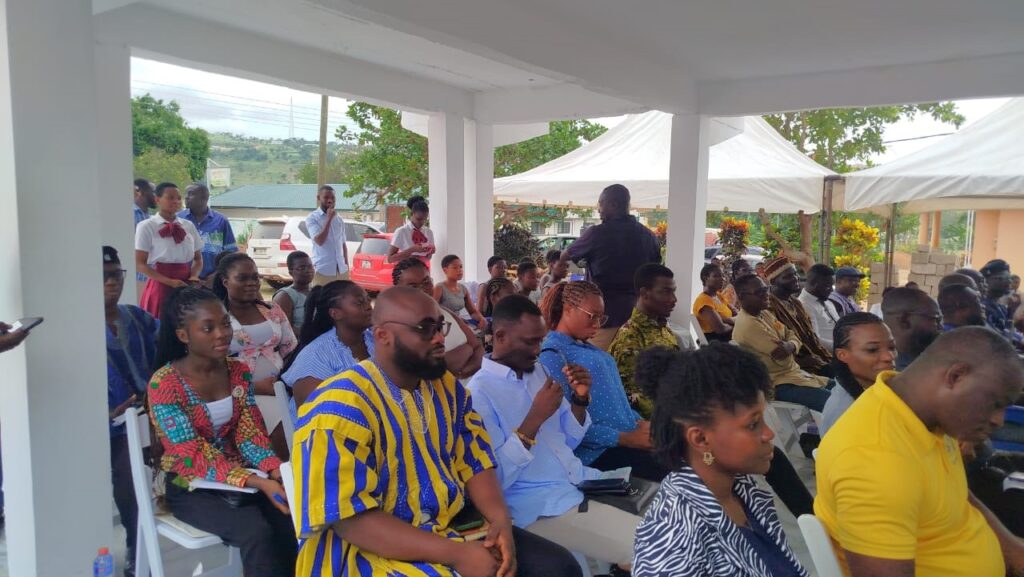
Delivering a solidarity message at the World Press Freedom Day celebration in Ho under the theme “Shaping a Future of Peace,” Dr Agbodza said his lifelong admiration for journalism was rooted in his early exposure to newspapers.
“I was brought up by journalists, and they have made me who I am today,” he said.
He recounted his modest upbringing and educational struggles, noting that access to newspapers, particularly the Daily Graphic, played a pivotal role in shaping his knowledge and worldview.
“I was not privileged to attend the best schools, but reading the Graphic from childhood prepared me for life.
Journalists have taught me almost everything — I can speak on any subject because of them,” he stated.
Dr Agbodza emphasised that journalism must be guided by responsibility, cautioning against the misuse of media platforms to attack individuals under the guise of press freedom.
“If there is no responsibility in journalism, then it is not journalism—it becomes an attack on people,” he stressed.
He referenced the late Norbert Zongo, a journalist killed in Burkina Faso, as a symbol of courage and integrity in the profession.
“Let us have journalists who can boldly tell the government when it is wrong. Do not be afraid to speak the truth,” he urged.
However, he warned that reckless and personal attacks disguised as journalism could erode public trust and weaken societal support for the media.
“If the public sees you always insulting leaders without basis, they will not support you. Journalism must be credible and responsible,” he added.
Dr Agbodza also shared his journey in establishing a communication studies programme at Ho Technical University, describing it as a dream that faced initial resistance but eventually materialised.
“People said it was not possible, but today we have a Bachelor of Communication and Applied Media Technology programme, and it is one of the best in the country,” he noted with pride.
He encouraged journalists to recognise their influence on society, stressing that many citizens relied on the media for knowledge and guidance.
“Everything you say on radio or television shapes minds. People are listening, learning, and judging the profession through your work,” he said.
Dr Agbodza concluded by urging media practitioners to uphold truth, professionalism and ethical standards to strengthen Ghana’s democracy and contribute to a peaceful society.
GNA
Edited by Maxwell Awumah/Benjamin Mensah
