


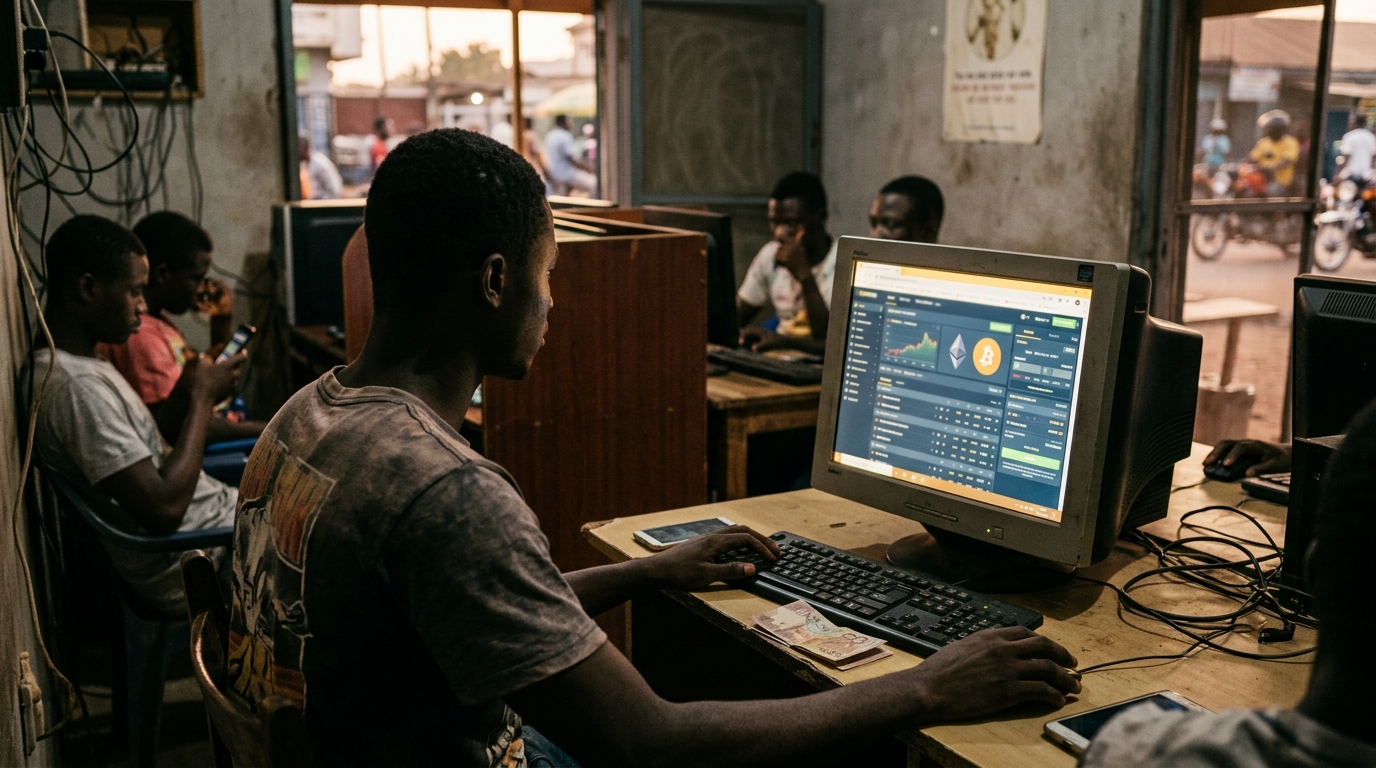
A young entrepreneur in Accra stares into the blue light of a smartphone, but he is not checking the stock market or bank statements. He is watching a digital wheel spin on a server hosted in a jurisdiction thousands of miles away, wagering Bitcoin fractions on outcomes dictated by an algorithm. This scene, once an outlier, has become the new reality for a growing demographic of Ghanaian youth who are bypassing traditional banking systems to participate in the volatile, borderless world of crypto-gambling.
The proliferation of these platforms represents a profound shift in the West African digital economy, creating a friction-less, high-stakes environment that regulators are struggling to monitor. As physical betting shops face increasing scrutiny and tax pressure, the migration to decentralized gambling platforms threatens to undermine national consumer protection laws, erode tax revenues, and expose vulnerable populations to unregulated financial risks.
The Regulatory Blind Spot
The Gaming Commission of Ghana operates under the Gaming Act, 2006 (Act 721), a framework designed for land-based operations, card games, and traditional sportsbooks. It requires operators to maintain physical headquarters, undergo rigorous licensing, and adhere to strict reporting standards. However, the rise of Bitcoin and other cryptocurrencies has created a regulatory anomaly. These platforms often host their domains offshore, utilizing decentralized wallet addresses that effectively vanish from the view of the Bank of Ghana and local law enforcement.
Legal analysts argue that the current legislative framework is fundamentally ill-equipped to police digital assets. When a bet is placed in Bitcoin, it exists outside the centralized banking system (the on-ramp and off-ramp of fiat currency). Consequently, there is no ledger for the Ghana Revenue Authority to inspect. According to preliminary data estimates, the illicit flow of capital through these untracked channels could be bypassing an estimated GHS 450 million (approximately KES 4.2 billion) in potential annual taxable revenue, a figure that is projected to grow as digital literacy expands.
The Economic Undercurrents
For many Ghanaians, particularly those aged 18 to 35, crypto-gambling is not merely a hobby it is viewed as a speculative financial instrument. Economic pressures, including persistent inflation and high youth unemployment, have driven a segment of the population to seek rapid wealth generation. While traditional betting platforms offer limited odds and low payouts, crypto-based casinos often provide multiplier games with no theoretical cap on potential losses or gains.
This behavior is exacerbated by the accessibility of mobile money integration. While the Bank of Ghana has issued warnings regarding the use of virtual assets, the ease with which individuals can convert mobile money to stablecoins or Bitcoin on peer-to-peer exchanges provides a seamless bridge to betting sites. The risks involved are extreme:
- Lack of Recourse: Players have no legal protection if a site decides to freeze funds or cease operations—a common occurrence in the grey crypto-gambling market.
- Price Volatility: A winning bet can effectively be halved in value overnight due to the inherent volatility of the underlying cryptocurrency.
- Addiction Mechanics: The 24/7 nature of digital gambling removes the cooling off periods found in physical casinos, fostering hyper-addictive behavior.
- Anonymity: The lack of Know Your Customer (KYC) compliance on many of these platforms means minors can access high-stakes gambling environments with little friction.
Mirroring the Nairobi Blueprint
The situation in Accra mirrors the crisis that unfolded in Kenya during the mid-2010s, albeit with a digital twist. In Kenya, the explosion of mobile betting platforms forced the government to engage in a protracted legislative battle, eventually implementing heavy taxation on stakes and winnings to curb the social fallout. Nairobi eventually established a regulatory precedent that forced major betting firms to align with tax and responsible gambling standards.
Ghana currently sits at a precipice. Observers at the African Center for Economic Transformation suggest that if the Gaming Commission does not move quickly to create a digital assets registry or mandate local ISP-level blocking for unlicensed crypto-gambling sites, the country could face a crisis of financial instability among its youth. The Kenyan experience proved that betting is a contagion once it becomes a primary method for seeking economic relief, the social costs—including bankruptcy and increased crime—far outweigh the nominal participation numbers.
Voices from the Frontline
In conversations with local tech analysts in the capital, a consensus emerges: the government cannot simply ban the technology. Attempting to shut down crypto-exchanges or block websites is technically difficult and often counter-productive, as it drives activity further underground into encrypted networks. Instead, experts advocate for a regulatory sandbox approach.
This would involve the Ghana Gaming Commission partnering with the Bank of Ghana to license crypto-native operators who agree to rigorous audits, mandatory deposit limits, and proof-of-reserve requirements. Without such proactive measures, the digital economy remains a wild west, where the promise of a decentralized financial revolution is currently being overshadowed by the quiet erosion of personal savings.
As the government deliberates its next legislative steps, the digital wheel continues to spin. Whether Accra will learn from the regulatory battles of its East African counterparts or allow the current ecosystem to metastasize remains the defining question of the year. For the individual participant, however, the stakes remain the same: a digital bet in a physical world that offers no safety net for the fallen.
