


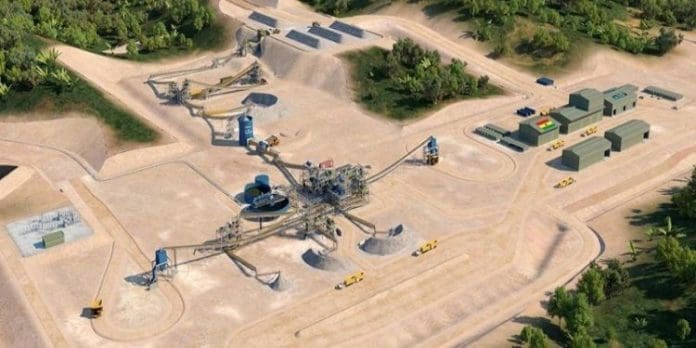

A communications professional is calling on authorities to move beyond token employment and ensure that communities hosting Ghana’s new lithium mining operations receive meaningful economic participation through local contract awards.
Fiifi Boafo, former Head of Public Affairs at the Ghana Cocoa Board (COCOBOD), made the argument on TV3’s morning show, The Big Issue, commenting on Parliament’s ratification of the Ewoyaa Lithium Project mining lease, which gives Atlantic Lithium, through its Ghanaian subsidiary Barari DV Ghana Limited, exclusive rights to conduct mining and commercial production at Ewoyaa in the Mfantsiman Municipality of the Central Region for an initial 15-year period.
Boafo argued that the conventional approach of pointing to local hiring as evidence of community benefit was insufficient and that the bulk of economic value from large extractive projects typically left host communities entirely.
“One thing I have observed is that when we talk about local participation we talk about the part that says let’s employ people from the local community. I mean we should go beyond that,” he said. “Most of the contracts are awarded, the big contracts, are awarded to contractors who are not locals. So when they make money, the money is shipped away.”
He said the key to sustainable community development lay in awarding significant contracts to local businesses with the capacity to execute them, rather than limiting community engagement to entry-level employment that ends when the mine closes.
“Can we make provision so that when we are awarding contracts within the mining industry we pay special attention or special consideration to the locals who live in the community and have the capacity?” he asked.
Boafo stressed that genuine empowerment required investment that outlasted the mine itself, so that communities could use the income from contract work to diversify into other sectors of the local economy.
The Ewoyaa deposit is considered one of the most significant hard-rock lithium discoveries in West Africa and is expected to diversify Ghana’s mining sector, which is currently dominated by gold, while creating new export streams and industrial opportunities. Atlantic Lithium had originally planned to expand its workforce to approximately 900 workers during the construction phase before laying off over 100 workers in November 2025 due to ratification delays.
The concerns raised by Boafo echo longstanding debates in Ghana’s extractive sector about whether resource-hosting communities in areas such as the Western Region have adequately shared in the economic benefits of oil and mining activity over the decades.
