
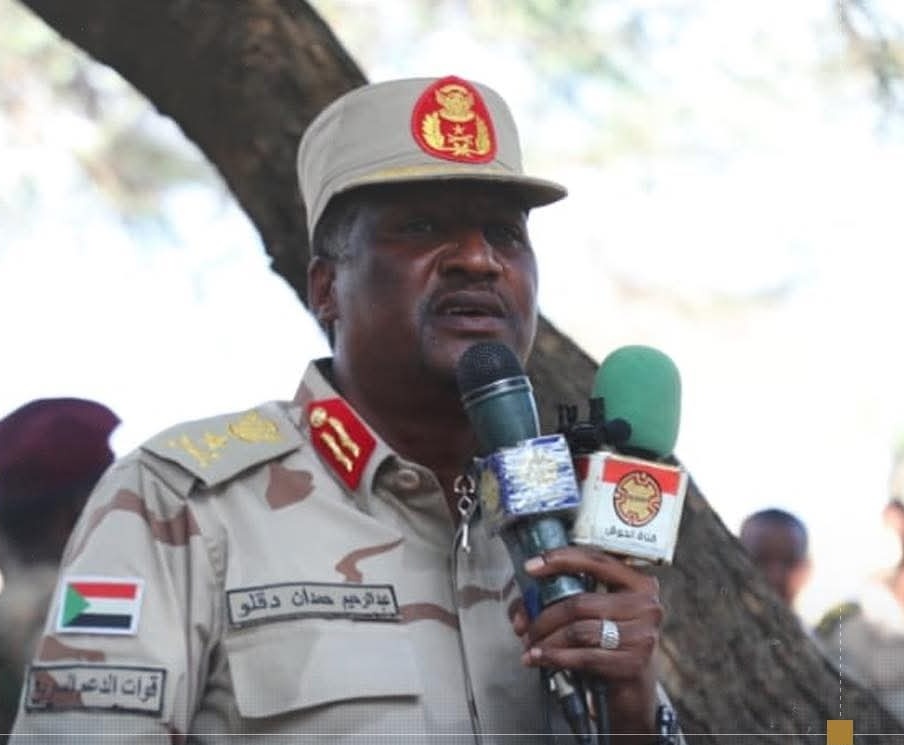
The UN Security Council has imposed sanctions on Sudan’s
Rapid Support Forces deputy commander Abdul Rahim Dagalo for his role in mass
atrocities that UN experts concluded bear the “hallmarks of
genocide”.
Rahim is the younger brother of RSF commander Mohamed Dagalo
and was the senior rmost leader at a rebels’ meeting hosted in Nairobi in
February last year.
The move has thus renewed attention on the controversial
meeting, which involved the sanctioned group’s leadership.
According to a narrative summary published on the sanctions
committee’s website on Tuesday, Rahim was designated for actions threatening
the peace, security and stability of Darfur, including violence and human
rights abuses.
The listing identifies Rahim as playing a key operational
role in the paramilitary group’s campaigns. He is accused of overseeing
operations linked to atrocities during the RSF takeover of el Fasher on October
26 last year.
The UN said he was present at the Sudanese army’s sixth
Infantry Division base in the city during the assault and was seen in footage
giving direct orders to fighters not to take captives but to kill.
That offensive, the UN noted, was marked by mass killings of
civilians at El Fasher University and the Saudi Hospital, shootings in
surrounding areas and ethnically targeted executions of Zaghawa and other
non-Arab communities.
The sanctions summary also cited reports of widespread
sexual violence, including gang rape in front of relatives, as well as the
kidnapping of medical personnel for ransom.
Four doctors, a pharmacist and a nurse were reportedly
abducted, with demands exceeding $150,000. The violence displaced an estimated
70,000 people, leaving many civilians trapped or missing.
Beyond the battlefield allegations, his designation has
drawn renewed attention in Kenya, where he appeared publicly exactly a year ago
during a meeting of RSF-aligned figures at the government-owned KICC in
Nairobi.
At that meeting, RSF leaders and allied political actors
announced plans for a parallel administration, a move that deepened tensions
with Sudan’s military leadership.
At the time, the Sudan Armed Forces accused Kenya of hosting
RSF commanders and facilitating their political activities abroad, allegations
that Nairobi rejected. The issue became more contentious after an interview
aired by Sky News showed Abdul Dagalo speaking from Nairobi, reinforcing claims
by Sudan’s military authorities that RSF figures were operating from the Kenyan
capital.
The developments placed Kenya at the centre of a diplomatic
row linked to the Sudan war, which erupted in April 2023 between the RSF and
the Sudanese army. The war has devastated large parts of the country,
particularly Darfur, where long-standing ethnic tensions and armed
mobilisations have fuelled renewed atrocities.
Analysts say the UN sanctions now underscore the
international community’s focus on accountability for commanders accused of
directing attacks on civilians. Under the Darfur sanctions regime, listed
individuals face travel bans and asset freezes aimed at limiting their ability
to operate internationally.
The sanctioning of Dagalo is significant not only because of
his position within the RSF hierarchy but also because of his operational
influence in the group’s campaigns across Sudan’s western regions.
He has been described as one of the key field commanders
shaping RSF strategy in Darfur and border areas.
The sanctions have also revived scrutiny over last year’s
meeting and its broader role in regional mediation efforts related to Sudan.
At the same time, the Kenyan government is also under
scrutiny after earlier sanctions announcement exposed Algoney Dagalo, the
younger brother of Hemedti and an RSF commander possessing a Kenyan passport.
While Nairobi has positioned itself as a diplomatic actor in
regional peace processes, the presence of RSF figures on its territory has been
criticised by Sudan’s military leadership and some regional observers.
Wiper party leader Kalonzo Musyoka, who also served as
Foreign Minister in the Moi administration, has criticised the Kenya Kwanza
administration over reports that Algoney holds a Kenyan passport.
Kalonzo said the alleged issuance of the passport to rebel
leaders could hurt Kenya’s image internationally and raise national security
concerns.
“The Ruto government is issuing passports to militia leaders
from Sudan and thus jeopardising relationships with friendly countries. It’s
tragic that individuals sanctioned by the US Treasury are using our passport,”
Kalonzo said.
He added Kenya has lost a significant share of the Sudanese
tea market due to support for the Sudanese rebels.
Meanwhile, the humanitarian situation in Darfur continues to
deteriorate, with aid agencies warning that large parts of the region remain
inaccessible. Civilians are still exposed to violence, displacement and
shortages of basic services.
According to International Rescue Committee, the war has
displaced over 12 million people and left 33.7 million people in need of
humanitarian support.
“More than 150,000 people have been killed, with
indiscriminate attacks on civilians being reported,” IRC said in its update
report on February 10.
“With over 30 million people in need of humanitarian aid,
Sudan accounts for a shocking 10 per cent of global needs.”
