


Kampala, Uganda | THE INDEPENDENT | New details have emerged about Uganda’s participation in the Kenya Pipeline Company (KPC) Initial Public Offering, shedding light on how the country will protect its strategic interests in the critical fuel import pipeline.
The Cabinet on Monday approved the Government of Uganda’s participation in the Initial Public Offering (IPO) of the Kenya Pipeline Company (KPC) through the Uganda National Oil Company (UNOC), securing a 20.15% strategic shareholding in the company.
Minister of Energy and Mineral Development Ruth Nankabirwa revealed for the first time the specific powers that come with the shareholding. Sources at the Ministry of Energy indicate that Uganda will initially invest over 255.4 million dollars or close to 92 billion shillings.
Speaking to the media, the Minister explained that Uganda now holds veto rights on pipeline tariff changes, the ability to appoint at least two directors to KPC’s board, and veto authority over key company decisions, including revisions to the dividend policy, material changes to the business plan, alterations to share capital, and amendments to the company’s Memorandum or Articles of Association.
Veto power is essentially the ability to say “no” to certain decisions, even if the majority of a company’s board or shareholders want to go ahead. It doesn’t mean Uganda controls every decision at KPC, but it gives the country a legal right to block specific actions that could affect its interests.
“These voting rights and concessions provide satisfactory guarantees and protections for the Government of Uganda’s strategic interests of security of supply, affordability, and accessibility,” Minister Nankabirwa said.
“Therefore, the decision to purchase shares is strategic, and the concessions outlined above provide assurances for the security of supply, accessibility, and affordability of petroleum products in Uganda.”
The move comes as KPC transitions toward partial privatization, with the Government of Kenya selling 65% of shares on the Nairobi Securities Exchange while retaining 35%.
According to the Minister, the privatization introduces a profit-driven governance model, making these safeguards critical for Uganda.
“During the period when KPC was 100% Government of Kenya-owned, Uganda relied on strong bilateral relationships to ensure a reliable and secure supply of petroleum products,” Minister Nankabirwa said.
“However, the privatisation of KPC and the divestiture of its shareholding are likely to shift KPC’s governance to focus on the profit-driven interests of private-sector investors, with the expectation of annual dividend payments. It was therefore important for Uganda… to secure additional guarantees and protections.”
Uganda depends on KPC for over 95% of its fuel imports, roughly 2.96 billion litres annually, making the pipeline and storage systems crucial for energy security.
The country’s stake and associated veto powers ensure that fuel supply, tariffs, and company policies remain aligned with Uganda’s national interests.
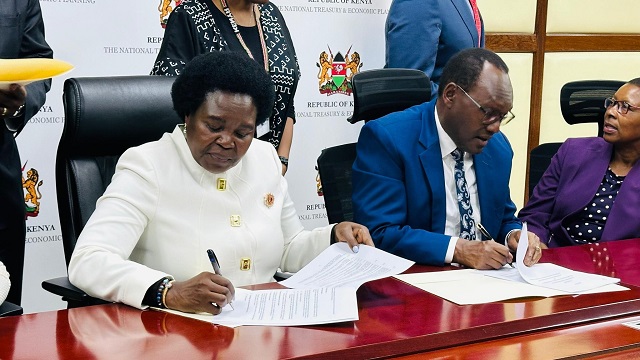
Minister Nankabirwa also credited the President, the Finance Ministry, and the Attorney General’s office for their role in securing the deal, saying that the engagement with Kenya marked a milestone for Uganda’s energy security and commercial interests.
In May 2024, UNOC signed a Transportation and Storage Agreement with KPC for the purpose of using KPC pipeline systems and infrastructure to handle the importation of the products at the Mombasa port and thereafter transport the same through the pipeline to depots in Western Kenya, where the Ugandan OMCs load their respective allocations for delivery and distribution into the Ugandan market.
The Uganda market is currently supplied by imports through the port of Mombasa in Kenya and supplemented through the ports of Dar-es-Salaam and Tanga in Tanzania.
Imports through Kenya account for over 95% of Uganda’s monthly demand, amounting to about 2.96 billion litres annually, and the remaining 5% are imported through Tanzania.
Why is it relevant for Uganda in the Kenya Pipeline deal?
Protecting fuel supply:
Uganda relies on the KPC pipeline for over 95% of its fuel imports. If decisions were made purely for profit—like raising tariffs or changing storage policies—Uganda could face higher fuel costs or disruptions. The veto allows Uganda to block such moves.
Maintaining affordability:
Fuel prices in Uganda are sensitive to pipeline tariffs and company dividend policies. By having veto power, Uganda can ensure that tariffs remain fair and that company decisions don’t push up local fuel costs.
Securing long-term control:
The privatization of KPC introduces private investors focused on profit. Veto rights let Uganda protect its 20.15% stake from dilution or unfavorable changes, giving it a strong voice in the company’s strategic decisions.
Influence without majority ownership:
Even though Uganda doesn’t own a controlling share, veto power means it can shape decisions critical to national energy security, making the investment both strategic and protective.
****
URN
