
A GNA Feature By Stephen Asante
Accra, Feb. 27, GNA – On February 28, 1948, Ghana, then a British protectorate under the name Gold Coast, experienced a significant uprising that would pave the way for a new era of the struggle for independence.
Central to this event were the Ghanaian veterans of World War II, whose contributions and subsequent neglect by the colonial administration fueled a broader movement for change.
“The ‘Accra Riots of 1948’ remains a significant moment in the country’s history, as the ramifications led to the country’s eventual independence,” says renowned historian and legal practitioner, Anokye Frimpong.
The antecedence to this memorable event is that, during World War II, many Ghanaians enlisted in the British Army, serving in various capacities across different theatres of war.
Often called the “Gold Coast Regiment”, these veterans played crucial roles in campaigns in East Africa, the Middle East, and Asia.
According to the Public Records and Archives Administration Department (PRAAD), the experiences of the soldiers abroad exposed them to ideas and ideals of freedom and self-determination, which contrasted sharply with their status as colonial subjects.
As events unfolded, these veterans, upon their return, found themselves primarily ignored by the colonial administration.
Promised pensions and benefits were either insufficient or unpaid, leading to widespread dissatisfaction, which would later result in the famous protest for justice, dubbed ‘the 1948 Crossroads Shooting Incident’.
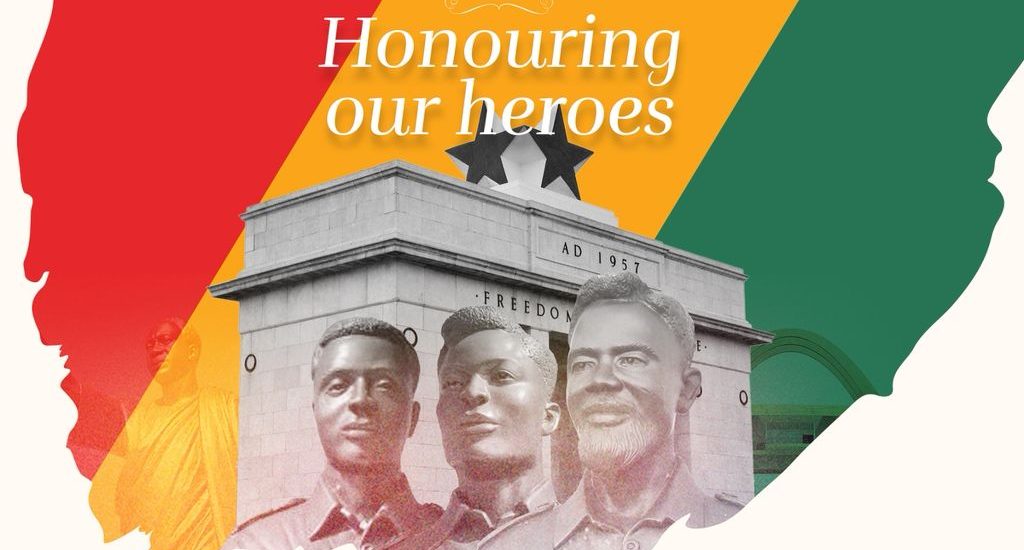
Led by Sergeant Major Adjetey, Corporal Attipoe, and Private Odartey Lamptey, these veterans decided to march to the Christiansborg Castle, the seat of the colonial government, to present a petition demanding their overdue benefits.
However, the peaceful protest turned tragic when Superintendent Colin Imray the British White Police Officer commanding, opened fire, killing the three veteran leaders.
This uprising, although suppressed, became an important moment in the history of resistance to colonialism.
That martyrdom, coupled with the veterans’ plight, resonated with many Ghanaians who were also experiencing the harsh realities of colonial exploitation and economic hardship.
Ghana, located on the western coast of Africa, became the target of colonial interest from European powers in the late 15th Century in the quest to control the trade of gold and slaves.
Subsequently, Britain established its control over the region in the 19th Century, significantly influencing its political, economic, and social structure.
“Under British control, Ghana’s economy underwent significant changes. The British authorities introduced new tax systems that burdened the local population,” the Historical Encyclopedia reports, noting that a key focus of economic policy became the development of the export sector, particularly agriculture.
The main export crops became cocoa, palm oil, and coffee.
“The Gold Coast was regarded as a “model colony” of the British Empire in West Africa since it contributed greatly, in economic terms as well as with troops, to the fight by the United Kingdom against its enemies during the two world wars.
Ironically, the British colonialists were fighting to avoid domination by dictatorships in Germany, Italy and Japan.
“In practice, the colonies were helping repay Great Britain’s war debts without receiving much in return in terms of consumption, infrastructure, or welfare,” says Dr Matteo Landricina, an expert in African History.
Renowned philosopher and author, Chinua Achebe, through his books, also exposed many of the negative colonial impacts on the African communities, and how they did their best to invade these countries politically, economically, and culturally.
In his novel, ‘Things Fall Apart’, the author tried to expose the side effects of the colonisers’ intentions to redesign the African communities up to Western standards, indicating that all colonial actions resulted in the colonisers’ good interests and were against African people.
These historical developments make the legacy of the 1948 Accra Riots profound.
A significant feature about those riots is that it galvanised a generation of leaders and activists who would play key roles in Ghana’s struggle for independence.
Figures such as renowned pan-Africanist Kwame Nkrumah, who later became Ghana’s first Prime Minister and President, drew inspiration from the events of 1948, and used them to galvanise support for the broader nationalist movement.
Moreover, the riots highlighted the importance of addressing the needs and rights of those who had served their country.
The veterans’ demands for fair treatment and recognition were a powerful reminder of the sacrifices made in the name of freedom and justice.
Their protests were more than just a moment of civil unrest; they were a catalyst for change, a turning point that set Ghana on the path to independence.
Residents of Accra took to the streets in riot over the killings of the ex-servicemen, and on the same day, the local political leadership, the United Gold Coast Convention, led by the ‘Big Six’, sent a cable to the Secretary of State in London.
“…unless Colonial Government is changed and a new Government of the people and their Chiefs installed at the centre immediately, the conduct of masses now completely out of control with strikes threatened in Police quarters, and rank and file Police indifferent to orders of Officers, will continue and result in worse violent and irresponsible acts by uncontrolled people,” the message read.
The leaders also blamed the Governor Sir Gerald Creasy (whom they called “Crazy Creasy”) for his handling of the colony’s problems.
The unrest in Accra, and in other towns and cities, would last for five days, during which both Asian and European-owned stores and businesses were looted, resulting in more deaths.
The British colonial government set up the Watson Commission, which examined the circumstances of the riots, paving the way for constitutional changes that eventually culminated in Ghana’s liberation as an independent nation.
As the country marks the 78th anniversary of the February 28 Christansborg Crossroads Shooting Incident, the bravery and sacrifices of the three ex-servicemen —Sergeant Adjetey, Corporal Attipoe, and Private Odartey Lamptey — will forever be remembered.
Their martyrdom embodied the collective action of the people, reinforcing the enduring power of unity and the relentless pursuit of justice.
Their treatment was a stark reminder of the inequalities and injustices inherent in colonial rule.
“Ghana’s independence in 1957 was a milestone for African decolonisation, as well as for the winding up of the British Empire,” says African historian, Dr Matteo Landricina.
Coincidently, the nation will be commemorating its 69th Independence Anniversary come March 6, 2026, and the occasion serves as a solemn moment for the people to reflect on the sacrifices of the forebears, as well as the gains made over the years.
In the 2026 State of the Nation’s Address, President John Mahama gave a positive outlook of the nation’s development trends, saying the economy has grown significantly.
“Ghana is placed among the top ten growing economies in Africa,” he noted, saying “Ghana is rising”.
Indeed, it is a time of reflection, stock-taking, resilience and moving forward with a tenacity of purpose.
Ex-servicemen, Sergeant Major Adjetey, Corporal Attipoe, and Private Odartey Lamptey, will forever be remembered for the ultimate sacrifice made for the liberation of a colonialised and subdued people.
GNA
Edited by Samuel Osei-Frempong

