
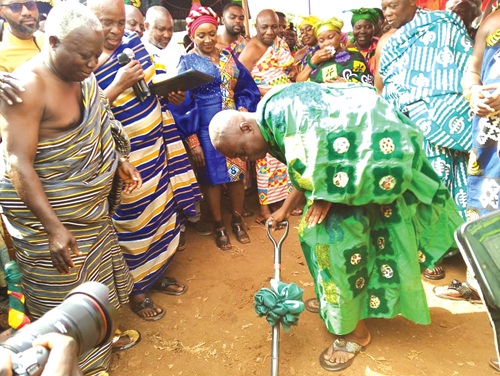
Sod-Cutting ceremony for the construction of a $2,500,000 ultra-modern Dialysis and Medical Centre has been held in Sunyani, the Bono Regional capital.
The project is being spearheaded by the Council of Bono and Ahafo Associations of North America (COBAANA), an umbrella body of Ghanaian diaspora associations from the erstwhile Brong-Ahafo Region residing in the United States and Canada.
The initiative is intended to improve access to life-saving dialysis services and other essential services for people living with kidney disorders in the middle belt, which currently lack the facility.
Patients requiring dialysis often travel to Kumasi or Accra for treatment, a situation that imposes enormous financial and emotional strain on them.
To be named “COBAANA Dialysis and Medical Centre”, the facility will be the first major dialysis centre in the middle belt.
Urgent need
At the ceremony on Wednesday, the Chairman of COBAANA, Dr Degraft Kwafo, underscored the urgent need to expand access to dialysis services in the Bono, Bono East and Ahafo regions.

An artist’s impression of the COBAANA Dialysis and Medical Centre when completed
He described kidney disease as a “silent but devastating” health challenge confronting many Ghanaians.
Dr Kwafo said dialysis treatment was expensive and difficult to access, especially for people in the regions, as they had to travel to Kumasi or Accra to access dialysis services.
“The Bono, Ahafo and Bono East regions together cannot boast of even one well-equipped dialysis centre,” he said.
Citing data from the Ministry of Health, Dr Kwafo said nearly 90 per cent of patients who required dialysis were unable to access the service due to financial constraints and the limited number of centres nationwide.
He added that about 80 per cent of dialysis facilities were concentrated along the coastal belt, leaving the middle belt.
Dr Kwafo expressed the hope that the centre, when completed, would help reduce preventable deaths and improve the quality of life of their people.
Boost to healthcare
The Bono Regional Minister, Joseph Addai Akwaboa, described the project as a major boost to specialised healthcare delivery in the middle belt.
He called the project a life-saving intervention that would significantly reduce the burden on families in the regions.
Mr Akwaboa said kidney and other non-communicable diseases were on the rise in the country, with hypertension and diabetes being major risk factors for kidney failure.
Access to dialysis services, he said, remained limited and costly, making the establishment of the centre in Sunyani both strategic and necessary.
Mr Akwaboa said the project was aligned with broader national efforts to expand access to specialised medical care.
He referenced the establishment of the Ghana Medical Trust Fund, popularly known as Mahama Cares, which is designed to provide financial support for specialised treatments that are often costly and not fully covered by the National Health Insurance Scheme.
The Minister advised residents to prioritise preventive healthcare practices, including regular medical check-ups, healthy lifestyles and early detection of conditions such as hypertension and diabetes to prevent complications that could lead to kidney failure.
Appreciation
The President of the Bono Regional House of Chiefs, Osagyefo Oseadeeyo Agyemang Badu II, commended the association for identifying and investing in one of the critical health sectors.
He said the establishment of the centre would help bring relief to the people in the regions, especially the poor, who could not afford extra expenses to travel long distances to receive dialysis care.
Osagyefo Agyemang Badu, who is also the Dormaahene, urged the association to speed up work on the project in order to entice others to support its completion.
He appealed to the chiefs, including residents in the regions, to demonstrate commitment by contributing toward the construction of the project.
Osagyefo Agyemang Badu also urged COBAANA to establish an equally important project in the Ahafo Region to balance their activities, since the association was formed by the two regions.
He said that since 2023, when the association made the decision, some residents had contributed significantly to the initiative.
Writer’s email:

