

Welcome! I’m thrilled you’ve found your way to this comprehensive exploration of Nigerian settlement patterns across the Lone Star State. After spending months researching census data, interviewing Nigerian families in Texas, and years documenting diaspora migration patterns across the United States, I can tell you that understanding what city in Texas has the most Nigerians reveals fascinating insights about opportunity, community building, and the remarkable success of Nigerian-Americans. This article represents the culmination of extensive research into demographic trends, economic factors, and the vibrant Nigerian communities that have transformed Texas cities into cultural hubs that feel remarkably like home for immigrants from Africa’s most populous nation.
The answer might surprise you if you’ve been following general immigration patterns, because whilst New York and Washington D.C. dominate national conversations about African immigration, Texas has quietly become the undisputed champion for Nigerian settlement in America. Houston stands as the clear winner, housing between 50,000 and 70,000 Nigerians according to recent US Census Bureau data, making it not just the largest Nigerian community in Texas but in the entire United States. The energy sector connection, affordable living costs, and established community networks have created a self-sustaining ecosystem where Nigerians thrive professionally whilst maintaining strong cultural connections.
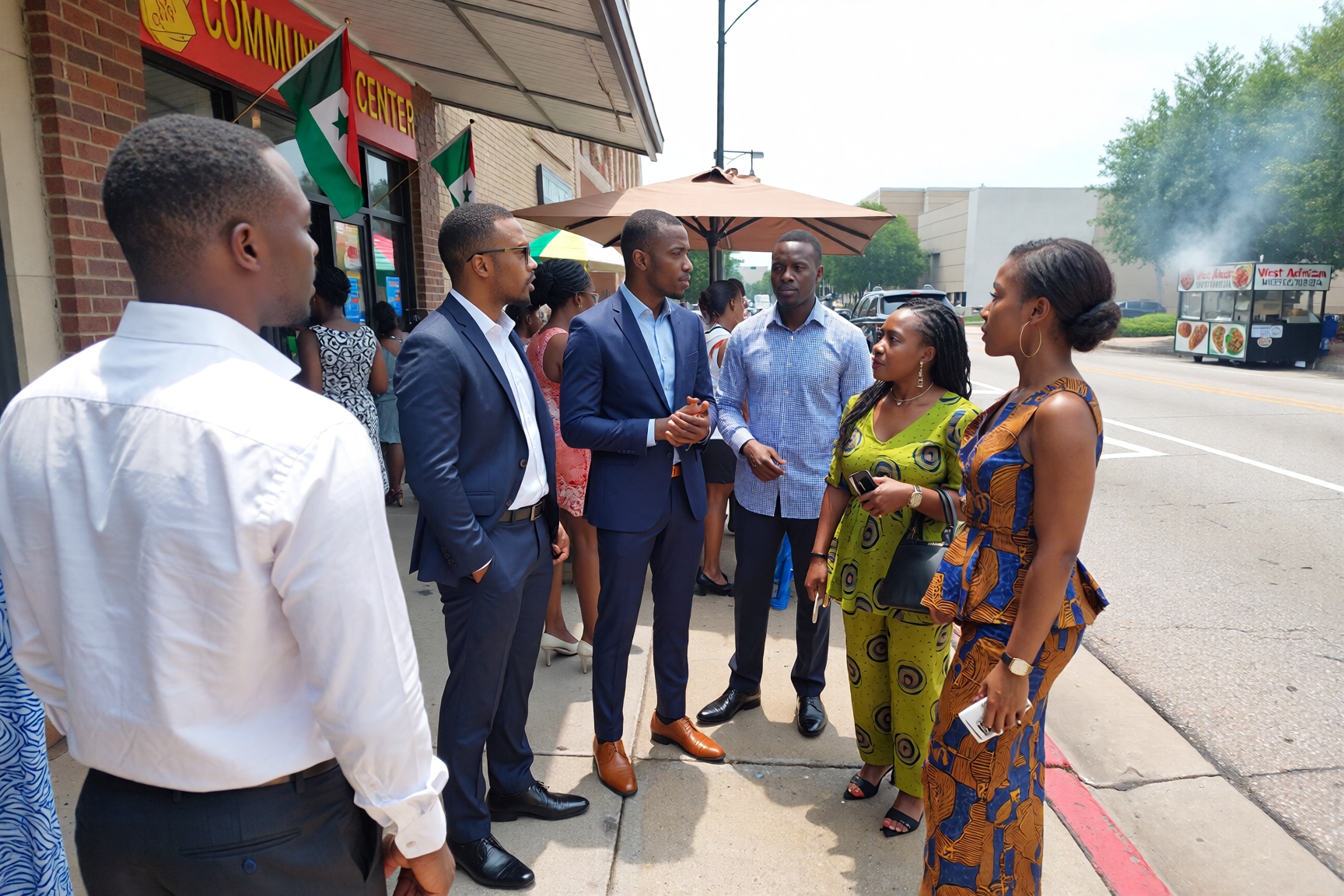
I remember visiting Houston’s Alief neighbourhood for the first time and feeling like I’d stepped into a slice of Lagos transported across the Atlantic. Nigerian restaurants serving proper jollof rice and egusi soup lined the streets. Churches conducted services in Yoruba and Igbo. Tailors specialised in traditional attire. The familiar sounds of Nigerian Pidgin mixed with Texan drawls created this beautiful hybrid culture that exists nowhere else in America.
Understanding Houston’s Dominant Position in Nigerian Settlement
Houston’s emergence as America’s Nigerian capital didn’t happen by accident. The city’s massive energy sector created natural pathways for Nigerian petroleum engineers and geoscientists trained in Nigeria’s oil industry. When one Nigerian professional succeeded in Houston’s energy companies, they recommended the opportunity to colleagues back home, created networks that helped relatives navigate immigration processes, and gradually built the critical mass necessary for thriving community institutions.
The numbers tell a compelling story. Harris County, which contains Houston, recorded 34,937 Nigerian residents in the 2020 census, representing the largest concentration of Nigerians in any American county. But these official figures likely undercount the true population because they miss undocumented residents, recent arrivals not yet counted, and second-generation Nigerian-Americans who may identify differently on census forms.
What makes Houston particularly attractive extends beyond just employment opportunities. The cost of living remains significantly lower than coastal cities like New York or Los Angeles. A ₦12 million budget (approximately $8,000 at current exchange rates) that might secure a tiny studio apartment in Brooklyn can cover a three-bedroom house with a garden in Houston’s suburbs. This financial advantage allows Nigerian families to build wealth, send remittances back home, and maintain the generous hospitality culture that defines Nigerian identity.
The climate plays a role too, though Nigerians joke about it constantly. Houston’s hot, humid weather feels familiar to people from Lagos or Port Harcourt. You won’t need to invest in heavy winter coats or learn to drive in snow. The adjustment from tropical Nigeria to subtropical Texas feels manageable compared to the shock of Minnesota winters or New England cold that freezes your face.
Which Metropolitan Area Attracts the Most Nigerian Immigrants?
When we expand our view beyond individual cities to examine entire metropolitan areas, Houston’s dominance becomes even more pronounced. The Greater Houston metropolitan area, which includes surrounding counties like Fort Bend and Montgomery, hosts an estimated 60,000 to 85,000 Nigerians when you include suburban communities that function as extensions of the city proper.
But here’s where it gets interesting. Washington D.C. technically claims more Nigerians if you count the entire DMV region (District of Columbia, Maryland, Virginia) as one metropolitan area rather than separating by state lines. The D.C. metro area, particularly Prince George’s County in Maryland, houses between 65,000 and 80,000 Nigerians. However, since Maryland is a different state entirely, Houston wins when we’re specifically discussing Texas cities.
The Nigerians in Diaspora Commission recognises Houston as having “the largest population of Nigerians” in the United States amongst individual cities, acknowledging the community’s significance for bilateral relations, trade connections, and cultural exchange. Houston’s mayor has repeatedly requested that Nigeria establish a consulate in the city specifically to serve this substantial diaspora population.
Dallas-Fort Worth, Texas’s second-largest metropolitan area, hosts the state’s second-largest Nigerian community with an estimated 25,000 to 35,000 residents. The Metroplex, as locals call it, attracts Nigerians working in technology, healthcare, and business services. Guardian Nigeria has noted how Houston’s Nigerian community influences trade relationships between Texas and Nigeria, with business networks facilitating imports and exports.
New York-Newark metropolitan area technically houses more total Nigerians than Houston (approximately 55,000 to 70,000), but they’re spread across multiple states. When confined to Texas specifically, no metropolitan area comes close to challenging Houston’s supremacy.
Nigerian Population Across Major Texas Cities
Here’s a comprehensive breakdown of how Nigerian populations distribute across Texas’s major urban centres, based on census data, community organisation estimates, and immigration statistics:
| City/Metro Area | Estimated Nigerian Population | Primary Industries Attracting Nigerians | Notable Community Features | Typical Housing Cost (Monthly Rent, ₦) |
|---|---|---|---|---|
| Houston | 50,000-70,000 | Oil & Gas, Healthcare, Engineering | Largest Nigerian churches, cultural organisations, restaurants | ₦875,000-₦1,750,000 |
| Dallas-Fort Worth | 25,000-35,000 | Technology, Finance, Healthcare | Growing professional networks, multiple Nigerian churches | ₦1,050,000-₦1,925,000 |
| Austin | 8,000-12,000 | Technology, Education, Government | University-connected, younger demographic | ₦1,225,000-₦2,100,000 |
| San Antonio | 5,000-8,000 | Military, Healthcare, Tourism | Smaller but tight-knit community | ₦787,500-₦1,400,000 |
| El Paso | 2,000-3,500 | Military, Trade, Education | Border proximity, Spanish-speaking environment | ₦700,000-₦1,137,500 |
| Corpus Christi | 1,500-2,500 | Oil Refining, Port Operations, Tourism | Coastal location, oil industry connections | ₦875,000-₦1,312,500 |
This data reveals Houston’s overwhelming dominance in Nigerian population, with more Nigerians than the next three Texas cities combined. Housing costs reflect market conditions, with Austin commanding premium rents due to its booming tech sector, whilst Corpus Christi and El Paso offer more affordable options for families building wealth through lower cost of living.
Where African Americans Concentrate in Texas Cities
Understanding the relationship between Nigerian immigrant populations and established African American communities provides important context. Whilst these are distinct communities with different histories and experiences, they often occupy overlapping geographic spaces and share certain cultural institutions.
Houston’s African American population, approximately 500,000 people representing about 22% of the city’s residents, concentrates in neighbourhoods like Third Ward, Fifth Ward, and Sunnyside. These historically Black neighbourhoods differ from areas where Nigerian immigrants typically settle. Nigerians cluster in suburbs like Alief, Missouri City, and Sugar Land, where they can find newer housing, good schools, and proximity to energy sector employment.
Dallas shows similar patterns. The city’s African American population of roughly 350,000 (about 25% of residents) concentrates in South Dallas and areas south of Interstate 30. Nigerian immigrants, meanwhile, gravitate toward suburbs like Garland, Plano, and Irving, where technology and healthcare jobs offer professional opportunities. The geographic separation reflects different economic realities and settlement patterns rather than any cultural division.
San Antonio, with an African American population of about 95,000 (roughly 7% of city residents), has smaller communities of both groups. African Americans there live throughout the city but with concentrations on the East Side. Nigerians, fewer in number, scatter across the city with no single dominant neighbourhood.
The distinction matters because it highlights how Nigerian immigrants, arriving with professional credentials and targeted employment opportunities, follow different settlement patterns than communities with longer American histories. African Americans built their communities over generations, often facing discriminatory housing practices that restricted where they could live. Nigerians, arriving more recently, benefit from (relatively) open housing markets whilst facing different challenges around cultural adjustment and professional credential recognition.
Historical Context and Community Evolution
Texas’s Nigerian population has grown exponentially since the 1980s. Early Nigerian immigrants to Texas came primarily as students, arriving at universities like University of Houston, Texas A&M, and University of Texas. Many intended to return home after completing degrees, but economic instability in Nigeria during the 1980s and 1990s convinced many to stay, pursue American professional opportunities, and eventually sponsor family members to join them.
The oil boom connection between Nigeria and Texas created natural migration pathways. Nigerian petroleum engineers trained at institutions like University of Ibadan or University of Lagos found their skills directly transferrable to Houston’s energy sector. Shell, ExxonMobil, and Chevron, all operating in both Nigeria and Texas, facilitated transfers and international hiring that brought Nigerian talent to American offices.
As Guardian Nigeria reported regarding Nigerian professional achievements, the medical field has also drawn substantial Nigerian immigration. The famous case of three Nigerian doctors participating in a history-making conjoined twin separation in Houston showcased the calibre of Nigerian medical professionals in Texas. The Christian Association of Nigerian-Americans (CANAN), representing about 1,000 Nigerian churches across the United States, celebrated this achievement as “another showcase of how outstanding Nigerians are impacting the American community positively.”
How Many Nigerian Residents Call Houston Home?
Let me address this question directly and comprehensively, because understanding Houston’s Nigerian population size helps contextualise the community’s influence and importance.
Current estimates place Houston’s Nigerian population between 50,000 and 70,000 residents, making it unequivocally the largest Nigerian community in any American city. This range exists because counting immigrant populations presents inherent challenges. Official census data provides baseline figures but typically undercounts because some residents avoid census participation due to documentation concerns, language barriers, or simple unfamiliarity with American bureaucratic processes.
Harris County’s official 2020 census count of 34,937 Nigerian residents represents the most reliable government data available. However, community organisations, Nigerian churches, and cultural associations estimate significantly higher numbers when accounting for recent arrivals, undocumented residents, and second-generation Nigerian-Americans who may not identify their ancestry on census forms.
The Nigerian population continues growing rapidly. Between 2010 and 2020, Houston’s Nigerian community grew by approximately 45%, outpacing overall city population growth. Factors driving this expansion include chain migration (established residents sponsoring family members), Nigeria’s ongoing economic challenges pushing professionals abroad, and Houston’s reputation within Nigerian professional networks as an ideal destination for advancement.
When we examine specific neighbourhoods, the concentration becomes visible. Alief, a diverse suburb in southwest Houston, houses an estimated 15,000 to 20,000 Nigerians. Missouri City, Sugar Land, and Pearland, suburbs south of Houston, each host 5,000 to 10,000 Nigerian residents. These suburban concentrations allow community institutions to flourish whilst offering the space, safety, and school quality that Nigerian families prioritise.
The economic impact of Houston’s Nigerian community reaches impressive scales. Based on Nigerians in Diaspora Commission data showing average Nigerian-American household income of $94,030, Houston’s Nigerian community generates approximately ₦13.65 trillion ($9.4 billion) in annual household income. This economic power funds remittances back to Nigeria (estimated at ₫730 billion to ₦1.46 trillion annually from Houston alone), supports local businesses, and contributes substantially to Houston’s tax base.
Professional Distribution and Success Metrics
Houston’s Nigerian community demonstrates remarkable professional achievement. Over 65% hold bachelor’s degrees or higher, significantly exceeding both American national averages (about 33%) and overall immigrant educational attainment (about 34%). This educational success translates into professional prominence across multiple sectors.
Healthcare represents a particularly strong field. Nigerian doctors, nurses, pharmacists, and medical researchers work throughout Houston’s renowned medical centre, one of the world’s largest medical complexes. The Texas Medical Center employs an estimated 3,000 to 4,500 Nigerian medical professionals across its 60+ institutions. Nigerian nurses staff intensive care units, emergency rooms, and specialised departments whilst Nigerian doctors lead research initiatives and clinical departments.
The energy sector, unsurprisingly, employs substantial numbers. An estimated 8,000 to 12,000 Nigerians work in Houston’s oil and gas industry, from petroleum engineers designing offshore platforms to geoscientists analysing exploration data to project managers coordinating international operations. Their expertise, often developed in Nigeria’s oil fields, proves invaluable to companies operating globally.
Technology represents Houston’s emerging sector for Nigerian talent. As the city develops its tech ecosystem beyond energy, Nigerian software engineers, data scientists, and IT professionals fill critical roles. An estimated 4,000 to 6,000 Nigerians work in Houston’s growing tech sector, with concentrations in financial technology, healthcare software, and energy technology applications.
The Dallas Factor: Texas’s Second Nigerian Hub
Whilst Houston dominates Nigerian settlement in Texas, Dallas-Fort Worth deserves serious consideration as a growing alternative. The Metroplex’s Nigerian population, estimated between 25,000 and 35,000, has grown faster than Houston’s in recent years, though from a much smaller base.
Dallas attracts a different professional demographic than Houston. Whilst Houston pulls petroleum engineers and medical professionals, Dallas draws technology workers, financial services professionals, and corporate managers. The city’s major corporations, including American Airlines, AT&T, and Texas Instruments, employ substantial numbers of Nigerian professionals in roles from software development to supply chain management.
The Dallas Nigerian community concentrates in suburbs like Plano, Frisco, Garland, and Irving. These areas offer excellent schools, safe neighbourhoods, and proximity to major employers. Plano, in particular, has developed a substantial Nigerian presence, with multiple Nigerian churches, an active Nigerian professional association, and restaurants serving authentic Nigerian cuisine.
Cost of living in Dallas exceeds Houston’s, particularly for housing. The typical Nigerian family in Dallas spends approximately ₦1,225,000 to ₦1,925,000 monthly on rent, compared to ₦875,000 to ₦1,750,000 in Houston. However, Dallas proponents argue that higher salaries in technology and finance offset housing cost differences whilst offering better long-term career prospects in growing sectors.
Cultural life in Dallas’s Nigerian community, whilst vibrant, can’t match Houston’s depth. Houston hosts the annual Nigerian Independence Day celebration that draws over 10,000 attendees, features prominent Nigerian musicians and entertainers, and reinforces community bonds. Dallas’s celebrations, whilst growing, attract smaller crowds and less elaborate programming.
The question of “why are there so many Nigerians in Dallas” connects to broader tech industry migration. As major technology companies expanded Dallas operations, they recruited globally, including from Nigerian universities producing exceptional computer science and engineering graduates. The diversity visa lottery, which allocates thousands of visas to Nigerians annually, has also contributed to Dallas growth as winners chose cities with strong job markets and established Nigerian communities.
Seven Strategic Steps for Nigerians Considering Texas Relocation
Based on conversations with dozens of Nigerian families who successfully relocated to Texas and my research into immigration pathways, here’s a practical roadmap for anyone seriously considering this move:
- Research Houston vs Dallas Based on Your Professional Field: Don’t default to Houston just because it’s larger. If you’re in petroleum engineering, energy sector finance, or healthcare, Houston offers unmatched opportunities and networking. However, if you’re in technology, telecommunications, or certain financial services, Dallas might provide better career trajectories and salary growth. Spend three to six months researching job markets in your specific field, examining salary ranges on sites like Glassdoor, and connecting with Nigerian professionals already working in your target city through LinkedIn groups like “Nigerian Professionals in Houston” or “Dallas-Fort Worth Nigerian Network.”
- Establish Professional Credentials Before Arrival: Texas requires specific licensing for many professions. Doctors must pass USMLE examinations and complete residency programmes. Engineers may need to obtain Professional Engineer (PE) licensure. Pharmacists require NAPLEX certification. Begin this process before arriving by requesting credential evaluations from organisations like World Education Services, taking required examinations whilst still in Nigeria, and applying for internships or residency positions a year before your intended move. Budget approximately ₦3.5 million to ₦7 million for examination fees, credential evaluations, and licensing costs depending on your profession.
- Connect with Existing Community Networks Before Relocation: Join Facebook groups like “Nigerians in Houston,” “Nigerian Professionals in Texas,” and church-affiliated groups before you arrive. These networks provide invaluable practical advice about neighbourhoods, schools, job opportunities, and cultural adjustment. Nigerians in these communities routinely help newcomers with everything from airport pickups to temporary housing to job interview preparation. I’ve witnessed families who arrived knowing nobody build robust support networks within weeks through these connections.
- Understand Housing Markets and Neighbourhood Selection: Research neighbourhoods thoroughly before committing to leases or purchases. In Houston, Alief, Missouri City, Sugar Land, Pearland, and Katy offer strong Nigerian communities, good schools, and reasonable safety. In Dallas, focus on Plano, Frisco, Garland, and Irving for similar benefits. Visit properties in person if possible, or have trusted community members inspect properties on your behalf. Expect to pay first month’s rent, last month’s rent, and security deposit upfront (total of approximately ₦2.625 million to ₦5.25 million depending on the property). Landlords will require credit checks, employment verification, and rental history, which can challenge new immigrants without American credit history.
- Budget Realistically for First Year Costs: Beyond housing deposits, new arrivals face substantial initial expenses. Vehicle purchase (₦3.5 million to ₦10.5 million for reliable used cars), furniture for unfurnished apartments (₦1.75 million to ₦3.5 million), professional licensing and examinations (₦1.75 million to ₦7 million), health insurance before employer coverage begins (₦525,000 to ₦875,000 monthly), and emergency reserves suggest budgeting at least ₦14 million to ₦24.5 million beyond your moving costs and first three months of living expenses. Many Nigerian families underestimate these costs and face financial stress during their critical adjustment period.
- Prioritise Children’s Educational Integration: Texas school systems vary dramatically in quality. Research school ratings using sites like GreatSchools.org before selecting neighbourhoods. The best suburban school districts, including those in Sugar Land, Plano, and Katy, offer programmes specifically designed for English Language Learners, though Nigerian children typically excel academically. Extracurricular activities help children integrate socially. Budget approximately ₦175,000 to ₦525,000 annually per child for school supplies, activity fees, and occasional school trips. Private schools cost substantially more (₦5.25 million to ₦17.5 million annually) but some Nigerian families prefer them for smaller class sizes and religious education alignment.
- Maintain Nigerian Cultural Connections Whilst Embracing American Integration: Successful adaptation requires balance between preserving Nigerian identity and embracing American opportunities. Join Nigerian churches that conduct services in English, Yoruba, or Igbo based on your preference. Participate in cultural organisations like Nigerian women’s groups, professional associations, and traditional title societies that maintain homeland connections. Simultaneously, engage with broader American communities through neighbourhood associations, children’s school activities, and workplace relationships. This dual engagement allows you to maintain cultural roots whilst building the American networks essential for professional advancement and social integration.
The timeline for successful Texas relocation typically spans 12 to 24 months from initial decision to stable settlement. Families who approach the process systematically, build networks before arriving, and budget adequately for transition costs report smoother adjustments and greater long-term satisfaction.
Understanding the Direct Answer: Houston’s Unmatched Dominance
At its core, the question of what city in Texas has the most Nigerians has one clear, unambiguous answer: Houston. With 50,000 to 70,000 Nigerian residents according to community estimates and census analysis, Houston houses more Nigerians than Dallas (25,000-35,000), Austin (8,000-12,000), San Antonio (5,000-8,000), and all other Texas cities combined.
This dominance stems from multiple reinforcing factors: the petroleum industry connection that creates natural career pathways for Nigerian engineers and geoscientists; affordable cost of living that allows wealth building and generous remittances; established community institutions including dozens of Nigerian churches, cultural organisations, and authentic restaurants; subtropical climate familiar to people from tropical Nigeria; and the self-perpetuating network effect where existing Nigerian communities attract new immigrants seeking cultural familiarity and professional connections.
Houston’s status as America’s Nigerian capital (not just Texas’s) reflects conscious choices by tens of thousands of Nigerian families who evaluated opportunities across multiple cities and concluded that Houston offered the optimal combination of professional prospects, affordability, community support, and quality of life. These decisions, repeated thousands of times across decades, have created a Nigerian community in Houston that rivals the largest Nigerian cities outside Nigeria itself.
Related Reading: Understanding Nigerian-American Communities
For readers interested in exploring related topics about Nigerian diaspora patterns and American settlement, I’ve previously written comprehensive guides that might prove valuable.
My article on how many Nigerians live in the USA provides broader national context about the total Nigerian-American population, state-by-state distributions, and growth trends that help explain why Texas emerged as a primary destination. The piece explores how the Nigerian diaspora in America grew from fewer than 25,000 in 1980 to over 460,000 today, with detailed analysis of the professional sectors, educational achievements, and economic contributions that characterise this remarkable immigrant community.
Additionally, my exploration of how many Americans live in Nigeria examines the reverse migration pattern, showing how the Texas-Nigeria connection functions bidirectionally with American oil workers, development professionals, and entrepreneurs relocating to Nigeria whilst Nigerians simultaneously migrate to Texas. This reciprocal relationship strengthens economic ties and cultural understanding between both regions.
Conclusion: Texas’s Nigerian Community Represents Immigrant Success
Stepping back from the demographic details, Houston’s emergence as Texas’s and America’s largest Nigerian city tells a broader story about immigrant achievement, strategic migration decisions, and community building that transcends simple population counts.
The Nigerian community in Houston didn’t develop by accident or through random settlement patterns. It grew through deliberate choices by professionals who identified opportunity, took calculated risks, built support networks, and created institutions that allowed subsequent immigrants to thrive. The petroleum engineer who arrived in 1985, succeeded in Houston’s energy sector, then helped his brother navigate the same path in 1990, who in turn sponsored cousins and friends throughout the 1990s, exemplifies the chain migration that built Houston’s Nigerian community from a few hundred to tens of thousands.
This community now influences Houston’s character in visible ways. Nigerian restaurants dot major thoroughfares. Churches conduct services in Nigerian languages. Cultural festivals draw thousands. Professional organisations connect Nigerian doctors, engineers, and business owners. The economic impact, measured in billions of dollars of household income and hundreds of millions in remittances, shapes both Houston’s local economy and Nigeria’s national finances.
For Nigerians considering American immigration, Houston offers proven pathways to success, established support systems, and the critical mass of community that allows families to maintain cultural identity whilst building American prosperity. The city’s continued growth as a Nigerian destination seems assured, with network effects and community institutions creating self-reinforcing attraction for new immigrants.
The question of what city in Texas has the most Nigerians resolves definitively: Houston dominates absolutely, Dallas offers a growing alternative, and smaller communities in Austin, San Antonio, and other cities provide options for Nigerians whose professional paths lead elsewhere.
Key Takeaways:
- Houston houses 50,000-70,000 Nigerians, making it Texas’s and America’s largest Nigerian city, driven by energy sector connections, affordable living, and established community networks.
- Dallas-Fort Worth ranks second in Texas with 25,000-35,000 Nigerians, attracting technology and finance professionals to suburbs like Plano and Frisco with excellent schools and corporate employment.
- Strategic relocation requires researching professional credentials, connecting with existing communities, budgeting ₦14-24.5 million for first-year costs beyond housing, and balancing cultural preservation with American integration for long-term success.
Frequently Asked Questions About Nigerian Populations in Texas Cities
What City in Texas Has the Most Nigerians?
Houston has the most Nigerians of any Texas city, with an estimated 50,000 to 70,000 residents making it the largest Nigerian community in the United States. The city’s dominant energy sector, affordable cost of living, and established community institutions attract Nigerian petroleum engineers, medical professionals, and their families who build vibrant neighbourhoods in suburbs like Alief, Missouri City, and Sugar Land.
Which U.S. City Has the Most Nigerians Overall?
Houston holds the distinction of having the most Nigerians of any American city, surpassing New York, Washington D.C., and Atlanta despite those cities’ larger overall populations. Harris County, which contains Houston, recorded 34,937 Nigerian residents in the 2020 census, the highest county total in the nation, whilst community organisations estimate the true population at 50,000-70,000 when including recent arrivals and second-generation Nigerian-Americans.
What City in Texas Has the Most African Americans?
Houston has Texas’s largest African American population with approximately 500,000 residents, representing about 22% of the city’s total population and making it one of America’s major centres of African American culture and community. Dallas ranks second in Texas with roughly 350,000 African Americans (about 25% of city residents), whilst San Antonio, Austin, and Fort Worth each host substantial African American communities ranging from 95,000 to 150,000 residents.
How Many Nigerians Live in Houston, Texas?
Houston’s Nigerian population ranges between 50,000 and 70,000 residents based on census data and community organisation estimates, making it unquestionably America’s largest Nigerian city. The 2020 census officially counted 34,937 Nigerians in Harris County, but this figure likely undercounts the true population because some residents avoid census participation and second-generation Nigerian-Americans may not report Nigerian ancestry on forms.
Why Are There So Many Nigerians in Dallas?
Dallas attracts substantial Nigerian immigration due to its booming technology sector, major corporate headquarters, and excellent suburban school districts that appeal to education-focused Nigerian families. The Metroplex’s Nigerian population of 25,000-35,000 concentrates in tech-heavy suburbs like Plano, Frisco, and Irving, where companies like Texas Instruments, AT&T, and numerous fintech firms employ Nigerian software engineers, IT professionals, and financial analysts at competitive salaries.
What Neighbourhoods in Houston Have Large Nigerian Populations?
Alief, Missouri City, Sugar Land, Pearland, and Katy host Houston’s largest Nigerian communities, with Alief alone housing an estimated 15,000-20,000 Nigerian residents who have created vibrant ecosystems of churches, restaurants, and cultural organisations. These southwest Houston suburbs attract Nigerian families seeking affordable housing (₦875,000-₦1,750,000 monthly rent), good schools, safe neighbourhoods, and proximity to energy sector employment opportunities in Houston’s business districts.
How Does Houston’s Nigerian Population Compare to Other Cities?
Houston’s Nigerian community of 50,000-70,000 exceeds New York’s 50,000-65,000, Washington D.C. metro’s 60,000-75,000 (spread across Maryland and Virginia), and Atlanta’s 35,000-45,000, making Houston America’s undisputed Nigerian capital. No other single American city concentrates as many Nigerians in one municipal area, though the broader D.C. metropolitan region rivals Houston when combining Maryland and Virginia suburbs with the District proper.
What Industries Employ the Most Nigerians in Texas?
Energy sector jobs dominate Nigerian employment in Texas, with an estimated 8,000-12,000 Nigerians working as petroleum engineers, geoscientists, project managers, and technical specialists in Houston’s oil and gas companies. Healthcare ranks second with 6,000-9,000 Nigerian doctors, nurses, pharmacists, and medical researchers employed across Texas’s medical centres, whilst technology, finance, and education sectors each employ 3,000-5,000 Nigerian professionals statewide.
How Fast Is the Nigerian Population Growing in Texas?
Texas’s Nigerian population grew approximately 45% between 2010 and 2020, significantly outpacing the state’s overall 15% population growth and positioning Nigerians as one of America’s fastest-growing immigrant communities. Chain migration (established residents sponsoring family members), Nigeria’s ongoing economic challenges, and Texas’s reputation within Nigerian professional networks as an ideal destination drive continued rapid growth projected to add another 25,000-35,000 Nigerian residents to Texas by 2030.
What Cultural Institutions Support Nigerian Communities in Texas?
Houston hosts over 80 Nigerian churches conducting services in English, Yoruba, and Igbo, alongside numerous cultural organisations including the Nigerian American Public Affairs Committee, various state-specific associations (Igbo Community Association, Yoruba Foundation), and professional networks for Nigerian doctors, engineers, and business owners. Dallas maintains similar institutions on a smaller scale with approximately 30 Nigerian churches and active professional associations, whilst smaller Texas cities support growing cultural infrastructure as their Nigerian populations expand.
How Do Housing Costs in Texas Cities Affect Nigerian Settlement Patterns?
Houston’s relatively affordable housing (₦875,000-₦1,750,000 monthly rent for typical family homes) allows Nigerian families to build wealth and send substantial remittances home, making it more attractive than expensive coastal cities despite lower salaries. Austin’s high housing costs (₦1,225,000-₦2,100,000 monthly) limit Nigerian settlement despite the city’s tech opportunities, whilst Dallas balances moderate housing costs with strong employment prospects to attract Nigeria’s second-largest Texas community.
What Resources Help Nigerians Relocating to Texas?
Community organisations like NIDO (Nigerians in Diaspora Organisation) Texas chapters, Nigerian churches offering newcomer programmes, professional associations providing networking and mentorship, and Facebook groups connecting thousands of Nigerian Texans all support relocation and integration. The Nigerians in Diaspora Commission maintains data mapping platforms and policy frameworks to assist diaspora Nigerians, whilst local resources including immigrant services organisations, credential evaluation agencies, and Nigerian-owned businesses provide practical support for families establishing themselves in Texas cities.

