Saturday, January 3, 2026
Home Blog Page 5

Ghana police deliver medical aid to South Sudan hospital 

0

By D.I. Laary, GNA 

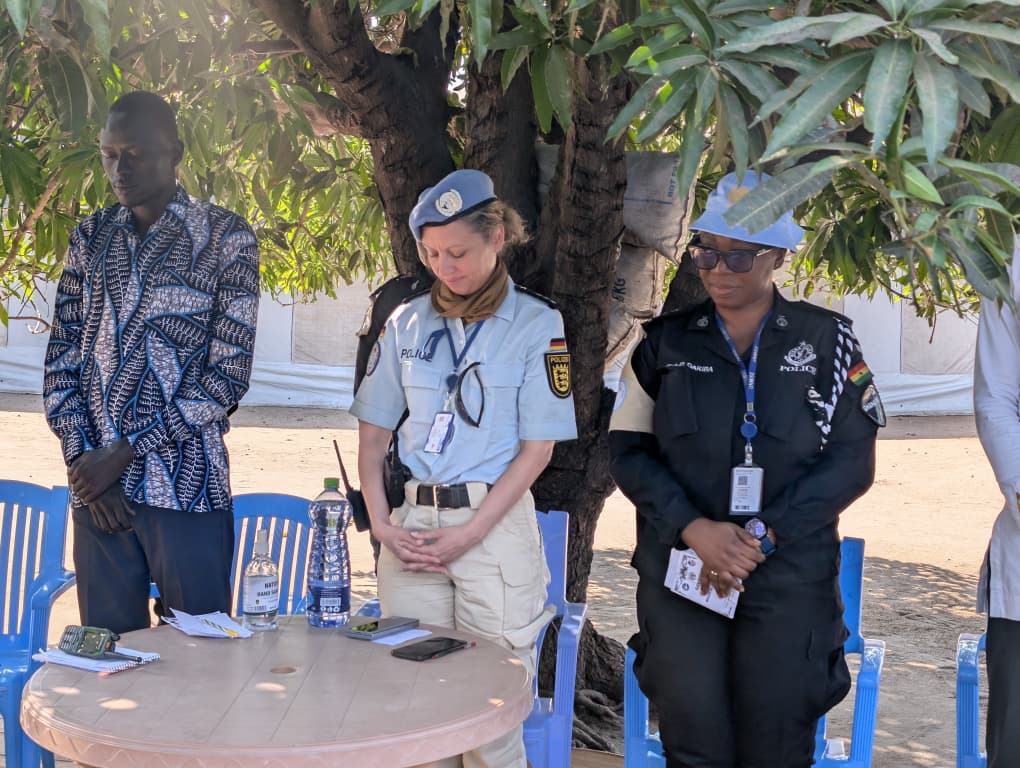
Accra, Jan. 03, GNA – The Ghana Formed Police Unit One (GHFPU 1), Rotation Nine has delivered medical supplies and food to Bieh Community Hospital in South Sudan, reinforcing community cooperation, and providing relief during the Christmas season. 

The outreach, organised under the United Nations Mission in South Sudan (UNMISS), was intended to provide immediate medical relief while strengthening relations between peacekeepers and the host community.  

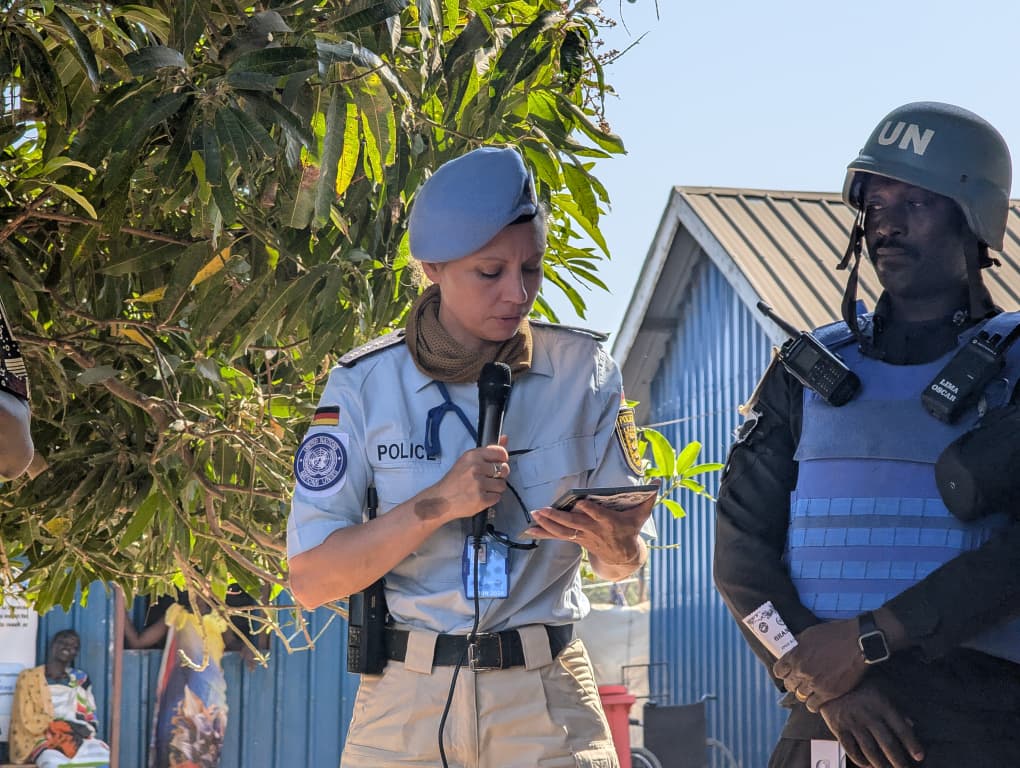
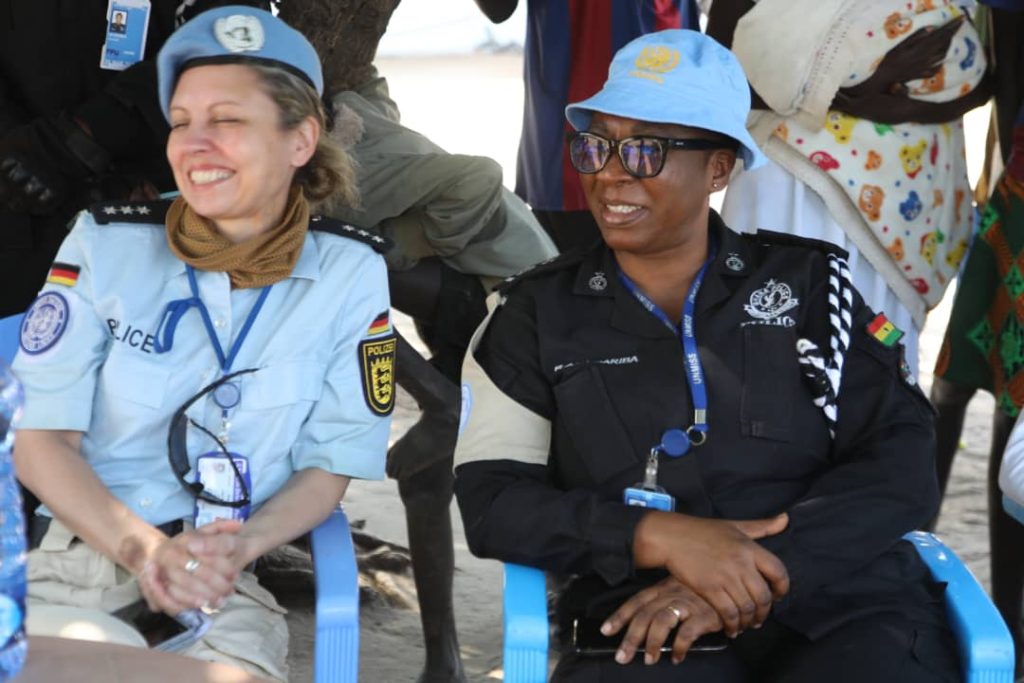
It was led by the Deputy Field Office Police Coordinator and Acting Field Office Police Coordinator, Madam Anke Lute, accompanied by Madam Doaa Elnagar of the FPU Coordination Office in Bentiu. 

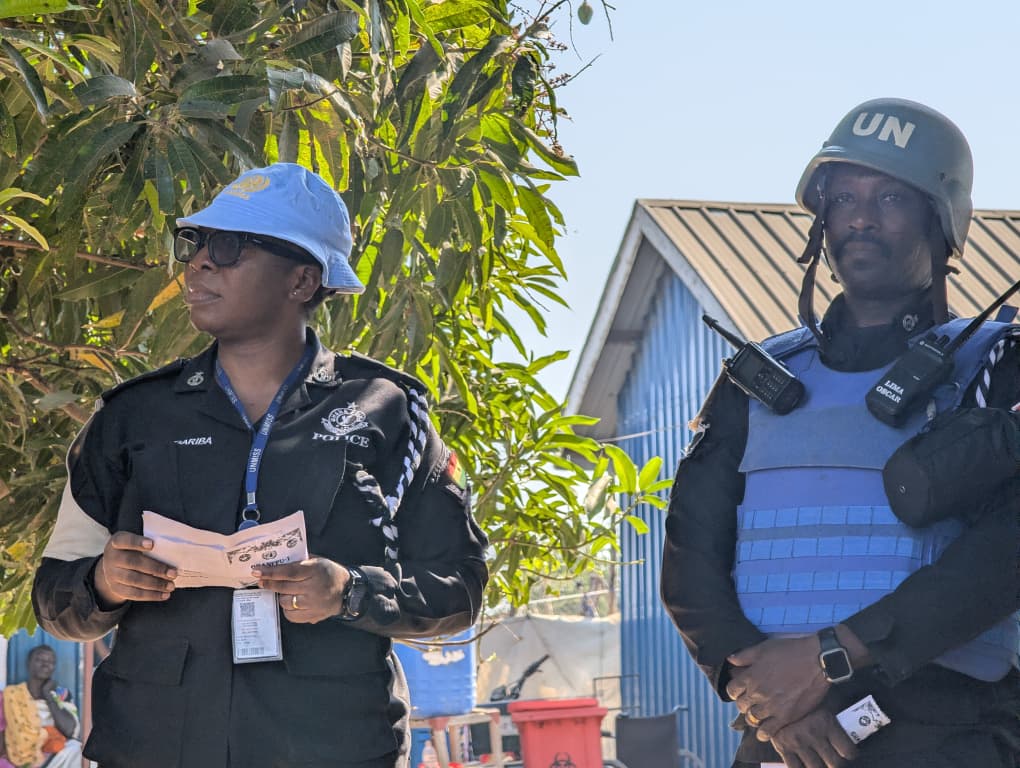
The Ghanaian contingent was headed by the Deputy Commanding Officer, Chief Superintendent Rosina Adwoa Donkor Gariba, supported by six senior police officers and 17 other ranks, including 14 inspectors.  

The Ghana Formed Police Unit One in a statement to the Ghana News Agency said that the team comprised six females and 17 males and deployed six UNMISS vehicles for the operation. 

Upon arrival in Bieh, it said, the team paid a courtesy call on the Bieh Police Commander, Lt. Col. Abraham Dhiesl, and the Community Leader, Mr. Gabriel Majang Deng, to formally notify them of the exercise. 

Addressing the gathering, Chief Superintendent Gariba conveyed Christmas goodwill on behalf of the Contingent Commander, Chief Superintendent Bismark Achaab, and underscored the broader purpose of the outreach.  

“This exercise reflects our commitment to civil-military cooperation and to standing with communities, especially during moments of need,” she said. 

Madam Lute reaffirmed UNMISS’s mandate to support communities within its Area of Responsibility.  

“Health and security go hand in hand. We encourage residents to take personal health seriously and to maintain close cooperation with the police for collective safety,” she noted. 

The Head of the Medical Team, Superintendent Dr. Agyekum Kwabena Ampofo, stressed the importance of solidarity during the festive season.  

“Christmas is a time of sharing. We hope these supplies will ease the burden on the hospital and be used effectively to serve patients,” he said, adding that the GHFPU Level One Hospital remained available for technical medical support. 

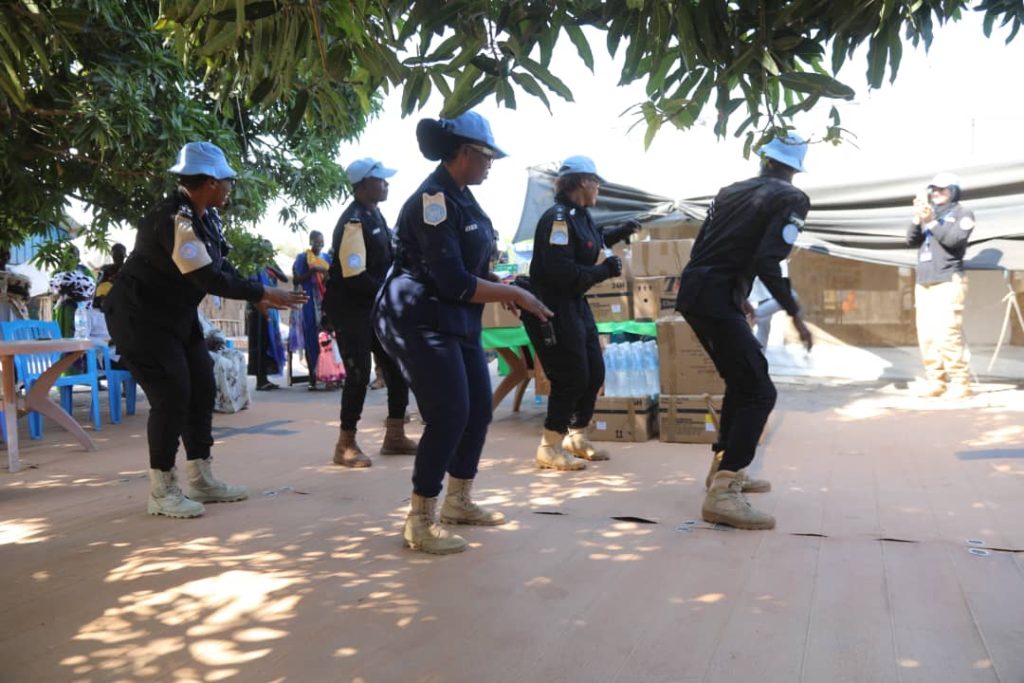
The outreach also featured a brief choreography performance by the Ghanaian officers, drawing applause from community members, before the official presentation of medical supplies and food items to hospital management and local leaders. 

Receiving the items, the Head of the Bieh Community Hospital Mr. Bakuony Tap Long expressed appreciation, describing the donation as timely.  

“These supplies have come when we are facing serious shortages,” he said, appealing for further assistance to construct an extension to the facility to meet growing demand. 

UNMISS officials have described the programme as a successful civil–military engagement. 

GNA 

03 Jan.  2026  

Edited by Kenneth Odeng Adade 

3% withholding tax crashed small-scale gold output, FX inflows in 2021

0

Chief Executive Officer of the Ghana Gold Board (GoldBod), Sammy Gyamfi, has disclosed that a 3% withholding tax introduced in 2021 under the Akufo-Addo administration led to a dramatic collapse in small-scale gold production and foreign exchange inflows.

Speaking on News File on Joy FM on Saturday, January 3, 2026, Sammy Gyamfi said small-scale gold exports plunged from 39.3 tonnes in 2020 to just 3.4 tonnes in 2021 following the introduction of the tax, with Ghana losing billions of dollars in potential foreign exchange earnings.

“In 2021, the NPP introduced a 3% withholding tax on small-scale gold. Small-scale gold exports output declined sharply that year from 39.3 tons in 2020 worth 2 billion dollars to 3.4 tons. The whole year 2021 Ghana got 3.4 tons from small-scale sector because of 3% discount in the form of withholding tax. And FX inflows reduced from 2 billion dollars from 2020 to 185 million dollars.”

Sammy Gyamfi explained that the sharp decline underscored the sensitivity of the small-scale mining sector to fiscal policy and reinforced the need to prioritise macroeconomic stability over narrow accounting profits.

He said lessons from the 2021 experience informed the current approach by the Bank of Ghana and GoldBod, particularly in building gold reserves and strengthening the cedi rather than focusing on short-term financial gains.

“So learning from this experience, the Bank of Ghana does not pursue its own accounting profits. Because the Bank of Ghana is a banker of last resort, it’s a banker of government, it is mandated to achieve price stability and support government’s economic policy. They are there to build reserves to ensure that your currency is strong and when you achieve that the benefits you get render any accounting loss infinitesimal.”

The GoldBod CEO’s comments come at a time of heightened public debate following reports alleging that the Board had recorded losses. Sammy Gyamfi dismissed the US$214 million loss as inaccurate, stressing that eventhough GoldBod is not a profit-making institution, the entity has not incurred any losses.

He said management accounts for 2025 show that GoldBod generated over GH₵960 million in revenue, while total expenditure remained below GH₵120 million, placing the institution on course to declaring an income surplus.

Sammy Gyamfi maintained that reforms in the gold trading sector are being shaped by hard lessons from past policy missteps, particularly those that undermined small-scale miners and weakened Ghana’s foreign exchange position.

Most popular celebrity arrests of 2025

0

Shatta Wale, Agradaa and Abu Trica were arrested in 2025 Shatta Wale, Agradaa and Abu Trica were arrested in 2025

Amongst the many things that happened in 2025, some key persons were also arrested.

These individuals were arrested at different points in the year for several crime-related matters.

And each one their arrests made huge headlines.

In retracing some of the big story headlines of 2025, GhanaWeb takes a some of the most popular celerity arrests that happened in the year in retrospect.

1. Shatta Wale

Dancehall artiste Shatta Wale was arrested on August 20, 2025, by the Economic and Organised Crime Office (EOCO) in connection with a 2019 Lamborghini Urus, which was suspected to be from proceeds of a $14 million crime.

According to Shatta Wale’s management, he presented himself voluntarily to the EOCO office, accompanied by his lawyer, Cephas Biyuo, to assist with investigations.

Shatta Wale was granted a bail of GH¢10 million by EOCO after being detained overnight.

2. Nana Agradaa

Also known as Prophetess Patricia Asiema, Nana Agradaa was arrested and sentenced to 15 years in prison with hard labour on July 3, 2025 at an Accra Circuit Court, presided by Justice Evelyn Amoah on charges of charlatanic advertisement and defrauding by false pretenses.

According to reports, Agradaa’s conviction stems from a viral video from 2022, in which she promised to double money for individuals who attended an all-night service at her church at Weija.

Prior to this, Agradaa was arrested on Sunday, October 9, 2022, following a series of public complaints

“The police have arrested Patricia Asiedua, alias Nana Agradaa, following allegations of a money-doubling scam levelled against her by some members of the public. The suspect is currently assisting with police investigations,” a statement from the Ghana Police Service read at the time.

Agradaa is currently serving her time at the Nsawam Prison despite attempts for appeal.

3. Cyborg

Abubakari Sadick also known as Cyborg was arrested on December 28, 2025, at Adenta for possession and unlawful discharge of firearm.

He was arrested after a viral video showed him firing a gun in public during the AfroFuture Festival.

He was fined GH¢24,000 by the Adenta District Court with a default sentence of up to two years in prison should he fail to pay, after he pleaded guilty to the charges.

4. Abu Trica

Frederick Kumi, known popularly as Abu Trica, was arrested on December 11, 2025, by a joint operation between the FBI and Ghana security agencies for his alleged involvement in a large scale online romance scam that targeted elderly victims in the US, defrauding them of over $8 million.

Abu Trica is facing charges of conspiracy to commit wire fraud, money laundering conspiracy and a forfeiture specification, which carries a possible sentence of up to 20 years in prison if convicted.

At a court appearance at an Accra High Court on Wednesday, December 31, 2025, Abu Trica complained of ill health and was ordered to be sent to a hospital at the expense of the state.

Abu Trica is currently still awaiting trial.

PAT/AE

Ghana begins talks with Ukraine to secure release of detained national

0

By James Amoh Junior, GNA

Accra, Jan. 3, GNA – Ghana has commenced diplomatic negotiations with Ukraine to secure the release of a Ghanaian national being held by Ukrainian authorities as a prisoner of war, the Minister of Foreign Affairs, Samuel Okudzeto Ablakwa, has disclosed.

The Minister, in a statement, said the Ukrainian Government had formally notified Ghana of the arrest of the national and provided his identity, which Ghanaian authorities had since verified.

Available evidence, according to the Minister, indicates that the Ghanaian travelled to Moscow, Russia, on July 7, 2024, where records show he signed a contract to join the 2nd Assault Company of the 71st Motorized Rifle Regiment of the 42nd Motorized Rifle Division.

He was later involved in hostilities in the Zaporizhzhia direction of the ongoing Russia /Ukraine war.

Mr. Ablakwa said he held a meeting on Thursday with the Acting Ambassador of Ukraine to Ghana, Ivan Lukachuk, during which he appealed for the release of the detained Ghanaian to come home.

He noted that a special diplomatic message had been sent to Kyiv to formally press Ghana’s position, adding that he was scheduled to travel to Ukraine in the coming weeks to continue negotiations aimed at securing the release.

The Minister said Ghana had objected to any attempt to include the national in a potential prisoners-of-war exchange between Ukraine and Russia, warning that such a move could further expose him to danger.

He expressed optimism that Ghana’s ongoing diplomatic engagement would yield positive results, citing the country’s cordial relations with Ukraine and its long-standing advocacy for peace and the cessation of hostilities.

Mr. Ablakwa issued a strong caution to the youth of Ghana, urging them to be vigilant against criminal recruitment and human trafficking networks that operate clandestinely, often through the dark web.

“It is extremely dangerous to get involved in any conflict. You can be killed or captured,” the Minister warned, appealing to young people not to fall prey as to such schemes.

He reaffirmed that the Mahama administration remained committed to prioritising the welfare of all Ghanaians and ensuring that no citizen was left in harm’s way.

GNA

Edited by Samuel Osei-Frempong

See photo of leaked Black Stars jersey for 2026 World Cup

0

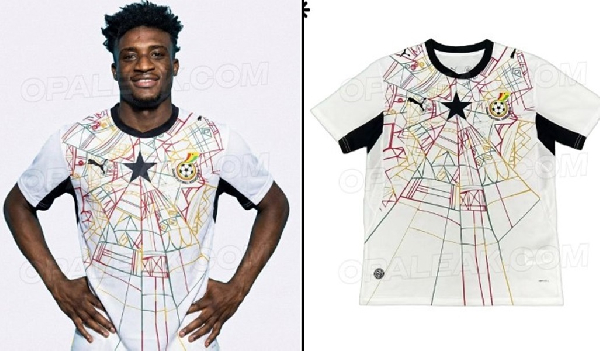
The leaked Black Stars jersey is yet to be confirmed by the GFA The leaked Black Stars jersey is yet to be confirmed by the GFA

The Black Stars jersey for the 2026 World Cup has surfaced online through a leak by Opaleak on X on January 2, 2025.

The jersey features a clean white base accented with bold, abstract line patterns in red, yellow, and green, symbolising Ghana’s national colors and cultural vibrancy.

At the center of the chest sits the iconic black star, a powerful emblem of national pride and identity, while the Ghana Football Association crest is positioned beside it.

A black cobweb‑like design appears in the middle, representing the famous Kwaku Ananse motif.

Ghana drawn in Group L for 2026 FIFA World Cup

The colors and design reflect Ghana’s indigenous traditions and national heritage, showcasing them to the world.

However, neither manufacturers PUMA nor the Ghana Football Association (GFA) have confirmed the release of the jersey, as assessments are still ongoing.

The image has, however, sparked mixed reactions on social media, with some football fans commending the design for reflecting Ghanaian culture.

Others also criticised the jersey design, arguing that it is too busy and should have been simplified to avoid being overly colorful.

The Black Stars have been placed in Group L and will battle England, Croatia, and Panama for a place in the knockout phase of the 2026 World Cup.

Ghana will play two matches in the United States and one in Canada.

See the jersey below:

SB/AE

Meanwhile, watch as Rev. Owusu-Bempah drops major prophecies for 2026

Nation-building must be top priority in 2026 – Rev Stephen Wengam urges

0

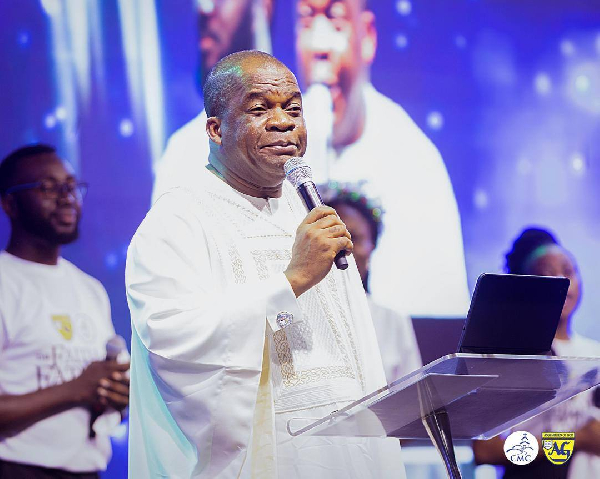
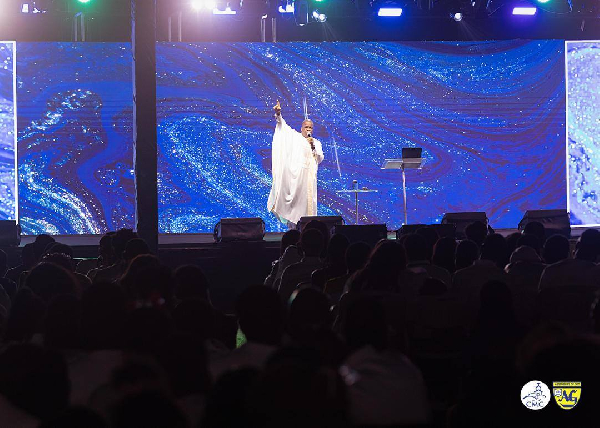
Rev Stephen Wengam speaking during the December 31 Watch Night Service Rev Stephen Wengam speaking during the December 31 Watch Night Service

The General Superintendent of the Assemblies of God, Ghana, Rev Stephen Wengam, has underscored the need to shape citizens who are demonstrably patriotic, incorruptible, and hardworking in order to advance the cause of national development.

He said this agenda must be given the highest priority in 2026.

Rev Wengam made the call while speaking at the Watch Night Service of Cedar Mountain Chapel in Accra to usher in the New Year.

He declared, “Even though there will be challenging moments, 2026 will bring greater prosperity and favour.”

Drawing lessons from the life of the Patriarch Abraham, whom he described as the father of the Christian faith, Rev Wengam expressed the belief that adherence to authentic Christian faith can significantly accelerate nation-building.

He particularly called on Christians to emulate Abraham by “believing boldly and radically, while modelling godly living to defend that legacy of faith.”

According to him, this approach would translate into greater patriotism, positive work ethics, higher productivity, and a less corrupt society.

The General Superintendent bemoaned the practice where some Christians serve God only for what they can receive, without embracing proper teachings on holy and righteous living.

“That was not the kind of Christian faith bequeathed to us,” Rev Wengam emphasised.

He announced that all Assemblies of God churches in Ghana will embark on a week-long fasting and prayer programme from Monday, January 5, 2026, to Sunday, January 11, 2026, to intercede for the church and the nation.

Also present at the Watch Night Service was the Burkinabé Ambassador to Ghana, David Kabre.

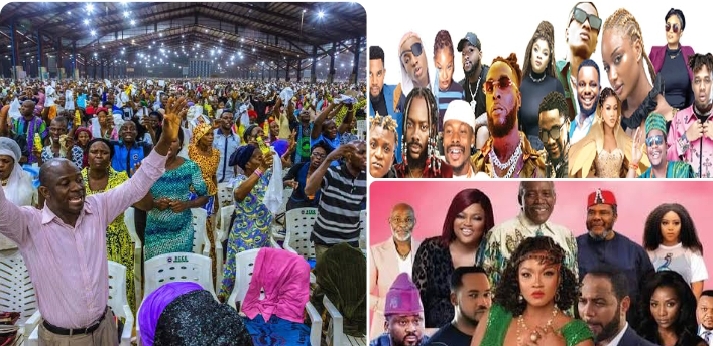
Crossover Night Services and Nigerian Entertainment Highlights of 2025

0

The final hours of 2025 in Nigeria were never quiet. Streets shimmered with the faint glow of streetlights reflecting off the Lagos lagoon, the hum of vehicles blending with distant church choirs preparing for their last declarations of the year. Across every major city, congregations gathered in anticipation of the moment when the old year would finally let go and the new year would stretch its first breath. Somewhere between the collective prayers and the chants of music fans in open-air arenas, the rhythm of Nigeria pulsed in a syncopation of faith and celebration. The night carried suspense, the kind that comes from knowing that what happens in these hours will echo into personal lives, career milestones, and national culture. From sacred halls to crowded festival grounds, Nigeria held its breath waiting for 2026 to arrive.

Crossover night services and entertainment highlights were no longer just parallel experiences. They were entwined threads of a national tapestry, each reflecting faith, ambition, and cultural identity. In 2025, this dual rhythm achieved a new intensity. Churches competed with stadiums, gospel melodies mingled with Afrobeats, and every broadcast, livestream, or social post became part of a digital memory stretching across homes, offices, and phones nationwide. The year’s conclusion carried weight and wonder, a threshold where spiritual reflection met cultural expression with consequences that extended far beyond the night itself.

As the hours ticked by, millions of Nigerians wondered what legacies they would carry from the outgoing year and what possibilities awaited them in the new one. The streets, the stages, the churches, and the screens all witnessed an intricate interplay between devotion and celebration. This narrative traces that interplay in careful detail, segmenting each arena of influence while capturing the metaphoric pulse of the nation, from the quiet prayers whispered in a Lagos cathedral to the uproar of a stadium in Abuja during a headline concert.

This is not a story told in fragments or statistics alone. It is a layered exploration of culture, faith, and entertainment, stitched together sequence by sequence, each scene flowing into the next with a narrative rhythm that mirrors the vibrancy and tension of Nigeria itself. It is the year in review without shortcuts, a full immersion into the night that carried an entire country from reflection to expectation.

Crossover Night Services: Faith at the Edge of Midnight

In every corner of Nigeria, the final night of December carried a weight that was almost tangible. The energy of anticipation could be felt even before the first hymn started. Pastors and church leaders meticulously prepared sermons designed to resonate with every demographic, weaving stories of personal victory with calls for spiritual vigilance. Worshippers filed into grand auditoriums, neighborhood chapels, and open-air tents in multitudes. It was a night when attendance exceeded expectation, not because of obligation but because of shared cultural belief that the last hour of the year was a threshold for transformation.

This year, several churches raised the bar with elaborate programs. The Fountain of Life Church in Lagos transformed its sanctuary into a sea of light and sound, with orchestras complementing solo performances in a choreography that felt cinematic. Similarly, branches of the Redeemed Christian Church of God adopted the theme “Night of Fire,” which was both a prophetic statement and a cultural marker for 2026. Congregants moved in synchrony, their voices rising and falling like waves, creating an audible architecture of devotion. The livestreams carried these experiences to millions more, bridging distance with digital immediacy and expanding the spiritual geography of the night beyond physical walls.

Yet the night was not uniformly celebratory. In Adamawa State, warnings of potential security threats caused cancellations that rippled across communities. The Christian Association of Nigeria issued urgent statements urging congregations to prioritize safety over ritual. This tension underscored the precarious balance between tradition and survival, reminding the nation that faith was never divorced from circumstance. The dichotomy between the jubilant gatherings in Lagos and Abuja and the cautious restraint in other regions highlighted Nigeria’s complex social and political fabric, revealing how spiritual expression adapts under pressure.

The cultural resonance of crossover night services lies in its dual nature. It is both intensely personal and profoundly communal. Families convene to recount victories, admit failings, and pray for guidance. Neighbors greet one another across porches, exchanging wishes that carry the weight of ritualized hope. The night itself becomes a liminal space where individual ambition is synchronized with collective memory, and the transition from December to January is marked not just by a calendar but by a performative assertion of continuity, aspiration, and belief. In 2025, these services were more than ceremonies; they were cultural barometers, reflecting the aspirations, fears, and resilience of a nation poised on the cusp of a new year.

Music & Performances: The Soundtrack of the Year

As the spiritual dimension of December 31 reached its zenith, the secular pulse of Nigeria’s music scene took its own ascent. Lagos, Abuja, Port Harcourt, and Kano hosted concerts that were not simply performances but declarations of cultural vibrancy. December 2025 was punctuated by headline events such as Flytime Fest, Dapper Live’s Trench Symphony, and street-level block parties that brought together genres from Afrobeats to R&B to street-hop. Chike’s “Detty Love” tours encapsulated the intersection of local culture with global musical sensibilities, inviting audiences to dance in spaces that were simultaneously celebratory and reflective.

Awards and recognition further cemented these musical milestones. The Headies and other industry forums highlighted talent that blurred genre boundaries, reflecting a growing hybridity in the industry. Gospel artists shared platforms with mainstream performers, while Afrobeat producers experimented with R&B textures, signaling a creative evolution that was both expansive and introspective. Social media amplified these moments, turning concerts into trending topics and artists into cultural icons whose influence extended far beyond the stadiums.

International engagements further elevated Nigerian music in 2025. Artists like Wizkid, Tems, Burna Boy, Davido, Ayra Starr, BNXN performed at festivals in Europe, the United States, and the Middle East, projecting Afrobeats as a global phenomenon. These performances were not mere exports of sound but articulations of Nigerian identity, blending indigenous rhythms with universal themes to create a musical language that resonated with diverse audiences. The interplay between local and global, traditional and modern, highlighted how Nigerian music in 2025 navigated both cultural authenticity and international appeal.

The cumulative effect of these events was a national soundtrack that mirrored the spiritual and cultural tempo of the country. From the chorus of worship in Lagos cathedrals to the thump of bass in Abuja arenas, music in 2025 reflected Nigeria’s capacity to transform celebration into art, art into commentary, and commentary into a shared experience. The night’s rhythms were both literal and metaphorical, setting the stage for entertainment and reflection to coexist in the national consciousness.

Film & Cinema: Nollywood’s Global Crescendo

In 2025, Nigerian cinema carved out new dimensions of global recognition, proving that Nollywood was no longer a regional curiosity but a cultural force commanding international attention. The year opened with the release of My Father’s Shadow, directed by Akinola Davies Jr., which became the first Nigerian film selected in Un Certain Regard at the Cannes Film Festival. The achievement resonated across the industry, not merely as a personal triumph but as an emblem of Nollywood’s growing sophistication. Critics and audiences alike recognized the film’s capacity to blend universal themes with uniquely Nigerian social textures, portraying familial struggle, urban tension, and cultural expectation with cinematic grace.

Streaming platforms amplified Nollywood’s reach, allowing works like A Lagos Love Story to transcend geographic boundaries. Its debut on Netflix ignited conversations about contemporary romance in Lagos, weaving in Afropop soundtracks, recognizable cityscapes, and authentic portrayals of millennial life. Viewers across Africa, Europe, and North America engaged with characters who navigated love, ambition, and cultural expectation, bridging the gap between local storytelling and global appeal. This trend underscored an emerging pattern where Nigerian narratives were curated not just for domestic audiences but for a transnational community that sought authenticity in African storytelling.

Domestic box office performance also reflected industry maturation. Funke Akindele’s Behind the Scenes emerged as one of the year’s highest-grossing films, proving that local cinema could sustain significant audience engagement without relying solely on international exposure. Films like Aso Ebi Diaries, Makemation, and Owambe Thieves diversified the cinematic landscape, blending comedy, drama, and social critique in ways that reflected Nigeria’s socio-cultural multiplicity. Each film carried a distinct rhythm, whether it was the humor of everyday life, the tension of societal expectation, or the spectacle of urban nightlife, collectively showcasing Nollywood’s capacity to narrate complex realities with a balance of artistry and entertainment.

Film festivals further solidified Nigeria’s cinematic authority in 2025. The Abuja International Film Festival, Lagos Fringe Festival, and S16 Film Festival became spaces for dialogue, experimentation, and critique. These forums nurtured hybrid forms that combined traditional storytelling with technical innovation, inviting discourse on narrative depth, visual aesthetics, and audience engagement. The festivals demonstrated that Nollywood’s expansion was not merely about quantity of output but the evolution of craft, audience sophistication, and an industry increasingly confident in its place on both continental and global stages.

Festivals & Cultural Events: The Pulse of Celebration

Beyond the walls of theaters and churches, Nigeria’s cultural calendar in 2025 was punctuated by festivals that demonstrated both the creativity and the social energy of the nation. The NECLive Conference returned as West Africa’s premier entertainment dialogue, bringing together artists, producers, and policymakers in Lagos to discuss the future of creative enterprise. The conference went beyond workshops and panel discussions; it served as a cultural compass, aligning industry ambition with national and international opportunities, and reinforcing the notion that Nigeria’s entertainment economy was as much a strategic enterprise as it was artistic expression.

December also witnessed the continuity of the Shakara Festival, a fusion of music, fashion, and experiential culture that drew attendees from across the country. The festival’s open-air performances, fashion showcases, and beachside gatherings transformed public spaces into sites of communal engagement, where audiences actively participated in the narrative of the festival rather than passively observing. Similarly, Flytime Fest, with its carefully curated lineup of domestic and international acts, illustrated how Nigerian music and culture could converge in celebratory formats that transcended socioeconomic and generational divides.

These festivals were not merely entertainment; they were socio-cultural markers, reflecting urban aspiration, youth identity, and evolving public taste. Participants carried these experiences beyond the festival grounds, sharing them on social media, in professional networks, and within local communities. In doing so, these events extended their impact, creating a feedback loop in which the celebration of culture became a catalyst for creative innovation, brand development, and national pride. The festivals in 2025 were reminders that the calendar itself could be a framework for cultural storytelling, and that Nigerian identity was inseparable from the rhythms of its entertainment landscape.

At the heart of these events was a tension between tradition and innovation. Organizers blended local aesthetics with international production standards, artists drew inspiration from both indigenous music and global trends, and audiences navigated expectations of authenticity and spectacle. In doing so, 2025’s festivals reflected the dynamism of a society negotiating its place in a globalized world while maintaining cultural specificity. The festivals were celebrations not just of art but of resilience, imagination, and the capacity of Nigerian culture to transform ordinary spaces into extraordinary experiences.

Pop Culture Moments: Lives that Defined the Year

Nigerian pop culture in 2025 was shaped as much by celebrity milestones as by collective trends in music, film, and social media. Influencer Priscilla Ojo’s April wedding, tagged #JP2025, captured national attention, highlighting how personal milestones can ripple through the public imagination. Coverage spanned digital platforms, lifestyle publications, and mainstream media, illustrating the intertwined nature of private life and cultural discourse. Social media amplified these moments, turning weddings, album drops, and viral appearances into shared experiences that became part of the national conversation.

Musical milestones also defined pop culture’s trajectory. Davido’s release of his fifth studio album, 5IVE, dominated online conversations, radio charts, and streaming platforms. Each track became a microcosm of Nigeria’s urban energy, merging lyrical narratives with Afropop rhythms that resonated across multiple demographics. Fans engaged in dance challenges, remix projects, and commentary, creating a participatory culture where music was both a personal and communal experience. This engagement reflected a broader phenomenon in 2025, where entertainment was inseparable from audience interaction and digital amplification.

Fashion, brand collaborations, and social media trends complemented these entertainment milestones. Artists and influencers leveraged visibility to introduce new aesthetics, campaign messages, and lifestyle products. Pop culture became a matrix of music, visual identity, and social commentary, allowing individuals and communities to express affiliation, aspiration, and taste. Whether through viral memes, trending hashtags, or curated livestreams, 2025 highlighted the ways in which pop culture extended beyond consumption into active participation and identity formation.

The synthesis of these moments demonstrated a critical insight: Nigerian culture in 2025 was a living archive, built as much from ephemeral interactions as from tangible productions. Each wedding, album release, or viral trend contributed to a mosaic that reflected the nation’s evolving priorities, digital literacy, and global cultural engagement. Pop culture was not passive entertainment; it was an active arena where meaning was negotiated, identities were affirmed, and national consciousness was subtly reshaped.

Closing Thoughts: Looking Back at 2025

2025 was a year that balanced faith, culture, and entertainment across Nigeria. Crossover night services brought communities together to reflect on the past year and pray for the year ahead. At the same time, music, film, and festivals offered spaces for celebration, creativity, and shared experiences, showing how culture and faith coexist in everyday life.

The year also highlighted the growing influence of digital platforms. Livestreamed services, online concerts, and viral social media moments allowed more people to participate, even from afar, connecting local and global audiences. Music and film continued to gain international attention, while domestic festivals and events reinforced community engagement.

Overall, 2025 showed continuity and growth. Churches adapted to challenges, artists explored new ideas, and pop culture reflected both personal and national stories. The year demonstrated Nigeria’s ability to celebrate, create, and connect across multiple spheres.

As the nation moved into 2026, 2025 stood as a reminder of the value of community, creativity, and shared experiences. It was a year where faith and culture worked together to shape national life and collective memory.

Bawa Rock Is Fully Registered to Trade in Gold -Sammy Gyamfi

0

This blog is managed by the content creator and not GhanaWeb, its affiliates, or employees. Advertising on this blog requires a minimum of GH₵50 a week. Contact the blog owner with any queries.

Attractive News Blog of Saturday, 3 January 2026

Source: Andre Mustapha NII okai Inusah

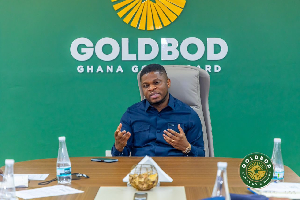
The Chief Executive Officer of the Ghana Gold Board (GoldBod), Sammy Gyamfi, has rejected allegations that Bawa Rock Company Limited is not registered or licensed to trade in gold, describing the claims as false and misleading.

Speaking on JoyNews’ Newsfile on Saturday, January 3, Mr. Gyamfi clarified that Bawa Rock is a legally incorporated Ghanaian company with a long-standing presence in the precious minerals industry.

According to him, the company was incorporated on January 15, 2015, under the laws of Ghana, with precious minerals trading listed as one of its principal business activities.

“Bawa Rock Company Limited is a company incorporated under the laws of Ghana. It was incorporated specifically on the 15th of January, 2015. Bawa Rock deals in precious minerals, among others,” he said.

Mr. Gyamfi stressed that claims suggesting the company has no mandate to trade in gold are inaccurate, noting that official records clearly indicate otherwise.

“When you hear people say that this company has nothing to do with gold trading or was not registered for that purpose, it is not true,” he stated.

Small Scale miners urge politicians to safeguard Ghana’s artisanal gold sector

0

The Ghana National Association of Small Scale Miners (GNASSM) is calling on politicians to safeguard the progress made in the artisanal and small-scale mining (ASM) gold sector.

In a statement released in Accra on Thursday, January 1, 2026, and signed by its General Secretary, Godwin Nickleson Armah, the association emphasised that despite the losses incurred by the Bank of Ghana in Artisanal Small Scale Mining (ASM) gold trading in 2024 and 2025, the gains made so far are enormous and impactful on the Ghanaian economy.

“GNASSM wishes to place on record that under the previous administration, when the Gold‑for‑Oil and Gold‑for‑Reserves programmes were rolled out, data from the Precious Minerals Marketing Company (PMMC) indicated that in 2024, 63.6 metric tons of ASM gold were exported, and in that same year the Bank of Ghana recorded losses. Under the current administration, through the Domestic Gold Purchase Programme, 101 metric tons of ASM gold had been exported as of 23rd December 2025, and the Bank of Ghana has also recorded losses. These figures show clearly that ASM gold trading cannot be assessed solely on a narrow accounting basis of profit and loss in a single year. Its broader macroeconomic, social, and governance benefits must be taken into account”, the statement in part read.

The association commended the establishment of the Ghana Gold Board (Goldbod) and its efforts to sanitise downstream gold trading, exclude foreigners from direct trading, and provide fair market prices for miners.

GNASSM warned against politicising the sector, urging politicians “to support the Goldbod and allow miners to operate within the existing framework”.

“We know that parliamentarians are fully aware of the object and mandate of the Goldbod and are also aware of the non-partisan approach you all used in passing the Ghana Gold Board Act. We therefore don’t expect a debate at this stage, but rather support for building the Gold trading and related sector. We also expect a united front that focuses on support to the Goldbod and other institutions to address our foreign exchange and reserves needs to give us the space to develop Ghana, the statement further noted.

The ASM sector contributes significantly to Ghana’s economy, with 101 metric tons of gold exported in 2025, despite Bank of Ghana losses.

GNASSM emphasised that the sector’s growth will strengthen the national economy and improve social conditions for Ghanaians, cautioning that negative criticisms hurt the market.

DISCLAIMER: The Views, Comments, Opinions, Contributions and Statements made by Readers and Contributors on this platform do not necessarily represent the views or policy of Multimedia Group Limited.

DISCLAIMER: The Views, Comments, Opinions, Contributions and Statements made by Readers and Contributors on this platform do not necessarily represent the views or policy of Multimedia Group Limited.

Bawa Rock Is Not a ‘Mushroom Company’ – GoldBod CEO Insists

0

Sammy Gyamfi
Sammy Gyamfi

The Chief Executive Officer of the Ghana Gold Board (GoldBod), Sammy Gyamfi, has dismissed suggestions that Bawa Rock Company Limited is a newly formed or illegitimate player in Ghana’s gold trading sector.

Addressing the issue on JoyNews’ Newsfile on Saturday, January 3, Mr. Gyamfi said Bawa Rock has been operating in the precious minerals space for nearly a decade and should not be described as a “mushroom company.”

“This company is also not a mushroom company that just surfaced in the gold trading space,” he emphasized.

He explained that Bawa Rock was incorporated in January 2015 and has since engaged in multiple business activities, including precious minerals trading, mining, farming, and general merchandise.

While acknowledging that the company is registered to undertake diverse operations, Mr. Gyamfi noted that dealing in precious minerals remains a core component of its business.

He added that Bawa Rock’s longevity and compliance history distinguish it from companies that enter the sector without proper credentials or experience.