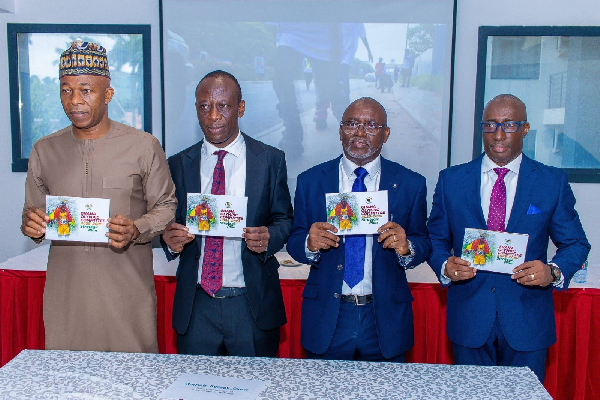
 President of Ghana Olympic Committee, Richard Akpokavie (2nd from right)
The Ghana Olympic Committee (GOC) has in a ground-breaking and pivotal moment in Ghana’s sports history, unveiled a 4-year strategic plan for a sustainable sports success in Accra.
The GOC’s 2025–2029 Strategic Plan is aimed at strengthening sports development in Ghana. The plan will focus on athletes, governance, funding, and partnerships to ensure Team Ghana becomes a competitive force in African and global sports.
The core pillars of the plan included enhanced funding mechanisms, a rigorous talent identification and development pathway, improved sports infrastructure, and a robust athlete welfare program covering education and post-career transition.
“This holistic approach recognized that an athlete’s success is deeply intertwined with their overall well-being and stability. The Federation Heads were specifically tasked with adapting these national pillars to their respective sporting disciplines.
Richard Akpokavie, GOC President, said the committee is committed to putting athletes at the center of all activities and providing federations with the tools to succeed.
“This plan provides a clear roadmap for advancing sports development in Ghana. We are not just aiming for medals; we are building a system where every athlete succeeds, and every federation thrives,” he said.
“For too long, our success has been sporadic flash of brilliance followed by long periods of struggle,” he declared. “This four-year plan is our promise to the nation, a commitment to building a solid, resilient structure. ‘We are moving beyond wishful thinking, we are implementing a foundation for excellence that will endure long after this committee’s tenure,” he stated.
Dr Fred Awaah, Board Chairman of the National Sports Authority, commended the GOC for integrating science into sports and for showing how sports contributes to national development, employment, and economic growth.
“Many people see sports only as entertainment. But it drives jobs, boosts the economy, and strengthens the nation,” Dr Awaah said.
The NSA Board Chairman acknowledged the comprehensive nature of the plan and pledged the support of the National Sports Authority (NSA) in its execution.
“The NSA stands ready to collaborate on the infrastructural and policy fronts,” Dr Awaah confirmed.
“This strategic plan aligns perfectly with the national agenda to treat sports as a serious industry, and we will provide the necessary governmental backing,” he asserted.
The comprehensive, four-year strategic plan is designed to carve a path for sustainable sports success in the nation. It is a deeply considered, long-term blueprint, aimed at influencing the performance of team Ghana.
Mohammed Muniru Kassim, the Secretary General of the Ghana Olympic Committee underscored the need for unity and administrative rigor.
“This plan represents months of consultation, sweat, and shared vision,” he announced.
“Today marks the transition from planning to action, and every federation head and athlete representative here is fundamental to its success,” he declared.
Senior vice president of GOC, Mawuko Afadzinu urged federations to follow GOC’s example to access government sports funding, stressing the need for proper documentation and clear strategic plans.
Chris Essilfie, Consultant and Member of the Commonwealth Sport Ethics Commission, provided the justification for the new strategy. “Ghanaian talent has never been the issue,” Essilfie stated pointedly.
“The true hurdle has been consistency in governance and ensuring world-class ethical standards. This new strategy directly addresses those structural gaps,” he emphasized, reminding federations that integrity was foundational to sustainability.
“This strategy is the lifeline we needed. It gives the young athletes of today a structured future, ensuring that raw talent doesn’t go to waste,” Rafstu Inusa, President of Ghana Rugby, her emotional words bringing the plan’s human element to the fore.
Federations were urged to follow GOC’s example to access government sports funding, stressing the need for proper documentation and clear strategic plans.