Friday, January 2, 2026
Home Blog

Army, police personnel take control of Ho Central Mosque

0

A scene from the Ho Central Mosque on Friday A scene from the Ho Central Mosque on Friday

A joint team of personnel from the Ghana Armed Forces and the Ghana Police Service took control of the Ho Central Mosque in the early hours of Friday, January 2, 2026.

According to a report by gbcghanaonline.com, the team swooped on the Ho Central Mosque around 2:00 a.m. on Friday to enforce the temporary closure of the mosque as ordered by the Volta Regional Security Council following last week’s shooting incident.

The report indicated that upon arriving at the mosque, the officers drove all the people there away before taking control of the area.

The personnel, the report indicated, guarded the mosque with a significant number of police vehicles, including a mobile cell.

The Volta Regional Security Council ordered the closure of the mosque to allow security authorities to investigate the shooting incident, which led to at least seven people sustaining injuries.

7 injured in Ho mosque shooting during Friday Jumu’ah prayers – Reports

A statement, signed by the Regional Minister, James Gunu, who is Chairman of the REGSEC, said the decision was taken in close consultation with the Ministry of the Interior.

“The directive has been deemed essential following an urgent meeting convened by the REGSEC on Monday, December 29, 2025, to address troubling developments within the Muslim community of Ho, involving two individuals asserting claims to the position of Regional Chief Imam,” the statement explained.

It further said the decision was taken in the interest of peace, unity, and a long-term neutral environment to facilitate mediation efforts aimed at resolving ongoing disputes and restoring harmony among all parties involved.

However, just days after the order, the tapes used to cordon off the mosque went missing, and the mosque was opened to the public.

BAI

Meanwhile, watch as Acting Defence Minister Ato Forson inaugurates 9-Member Ministerial Advisory Board

Ayden Heaven Commits to England Over Ghana

0


Manchester United defender, Ayden Heaven, has shut the door on a potential switch of international allegiance to Ghana, opting instead to pursue his future with England in a decision that dents the Black Stars’ plans ahead of next summer’s FIFA World Cup.

The 19-year-old centre-back, who is eligible to play for Ghana through a grandparent, has been on the radar of the Ghana Football Association as it seeks to bolster the national team with dual-nationality talents. However, sources indicate that Heaven is determined to remain on the England pathway and has no intention of changing his international affiliation.

Ghana face a daunting task at the expanded World Cup, having been drawn in a demanding group featuring England, Croatia and Panama at the tournament to be staged across the United States, Canada and Mexico. Heaven’s choice means the Black Stars will be unable to call on the highly rated defender despite his eligibility.

Born in London, Heaven completed a move to Manchester United from Arsenal in February after making a single senior appearance for the Gunners. He has represented England at multiple youth levels and was most recently involved with the England U-20 setup, though an ankle injury sustained against Switzerland in October forced him to miss the November clash with Japan.

At club level, the teenager’s progress has accelerated in recent weeks. After making two substitute appearances in the Premier League, Heaven earned his first start for United against West Ham on December 4, featuring in the centre of a back three. Although he was booked early and substituted at half-time in that match, his performances have steadily improved, leading to starts in four consecutive games.

He impressed in a narrow 2-1 defeat to Aston Villa on December 21 before delivering a standout, man-of-the-match display in United’s 1-0 victory over Newcastle — a result that marked only the club’s second clean sheet of the season.

United head coach Ruben Amorim has been effusive in his praise of the young defender’s development. “I am really pleased with Ayden. You can feel that he is improving every game,” Amorim said. “He is young, but you can feel that he has a good game, slows the thinking and improves during the game. He trained really well and, if he continues to play like that, it is going to be really hard to take his place.”

While Ghana miss out on a promising defensive prospect, Heaven’s rapid rise at Old Trafford highlights why England remains his focus as he continues to establish himself at the highest level of the game.

Chief Imam condemns shooting incident at Ho Central Mosque

0

Sheikh Dr Osmanu Nuhu Sharubutu is the National Chief Imam Sheikh Dr Osmanu Nuhu Sharubutu is the National Chief Imam

The National Chief Imam, Sheikh Dr Osmanu Nuhu Sharubutu, has condemned the shooting incident that took place at the Ho Central Mosque in the Volta Region on Friday.

The National Chief Imam described the development as an affront to Islam by Muslims at the Ho Central Mosque at Ho Zongo.

According to him, the shooting incident at the mosque not only posed a threat to national security but also represented a deviation from basic civility and an act of impunity.

Shaikh Dr Sharubutu said this in a statement signed on his behalf by his Personal Assistant, Dr Abubakar Mohammed Marzuq Azindoo, and issued to the media in Accra.

Shaikh Dr Sharubutu said the gun violence was traceable to the contest for the Volta Regional Imamship between Shaikh Ali Muniru and Shaikh Anas.

The National Chief Imam stressed that Shaikh Muniru is the legitimate Volta Regional Imam, while Shaikh Anas is the Deputy Imam.

He explained that the selection of Shaikh Muniru did not face any opposition, as extensive consultations and mediation took place.

Shaikh Dr Sharubutu said he therefore did not understand why a matter that had been resolved continued to be a source of violence, describing both leaders as his children whom he expected to show solidarity in the service of Allah and humanity.

He urged the followers of the two leaders at the Ho Central Mosque to be law-abiding and to embrace peace in line with the norms of Islam.

The National Chief Imam therefore appealed to the police to demonstrate a high level of professionalism and to avoid partiality and selective justice in order to promote peace and justice.

Shaikh Dr Sharubutu prayed for the speedy recovery of the injured and reminded the factions of the words of Allah which state: “The believers are brothers. So make reconciliation between your brothers. And fear Allah, so that you may receive mercy” (Quran 49:10).

The National Chief Imam concluded by praying that “May Allah reconcile the Ummah and bless our homeland Ghana.”

Court to rule on Malami, wife, son’s bail Jan 7

0

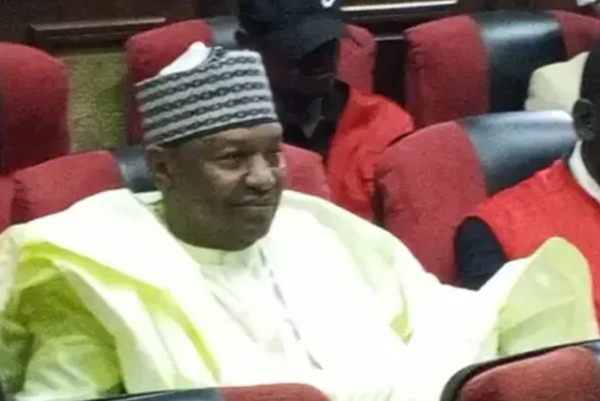
Abubakar Malami is former AttorneyvGeneral of the Federation and Minister of Justice Abubakar Malami is former AttorneyvGeneral of the Federation and Minister of Justice

The Federal High Court in Abuja has fixed January 7, 2026, to rule on the bail applications filed by a former Attorney-General of the Federation, Abubakar Malami, SAN, his son, Abubakar Abdulaziz, and his wife, Bashir Asabe.

Justice Emeka Nwite, on Friday, set the date after counsel for the defence, Joseph Daudu, SAN, and counsel to the Economic and Financial Crimes Commission, Ekele Iheanacho, SAN, adopted their processes and presented their arguments.

The PUNCH reports that the EFCC, in the charge marked FHC/ABJ/CR/700/2025, named the ex-minister, his wife, and son as the first, second, and third defendants respectively in a money laundering case.

The anti-graft agency accused the defendants of carrying out various suspicious transactions and attempting to conceal the unlawful origin of billions of naira through bank accounts and property acquisitions across Abuja, Kano, and Kebbi.

The alleged offences were committed between 2015 and 2025, a period that includes Malami’s tenure as AGF under the administration of the late former President Muhammadu Buhari.

The Commission alleged that Malami, his son, and Asabe conspired to disguise the origin of funds, acquire property indirectly, and retain sums they allegedly knew were proceeds of unlawful activity, in violation of the Money Laundering (Prohibition and Prevention) Acts of 2011 (as amended) and 2022.

Joy FM’s 90’s Jam is underway at Pleasant Gardens with massive crowds and retro vibes

0

The golden era of music has officially returned to the capital as Joy FM’s 90’s Jam kicks into high gear at the Pleasant Gardens located at Dzorwulu.

Joy FM’s 90’s Jam

As of tonight, Friday, January 2, 2026, the venue has been transformed into a pulsing epicentre of nostalgia, with the atmosphere described as nothing short of electric, with all cabanas sold.

The venue is completely packed with a massive crowd of 90s music enthusiasts, many of whom have turned up in iconic retro outfits to relive the greatest hits of the decade.

The sheer volume of attendees has already seen the car park reach full capacity, with late arrivals being directed to overflow areas as hordes of fans continue to stream in to join the celebration.

The night is being steered by a team of renowned entertainers who are currently taking patrons on a rhythmic journey through time.

The legendary DJ Black is behind the turntables, delivering his signature seamless transitions between classic Hip-hop, Hiplife, and R&B anthems.

Joining him to keep the energy at a fever pitch are some of the biggest names in Ghanaian broadcasting, including Lexis Bill and Nii Ayi Tagoe, whose infectious energy is keeping the crowd on their feet. Broadcaster Kofi Hayford is adding his unique flair to the night’s entertainment.

While the dance floor is the heart of the event, the vibe extends across the entire Pleasant Gardens.

Thousands of patrons are seen chilling in groups, reminiscing about the 90s while enjoying a wide array of refreshments.

True to the promise of a premium experience, there is plenty to eat and drink, with vendors serving everything from local favourites to assorted cocktails, ensuring that the energy levels remain high for the straight-till-dawn marathon.

The massive turnout is a testament to the improvements promised by The Multimedia Group.

Earlier this week, General Manager for Sales and Marketing David Max-Fugar assured fans that concerns regarding space and security had been addressed.

With expanded dancing space and a heavy security presence—including the Ghana Police Service—the night is proceeding smoothly despite the record-breaking crowds.

“The safety of life and property is assured,” Max-Fugar stated during the setup, and that promise is being felt tonight as fans party with total peace of mind.

DISCLAIMER: The Views, Comments, Opinions, Contributions and Statements made by Readers and Contributors on this platform do not necessarily represent the views or policy of Multimedia Group Limited.

DISCLAIMER: The Views, Comments, Opinions, Contributions and Statements made by Readers and Contributors on this platform do not necessarily represent the views or policy of Multimedia Group Limited.

Watch Semenyo being baptized on Bournemouth beach

0

Semenyo (in white shirt) was baptised in England Semenyo (in white shirt) was baptised in England

Black Stars winger Antoine Semenyo has been spotted on a Bournemouth beach in England being immersed in water to affirm his faith.

According to British media outlet Daily Mail, the forward has been officially baptised as a Christian, strengthening his faith and resolve in his football career.

The winger was seen in a white shirt and black trousers, with his hands on his chest, while another person believed to be a man of God engaged him in the spiritual exercise.

After a while, he was immersed in the water and then raised back up, following the usual practice of Christian baptism. Both men then laugh and stepped out of the water afterward.

Ghana drawn in Group L for 2026 FIFA World Cup

Prior to this, Semenyo was instrumental in Bournemouth’s 2–2 draw against Chelsea at Stamford Bridge, constantly supporting the attack while also tracking back to help the defense, giving his side the balance they needed.

Meanwhile, the right‑winger is on the verge of sealing a move to Manchester City, which is expected to be finalised in the coming days, in a £65 million deal, following his impressive performances.

Reports from England indicate that there has been an agreement in principle between both clubs, with an official announcement expected soon.

Bournemouth Head Coach Andoni Iraola clarified that the Ghanaian attacker will feature for the club against Arsenal in the Premier League on Saturday, January 3, 2025.

“I think he will play vs Arsenal, yes. He needs to recover because we play Arsenal at home in another three days, against the top of the league,” he said.

Watch the video below:

SB/AE

Meanwhile, watch as Rev Owusu-Bempah drops major prophecies for 2026

MTN Ghana Reduces Tariffs Following VAT Reforms

0

Mtn Logo

MTN Ghana implemented tariff reductions across all products and services effective January 2, 2026, becoming one of the first major telecommunications operators to adjust pricing under Ghana’s restructured Value Added Tax (VAT) framework.

The company notified customers through text messages on Friday that the tariff adjustments align with changes introduced under the Value Added Tax Act, 2025 (Act 1151), which took effect January 1. MTN directed subscribers to visit its official website for detailed information about the new pricing structure.

The Ghana Revenue Authority (GRA) reduced the standard VAT rate to 20 percent from the previous composite rate of 21.9 percent as part of comprehensive reforms aimed at simplifying tax administration and easing the burden on consumers and businesses. The telecommunications sector represents a significant area where consumers will observe immediate price impacts from the legislative changes.

Dominic Naab, Acting Head of the Strategy and Research Department at GRA, emphasized that proper implementation of the reformed system should enhance revenue collection while creating a fairer environment for taxpayers. Removing overlapping levies and simplifying computation creates benefits for both businesses and consumers across the country, he explained during recent public briefings.

The VAT reforms abolished the COVID-19 Health Recovery Levy, a 1 percent charge introduced during the pandemic that added to transaction costs. This elimination provides direct relief for telecommunications users who previously absorbed this expense on top of standard VAT. Naab confirmed the levy has been completely repealed and no longer factors into VAT calculations.

The new framework recouples the National Health Insurance Levy (NHIL) and Ghana Education Trust Fund (GETFund) levies with the main VAT system. This technical adjustment allows businesses to claim these levies as input tax credits, treating them as deductible input taxes rather than separate charges. The change reduces the effective cost of doing business while maintaining funding for critical national programs.

Dr. Martin Kolbil Yamborigya, Commissioner for the Domestic Tax Revenue Division at GRA, clarified that the revised structure actually lowers the effective VAT burden despite initial public concerns. Previously, NHIL and GETFund levies were calculated on a base that included VAT, creating a cascading effect that increased the overall tax rate. Under the new system, all three components calculate from the same base amount.

If the taxable base equals GH₵100, the GETFund levy of 2.5 percent, NHIL of 2.5 percent, and 15 percent VAT now all apply to that original amount. This decoupling eliminates the cascading calculation that previously inflated effective rates, returning the structure to a simpler format.

The VAT registration threshold for businesses supplying goods increased from GH₵200,000 to GH₵750,000 annually, exempting thousands of small enterprises from mandatory compliance. Service providers must register regardless of revenue, reflecting VAT’s nature as a consumption based tax where end users bear the actual cost.

The GRA phased out the VAT Flat Rate Scheme that previously offered simplified rates of 3 percent and 5 percent for certain businesses. All previously registered entities must now operate under the standard VAT framework and continue charging at standard rates until the Commissioner General completes migration or deregistration processes. Companies holding VAT flat rate booklets must return unutilized materials to authorities.

MTN conducted a planned service disruption during early morning hours on January 2 to upgrade systems for VAT compliance. The maintenance period, scheduled from midnight to 6:00 AM, aimed to ensure all network charges accurately reflect statutory reforms. Voice calls and existing data bundles remained functional throughout the maintenance window, though real-time balance updates and automated bundle renewals experienced temporary suspension.

The telecommunications giant positioned itself as an early mover in reflecting tax changes within consumer pricing, potentially setting expectations for how other major service providers will respond to the new regime. Whether competitors match MTN’s approach or adopt different strategies will become apparent as implementation proceeds through January.

For telecommunications consumers, the practical impact involves slightly lower effective tax rates on services beginning January 2. The standard 20 percent rate replaces the previous 21.9 percent composite rate, offering modest but measurable savings across voice calls, data packages, and mobile money transactions.

The extent to which these tax savings translate into reduced retail prices depends on how operators adjust their underlying service tariffs and pricing structures. Some companies may maintain existing base prices while passing through the full tax reduction, resulting in lower final costs. Others might adjust base rates to partially offset the tax decrease, limiting consumer benefits.

MTN’s tariff adjustment also reflects broader industry pressures beyond tax compliance. Telecommunications operators face intense competition for subscribers, regulatory requirements on pricing transparency, and infrastructure investment demands that constrain profitability. The VAT reforms create an opportunity to demonstrate consumer focused pricing while navigating these competing pressures.

Industry analysts suggest the reforms could stimulate greater mobile service usage if consumers perceive meaningful cost reductions. Lower data prices might encourage increased internet consumption, supporting digital transformation objectives. More affordable voice services could benefit lower income segments who remain price sensitive about telecommunications spending.

The GRA launched the VAT reforms with substantial advance communication to businesses and taxpayers. The Authority issued public notices, conducted stakeholder briefings, and established multiple support channels including taxpayer service centers, toll free lines, WhatsApp support, and email assistance. This outreach aimed to facilitate smooth transitions for companies adjusting systems and processes.

Employers, accountants, auditors, importers, exporters, clearing agents, and tax consultants received specific encouragement to familiarize themselves with new provisions ahead of implementation. The Authority recognized that widespread understanding of the changes would prove essential for achieving voluntary compliance objectives.

The reforms represent Ghana’s most comprehensive VAT restructuring in over a decade. Whether the legislation achieves stated goals of simplification, fairness, and improved compliance will depend substantially on implementation effectiveness and how businesses adapt to the unified structure. The first quarter of 2026 will likely reveal operational challenges and adjustment patterns that could prompt further refinements.

MTN’s swift response demonstrates how major corporations are prioritizing VAT compliance and leveraging the reforms as customer communication opportunities. The telecommunications sector’s visibility makes it an important bellwether for how reforms affect consumer facing industries across Ghana’s economy.

Other telecommunications operators have not yet publicly announced similar tariff adjustments, though industry observers expect comparable moves as companies complete their own system upgrades and pricing reviews. The competitive dynamics of Ghana’s telecommunications market suggest operators will closely monitor each other’s responses to avoid disadvantages.

The abolition of the COVID-19 Health Recovery Levy carries symbolic as well as practical significance. Removing pandemic era measures signals Ghana’s economic transition toward normalcy while addressing longstanding concerns that temporary emergency taxes often become permanent features. The levy’s elimination demonstrates government willingness to sunset special charges when their justifications expire.

GRA officials characterize the VAT reforms as promoting equity in the tax system while enhancing administrative efficiency. Strengthening compliance among taxpayers nationwide remains a central objective, with simplified structures expected to encourage voluntary participation rather than evasion or avoidance behaviors.

For MTN Ghana subscribers, the tariff reductions translate into immediate tangible benefits. A typical mobile user purchasing data bundles, making voice calls, and conducting mobile money transactions will experience cumulative savings from the lower VAT rate. These savings accumulate over time, potentially freeing household resources for other expenditures.

The timing of implementation at the beginning of the calendar year offers administrative advantages. Companies can align their accounting periods with the new regime, simplifying financial reporting and audit processes. Consumers start the year with adjusted expectations about service costs rather than experiencing mid year disruptions.

Whether the VAT reforms achieve their ambitious objectives will become clearer as 2026 progresses. Early indicators from major companies like MTN suggest that compliance mechanisms are functioning and consumer benefits are materializing. Sustained monitoring of implementation outcomes will inform assessments of the reforms’ success.


BoG to inject $1 billion into FX market in January 2026 under intermediation programme

0

The Headquarters of the Bank of Ghana The Headquarters of the Bank of Ghana

The Bank of Ghana (BoG) has announced plans to inject up to $1 billion into Ghana’s foreign exchange market in January 2026 under its Foreign Exchange Intermediation Programme, extending its active role in stabilising liquidity and supporting the cedi.

Market participants attributed the cedi’s significant appreciation in late 2025, including a 13.9 percent gain by end-October and strong year-to-date performance, to part to these interventions and related policy reforms.

Under the updated programme for January, the Central Bank will continue to sell foreign exchange on a spot basis to licensed commercial banks, with the total volume of up to $1 billion expected to be disbursed in regular auctions.

Bank of Ghana to sell US$1.15 billion in forex under Domestic Gold Programme

While specific scheduling details have not yet been released, the January plan continues with the BoG’s ongoing commitment to deepening the interbank FX market, improving price discovery, and smoothing volatility.

The move follows a series of interventions in late 2025, including the notable $1.15 billion injection in October and $1 billion in November 2025, which was carried out in a market-neutral manner through open spot auctions.

ID/AE

Ghana Implements Comprehensive VAT Reforms Under New Tax Law

0

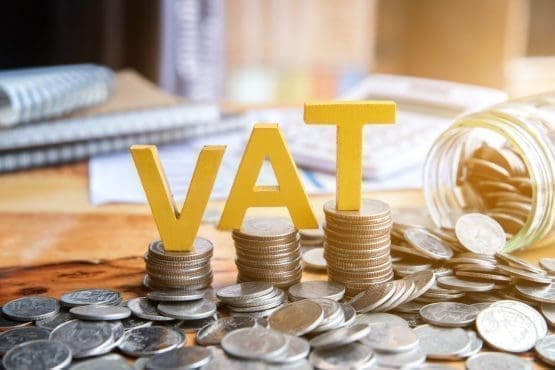
Value Added Tax (VAT)

Ghana Revenue Authority (GRA) officials have clarified critical registration and compliance requirements as businesses adjust to sweeping Value Added Tax (VAT) changes that took effect January 1 under the Value Added Tax Act, 2025 (Act 1151).

The reforms establish distinct thresholds for goods and services, with service providers facing mandatory registration regardless of revenue while businesses supplying goods must exceed GH₵750,000 in annual turnover. The standard rate now sits at 20 percent following reduction from the previous 21.9 percent rate, marking a significant departure from the previous regime that offered multiple rate categories.

Dominic Naab, Acting Head of the Strategy and Research Department at GRA, emphasized during a recent public briefing that service sector operators cannot avoid VAT obligations based on size. Every person providing services must register for VAT because the tax system targets consumption rather than production. Consumers ultimately bear the tax burden when purchasing services, making universal registration essential for proper revenue collection.

The GH₵750,000 threshold applies exclusively to goods suppliers, creating a compliance divide between sectors. Small retailers selling physical products below this amount escape registration requirements, potentially reducing administrative burdens for thousands of micro and small enterprises. Service businesses operating even modest consultancies, repair shops, or professional practices must navigate the full VAT system immediately.

Companies already registered under the previous framework face immediate transition obligations. Naab explained that all persons registered under the old regime must continue charging VAT at standard rates throughout the transitional period. The Authority expects businesses to maintain compliance with current regulations until GRA completes necessary administrative procedures for system migration.

The VAT Flat Rate Scheme has been abolished with introduction of a unified and more transparent VAT structure, fundamentally altering operations for retailers who previously benefited from simplified rates. The old system offered four categories including flat rates of 3 percent and 5 percent that reduced complexity for smaller operators. Under the new law, these categories vanish entirely.

Businesses holding VAT flat rate booklets must return unutilized materials to the Commissioner General. Naab clarified that flat rate persons are required to surrender these booklets until they complete migration or deregistration processes. During this interim period, affected businesses cannot charge flat rates despite possessing valid booklets. They must apply standard rates exclusively.

The Commissioner General has not deregistered former flat rate taxpayers, leaving them in regulatory limbo. These businesses must keep charging VAT at standard rates rather than abandoning tax collection entirely. The transition demands careful documentation as companies await official deregistration or migration into the new unified system.

Companies supplying goods now face clear turnover calculations to determine obligations. Operations generating GH₵750,000 or more in annual sales must register and charge VAT, while those below this threshold remain exempt. This represents a substantial increase from the previous GH₵200,000 threshold, offering breathing room for businesses affected by inflation and currency fluctuations over recent years.

Service providers confront different realities. A small accounting firm earning GH₵50,000 annually faces identical registration requirements as a major consulting operation generating millions. The absence of any threshold for services reflects government intentions to capture consumption taxes across the entire service economy without exemptions based on business size.

Accounting teams across sectors are reviewing internal processes to ensure compliance with standard rate applications. Financial controllers must verify that invoicing systems correctly calculate the new 20 percent rate while removing any references to abolished flat rates. Many companies are conducting staff training sessions to familiarize teams with updated requirements.

Business owners are simultaneously adjusting pricing strategies to reflect uniform VAT application. Retailers previously charging 3 percent flat rates must now incorporate 20 percent into their pricing structures, potentially affecting competitiveness and margins. Service businesses accustomed to informal arrangements now face mandatory VAT registration with corresponding compliance costs.

The COVID-19 Health Recovery Levy has been abolished alongside the flat rate scheme, removing another layer from Ghana’s tax structure. The pandemic era measure added to the overall tax burden but disappears under the new framework. This elimination partially offsets the increased compliance complexity facing service providers.

The reforms also recoupled National Health Insurance Levy (NHIL) and Ghana Education Trust Fund (GETFund) levies with the main VAT system. GETFund and NHIL levies will be treated as input tax deductions, allowing businesses to claim these levies as input tax credits. This technical change reduces the effective cost of doing business by permitting companies to offset these payments against their VAT liabilities.

The standard rate technically comprises 15 percent VAT plus 2.5 percent NHIL and 2.5 percent GETFund, totaling 20 percent. This structure maintains funding for critical national programs while simplifying the overall calculation for taxpayers. Businesses collect a single combined rate rather than tracking multiple separate levies.

GRA has established multiple support channels for businesses navigating the transition. Taxpayer Service Centres across the country offer face to face consultations, while the toll free line 0800 900 110 provides telephone assistance. The Authority also maintains WhatsApp support on 055 299 0000 and 020 063 1664, alongside email support through [email protected].

Implementation challenges extend beyond registration mechanics. Service providers must establish proper accounting systems if they previously operated informally. This includes purchasing or developing invoicing software capable of generating VAT compliant receipts, maintaining detailed transaction records, and filing monthly returns through GRA’s electronic platforms.

Goods suppliers approaching the GH₵750,000 threshold face strategic decisions. Companies expecting revenue growth might register voluntarily to avoid sudden compliance obligations mid year. Others may restructure operations to remain below the threshold, though such arrangements could limit business expansion opportunities.

The unified VAT structure aims to promote equity and improve administrative efficiency according to GRA statements. Eliminating multiple rate categories and exemptions theoretically simplifies enforcement while expanding the tax base. Service sector inclusion particularly broadens revenue collection beyond traditional goods based commerce.

Critics question whether mandatory service provider registration imposes disproportionate burdens on informal sector operators. Many small service businesses lack sophisticated record keeping systems or financial management expertise. Compliance costs including accounting software, professional advice, and administrative time could exceed actual VAT liabilities for marginal operations.

Enforcement mechanisms remain unclear as implementation proceeds. GRA must balance aggressive compliance enforcement against the practical challenges facing newly registered taxpayers. Overly harsh penalties during the transition period could discourage voluntary compliance and drive businesses underground, undermining the reform’s revenue objectives.

The January 1 implementation date provides limited adjustment time compared to similar reforms elsewhere. Many businesses learned of the specific requirements only weeks before the deadline, constraining their ability to update systems and train staff. The compressed timeline reflects government urgency to simplify tax administration but creates operational stress for taxpayers.

Regional differences in business sophistication may affect compliance patterns. Urban enterprises in Accra and Kumasi typically maintain better records and access professional tax advice more easily than rural operators. This geographic divide could create uneven implementation across the country, concentrating compliance in major commercial centers while rural areas lag behind.

The reforms represent the most significant VAT restructuring since Ghana introduced the tax decades ago. Success depends on effective communication, reasonable enforcement, and ongoing taxpayer support as businesses adapt to the unified system. Early implementation months will prove critical for establishing sustainable compliance patterns.

Former African Footballers of the Year and new contenders set to shape group-stage

0


Published:

The group stage of the TotalEnergies CAF Africa Cup of Nations Morocco 2025 has underlined a familiar truth about African football: experience still matters, but a new generation is rapidly closing the gap.

Across six groups and 24 matches, a blend of decorated winners and emerging stars has driven performances, influenced results and ignited debate over who could claim the continent’s top individual honour next.

With 87 goals scored before the knockout rounds, several African Footballer of the Year winners have once again stepped forward when their teams needed them most. At the same time, younger talents have delivered defining moments that suggest the balance of power may soon shift.

Proven winners still delivering

For Senegal, Sadio Mané, African Footballer of the Year in 2019 and 2022, combined leadership with efficiency.

His goal in the group stage, alongside two from Nicolas Jackson, helped the Lions of Teranga finish top of Group D, reinforcing Mané’s enduring influence in major tournaments.

Algeria’s campaign has been driven by Riyad Mahrez, the 2016 African Footballer of the Year.

Mahrez emerged as one of the group stage’s standout performers, scoring three goals — including a brace against Sudan and a crucial strike versus Burkina Faso — as the Desert Foxes topped Group E with authority.

Egypt, meanwhile, leaned heavily on Mohamed Salah, winner of the award in 2017 and 2018.

Salah struck twice, delivering a dramatic last-gasp winner against Zimbabwe before netting the decisive goal against South Africa to keep the Pharaohs top of Group B.

Despite Gabon’s early exit, Pierre-Emerick Aubameyang, African Footballer of the Year in 2015, showed his instincts remain intact, scoring during the group stage and reinforcing his reputation as one of Africa’s most reliable finishers.\

Recent winners set to sparkle

For hosts Morocco, Achraf Hakimi, the 2025 African Footballer of the Year, returned from injury to feature on matchday three, offering defensive stability and attacking thrust as the Atlas Lions navigated a demanding group.

Alongside the established names, several players used the group stage to strengthen their case as future African Footballer of the Year contenders. Nigeria’s campaign has been shaped by Ademola Lookman, the 2024 winner, who contributed two goals and two assists, including a match-winning performance against Tunisia that earned him the Man of the Match award.

Nigeria also benefited from the physical presence of Victor Osimhen, African Footballer of the Year in 2023, whose goal against Tunisia underlined his continued importance in big matches.

Rising stars stake their claim

Côte d’Ivoire’s attacking spark came from Amad Diallo, who scored twice in the group stage, including a decisive winner against Mozambique, combining pace, vision and composure.

Elsewhere, Bryan Mbeumo provided creativity and goals for Cameroon, while Raphaël Onyedika quietly controlled midfield proceedings for Nigeria, dictating tempo and enabling attacking transitions.

Experience meets ambition

As AFCON 2025 moves into the knockout rounds, the group stage has set a clear tone. Former African Footballers of the Year — Mané, Mahrez, Salah, Aubameyang and Hakimi — continue to shape matches with authority and composure.

At the same time, rising stars such as Diallo, Mbeumo and Onyedika have signalled their readiness to inherit the spotlight.

The next phase of the tournament will test whether experience or youthful momentum ultimately prevails — and may well determine who emerges as Africa’s next Footballer of the Year.