


The government has reached an agreement with Ghana’s large-scale mining companies to implement a key component of the Ghana Accelerated National Reserve Accumulation Programme (GANRAP), requiring 30% of their gold output to be sold to the Bank of Ghana and the Ghana Gold Board for local processing and refining.
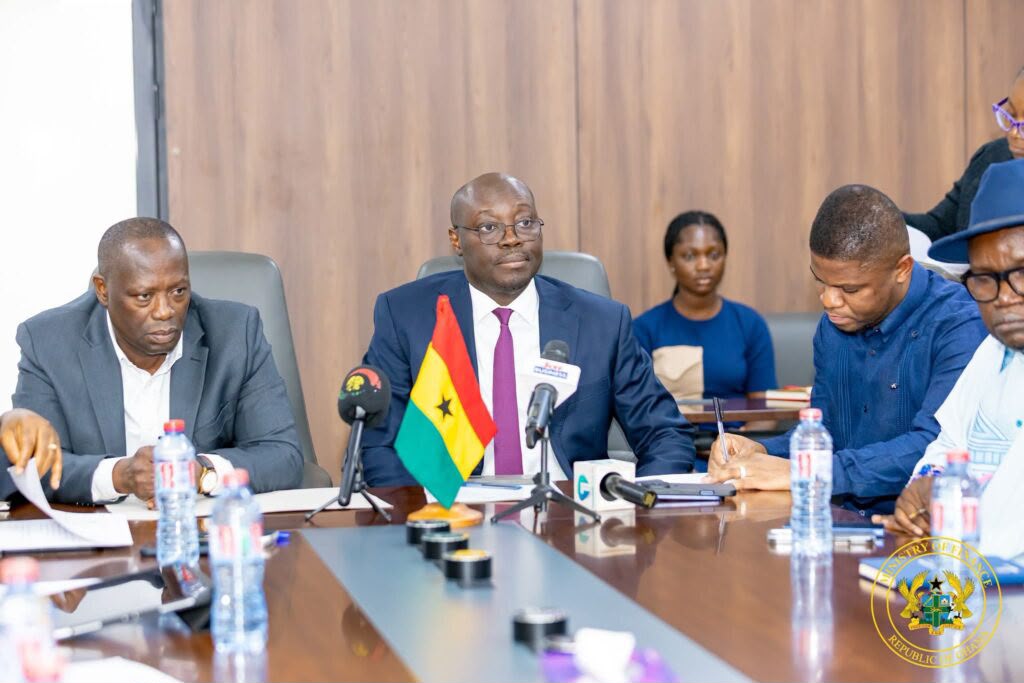
The agreement was formalised on Thursday through a Memorandum of Understanding (MOU) signed by the Ministry of Finance, Ministry of Lands and Natural Resources, Bank of Ghana, Ghana Gold Board and the Ghana Chamber of Mines, representing the country’s large-scale mining companies.
Speaking at the signing ceremony, Finance Minister Dr Cassiel Ato Forson said the agreement followed extensive consultations between government, the Chamber of Mines, mining companies, the central bank and the Gold Board.
He said the MOU marks the conclusion of negotiations on how the 30% gold purchase component of GANRAP will be implemented.
“Today’s signing of the memorandum of understanding signifies that we have successfully come to a mutual understanding that that policy will be implemented effective the date of signing,” he said.
Under the arrangement, the gold purchased from the large-scale mining companies will be processed and refined locally before being transferred to the Bank of Ghana to support the country’s reserve accumulation efforts.
The Finance Minister said the agreement represents an important step in government’s efforts to strengthen Ghana’s reserves and improve macroeconomic stability.
The Minister for Lands and Natural Resources, Emmanuel Armah-Kofi Buah, described the programme as an important initiative whose impact on macroeconomic stability and financial management cannot be overemphasised.
He commended the Chamber of Mines and the large-scale mining companies for their cooperation throughout the negotiations.
According to him, the Ministry of Lands and Natural Resources will continue to work with the mining industry to address challenges that may emerge during the implementation of the programme.
He stressed the need for flexibility as the new arrangement takes shape, noting that resolving emerging issues will ultimately serve the national interest.
BoG pledges support
The Governor of the Bank of Ghana, Dr Johnson Pandit Asiama, expressed the central bank’s commitment to working with all stakeholders to ensure the successful implementation of the agreement.
He acknowledged the contributions of the Ghana Gold Board, the Ministry of Finance and the Ministry of Lands and Natural Resources in bringing the various parties together.

The Governor said the central bank would work to ensure that the programme delivers maximum benefits to the Ghanaian economy.
Mining industry backs programme
The Chief Executive Officer of the Ghana Chamber of Mines, Eric Asubonteng, said the mining industry fully supports the objectives of GANRAP, particularly its focus on strengthening Ghana’s macroeconomic resilience.
He said building a reserve buffer capable of helping the country withstand external shocks would benefit both the broader economy and businesses operating in Ghana.
Mr Asubonteng also welcomed the programme’s objective of developing internationally accredited gold refineries in Ghana.
He disclosed that the Chamber had, even before GANRAP, begun exploring opportunities to support local gold refining, including engagements with refineries in Ghana and South Africa.
However, he called for GANRAP to evolve beyond its current timeframe and become an incentive-based system that encourages local processing and refining.
 He cited countries including Tanzania, India and South Africa, where incentives are used to encourage local beneficiation of minerals.
According to him, such an approach could position Ghana as a major gold refining hub for the West African sub-region, leveraging the significant volumes of gold produced within Ghana and neighbouring countries.
“We need to look at GANRAP beyond even 2028,” he said, arguing that an incentive-led system would make local beneficiation more sustainable.
He said the Chamber would continue working with government and other stakeholders to address implementation challenges while keeping the broader objectives of the programme in focus.

The MOU marks a significant step towards the implementation of GANRAP, bringing government, the central bank, the Gold Board and Ghana’s large-scale mining industry under a common framework for gold purchases, local refining and reserve accumulation.
